Why 5 Cubic Meters Is the Right Capacity
Medical oxygen procurement comes down to one question most buyers get wrong: how much is enough? Too little and you're scrambling during peak demand; too much and you're paying for capacity that sits idle. A 5 cubic meter per hour (5 m³/h) medical oxygen generator hits the practical midpoint for a well-defined range of facilities — and understanding why starts with actual oxygen consumption patterns.
A standard hospital bed in general ward use consumes roughly 0.3–0.5 m³ of oxygen per hour. ICU patients under ventilation can require up to 1 m³/h per bed. A facility running 8–15 simultaneous oxygen points — covering ward beds, a small ICU, and an operating room — will find 5 m³/h delivers sufficient flow with built-in headroom for demand spikes. For facilities outside that range, our full range of medical oxygen generator solutions for hospitals and clinics covers outputs from portable units to large centralized systems.
The 5 m³/h specification also matters for infrastructure reasons. It operates within standard single-phase or light three-phase electrical supply, requires a modest footprint, and can be containerized for remote or temporary deployment — all without the logistical overhead of liquid oxygen deliveries or high-pressure cylinder management.
Core Technical Specifications
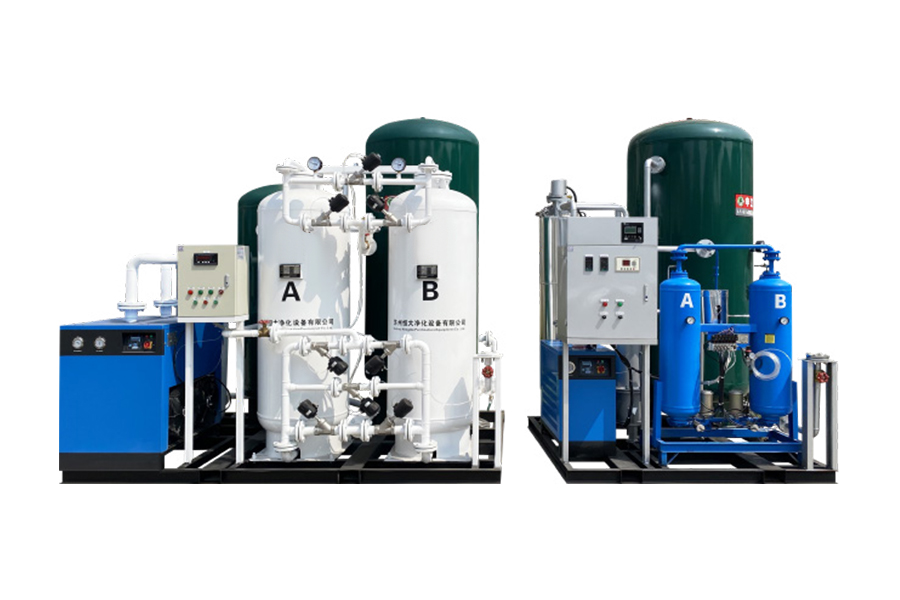
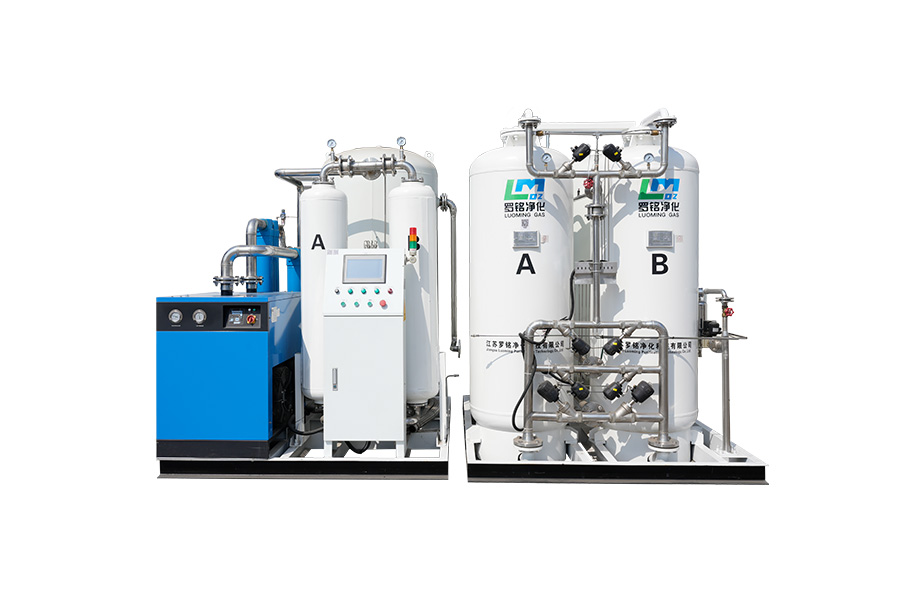
The performance of a 5 cubic medical oxygen generator depends on what's inside, not just the nameplate output. PSA (Pressure Swing Adsorption) technology is the industry standard: compressed ambient air passes through zeolite molecular sieve columns that selectively adsorb nitrogen, allowing oxygen-enriched gas to pass through to the outlet. The two-column alternating cycle runs continuously with no consumable chemicals.
Oxygen purity holds at 93% ±3% — the internationally accepted specification for medical-grade PSA oxygen, consistent with pharmacopoeia standards for clinical use including ventilation support, surgical procedures, and emergency care. Outlet pressure typically ranges from 0.3 to 0.4 MPa, suitable for direct pipeline integration.
Certification coverage should include ISO 13485 (medical device quality management), ISO 9001, CE marking, and GMP compliance. These aren't checkbox credentials — they represent audited production processes, documented quality controls, and traceability standards that matter when the equipment is classified as a medical device in the destination country.
Which Healthcare Settings Need This Capacity?
The 5 m³/h output is particularly well matched to four deployment contexts.
District and county-level hospitals with 50–150 beds represent the primary market. These facilities carry enough patient volume to justify on-site generation over cylinder supply, but don't yet need the larger centralized systems serving major urban hospitals. On-site generation eliminates supply chain dependency and reduces long-run oxygen costs significantly compared to delivered cylinders.
Nursing homes and long-term care facilities present a steady, predictable oxygen demand profile — ideal for a continuous-run PSA system. Residents requiring overnight or round-the-clock oxygen therapy benefit from the uninterrupted supply that cylinder-based systems simply cannot guarantee without frequent logistics coordination. See how the system integrates into medical oxygen concentrator applications in nursing homes.
Remote clinics and high-altitude facilities face a compounded challenge: both supply chain difficulty and reduced ambient oxygen partial pressure. A self-contained 5 m³/h generator solves both simultaneously — on-site production removes the resupply problem, while the PSA process remains effective at altitude with appropriate system calibration. For facilities needing cylinder-filling capability alongside pipeline supply, an on-site medical oxygen filling system can be integrated directly into the generation setup.
Containerized field deployments — mobile medical units, disaster response facilities, military field hospitals — benefit from the generator's compact form factor. The entire system can be pre-installed inside a standard shipping container with side or end-door access, optional air conditioning, insulation for cold-climate operation, and an onboard generator for off-grid power. The container becomes a self-sufficient oxygen supply module, deployable by truck and operational within hours of arrival.
How to Evaluate a Supplier
Buying a 5 cubic medical oxygen generator is a long-term infrastructure decision. The machine will run continuously for years; the supplier relationship matters as much as the specification sheet.
Start with certification verification, not just certification claims. Ask for the actual license numbers for the Class II Medical Device Production License and the relevant CE technical file. A legitimate manufacturer will provide these without hesitation. Certification gaps at this stage are a reliable indicator of quality control gaps downstream.
Evaluate customization depth. Standard capacity configurations cover most scenarios, but voltage requirements, outlet pressure specifications, container dimensions, and cold-climate adaptations vary by project. A supplier that can only ship catalog configurations will create problems for non-standard installations. Confirm whether OEM arrangements are supported if your procurement involves rebranding.
Delivery timelines for gas generation equipment typically run 10–50 working days depending on configuration and order volume. Build this into project planning — last-minute procurement of capital medical equipment rarely ends well. Clarify payment terms (T/T and L/C are standard) and export packaging standards upfront.
Post-installation support is where many buyers discover gaps too late. Confirm whether the supplier offers remote video-guided commissioning and whether on-site engineer deployment is available for your region. For facilities where in-house technical staff have limited gas equipment experience, this distinction is critical. If your application demands higher oxygen concentration than standard PSA output, a high purity medical oxygen generator reaching 99.5% concentration is the appropriate upgrade path — confirm your supplier manufactures across both product lines before committing.





 English
 русский
 Français
 Español
 عربى
عربى