Understanding Liquid Ammonia Vaporizers
A liquid ammonia vaporizer is a critical component in industries that utilize ammonia as a refrigerant or chemical feedstock. Its primary function is to convert liquid ammonia into a gaseous state, ensuring precise and controlled delivery for processes such as refrigeration, chemical synthesis, and fertilizer production. The efficiency and safety of operations largely depend on the proper selection, installation, and maintenance of the vaporizer.
Types of Liquid Ammonia Vaporizers
Liquid ammonia vaporizers can be classified based on their heat source and operational design. Each type offers advantages and limitations depending on the application environment and capacity requirements.
Indirect Fired Vaporizers
These vaporizers use a separate heat source, such as steam or hot water, to indirectly heat liquid ammonia. They provide stable vapor production and are widely used in industrial refrigeration due to their reliability and precise control.
Direct Fired Vaporizers
Direct fired vaporizers use natural gas, oil, or other fuels to directly heat ammonia in a shell-and-tube or finned coil arrangement. While they offer rapid vaporization and compact designs, careful monitoring is required to avoid localized overheating.
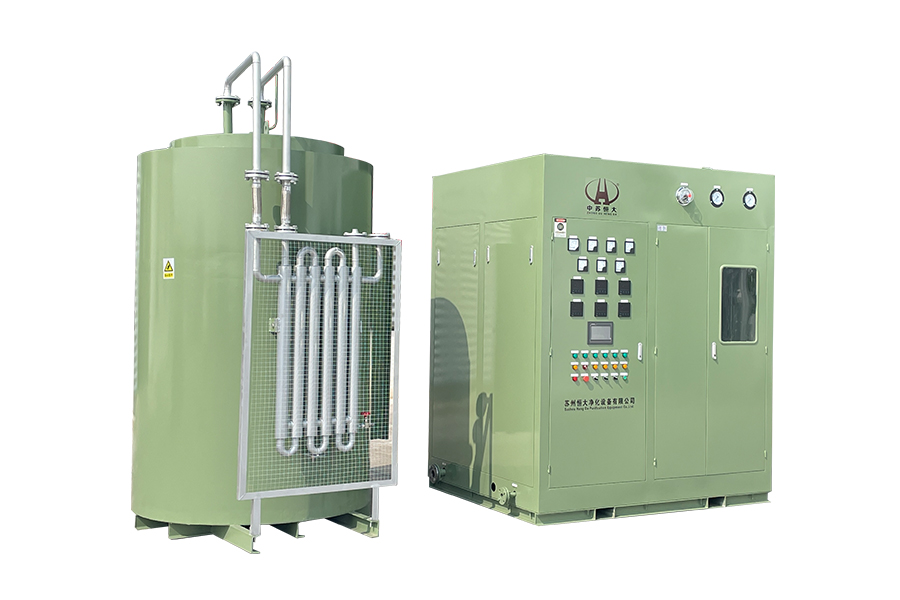
Electric Vaporizers
Electric vaporizers employ resistance heaters to vaporize ammonia. These are ideal for environments where fuel sources are limited or emissions must be minimized. They provide consistent output and simple automation, though energy consumption can be higher than other methods.
Key Operating Principles
The operation of a liquid ammonia vaporizer relies on controlled heat transfer to raise the ammonia from a liquid to a gaseous state without causing excessive pressure or thermal stress. Maintaining proper flow rates, heat exchange efficiency, and safety valves are critical for smooth operation.
Flow and Pressure Control
Accurate flow regulation ensures that the vaporizer can handle varying ammonia demands. Pressure relief valves and regulators protect the system from overpressure, preventing hazardous situations.
Heat Exchange Efficiency
Efficient heat transfer minimizes energy consumption while ensuring rapid vaporization. Material selection for tubes and coils, along with proper surface area design, is essential to maintain consistent vapor quality.
Installation Considerations
Proper installation of a liquid ammonia vaporizer impacts performance, safety, and longevity. Key factors include location, orientation, and accessibility for inspection and maintenance.
Site Selection
Install vaporizers in well-ventilated areas, away from ignition sources. Positioning should allow easy connection to ammonia storage tanks and downstream process lines.
Piping and Connections
Use corrosion-resistant materials such as stainless steel or coated carbon steel. Proper insulation and support prevent stress on joints and minimize heat loss during ammonia transport.
Maintenance and Safety
Regular maintenance ensures reliable operation and prevents accidents. A detailed safety protocol is necessary due to ammonia's toxic and flammable nature.
Routine Inspection
Check for leaks, corrosion, and valve integrity. Inspect heat exchange surfaces for scaling or fouling, which can reduce efficiency and increase operational risks.
Emergency Measures
Equip systems with emergency shutdown valves, pressure relief devices, and leak detection sensors. Staff should be trained in handling ammonia exposure and containment procedures.
Performance Monitoring
Continuous monitoring ensures optimal performance and early detection of issues. Key parameters include ammonia vapor temperature, pressure, and flow rate. Automated control systems enhance consistency and reduce manual intervention.
Monitoring Parameters
| Parameter |
Recommended Range |
Notes |
| Vapor Temperature |
-10°C to 50°C |
Depends on downstream requirements |
| Pressure |
5-15 bar |
Varies by application and vaporizer design |
| Flow Rate |
Adjustable per process demand |
Use flow meters for precise control |
Conclusion
Liquid ammonia vaporizers are essential for safe and efficient ammonia handling in various industries. Understanding their types, operating principles, installation requirements, and maintenance practices helps optimize performance while ensuring safety. Proper monitoring and adherence to protocols minimize risks, providing reliable vaporization for industrial processes.





 English
 русский
 Français
 Español
 عربى
عربى