What a Liquid Ammonia Vaporizer Does
A liquid ammonia vaporizer converts stored liquid ammonia (NH₃) into a gaseous state so it can be safely used in industrial processes, refrigeration systems, agriculture, and chemical manufacturing. Without a vaporizer, liquid ammonia cannot be directly introduced into most downstream equipment, making this device a critical link in any ammonia supply or delivery system.
Liquid ammonia is stored at approximately -33°C (-27.4°F) at atmospheric pressure or under pressure at ambient temperatures. The vaporizer applies heat — through ambient air, water, steam, or electric elements — to phase-change the liquid into vapor at a controlled rate and pressure.
Types of Liquid Ammonia Vaporizers
Several vaporizer designs are used depending on throughput requirements, available heat sources, and installation constraints. Each type carries distinct trade-offs in efficiency, cost, and maintenance.
Ambient Air Vaporizers
These units use finned aluminum or stainless steel tubes to absorb heat from surrounding air. They require no external energy source, making them the lowest-cost option for low-to-medium flow rates. However, their capacity drops significantly in cold climates — performance can fall by 40–60% when ambient temperatures drop below 0°C.
Water Bath Vaporizers
The ammonia coil is submerged in a heated water bath, typically maintained at 50–80°C. This design offers stable output regardless of outdoor temperature and is widely used in industrial plants with continuous high-volume demand. Water bath vaporizers can handle flow rates from 50 kg/hr to over 5,000 kg/hr.
Steam or Hot Water Heated Vaporizers
These shell-and-tube heat exchangers use plant steam or hot water on the shell side to vaporize ammonia on the tube side. They are preferred in facilities where steam is already available, offering high thermal efficiency and precise temperature control.
Electric Vaporizers
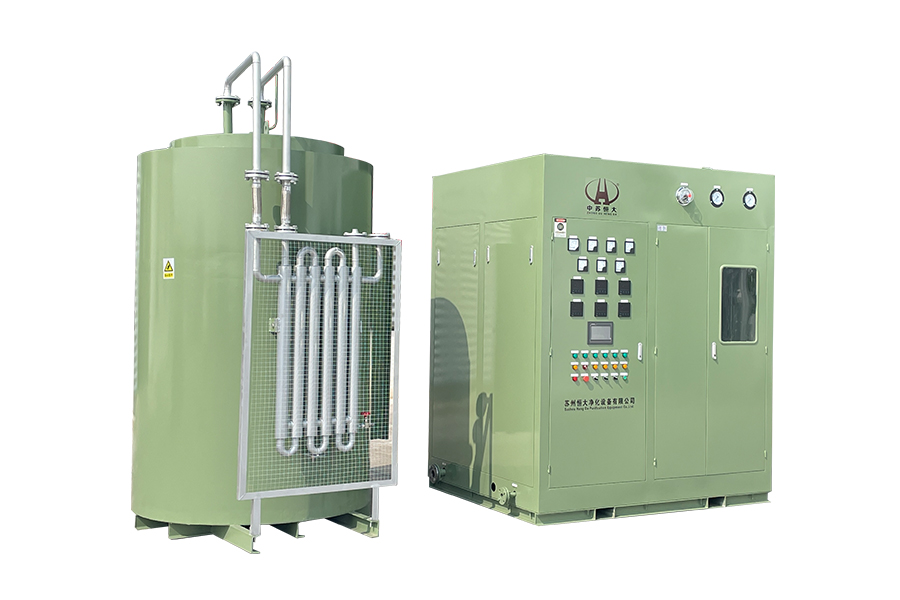
Electric immersion heaters are embedded in the vaporizer chamber. These are compact and easy to install, but operating costs are higher due to electricity consumption. They are typically used for smaller flow rates under 200 kg/hr or in laboratory and pilot-plant settings.
Table 1: Comparison of Common Liquid Ammonia Vaporizer Types
| Type |
Heat Source |
Typical Flow Rate |
Best Use Case |
Operating Cost |
| Ambient Air |
Atmospheric air |
10–500 kg/hr |
Warm climates, low demand |
Very low |
| Water Bath |
Heated water |
50–5,000 kg/hr |
Continuous industrial use |
Medium |
| Steam/Hot Water |
Plant steam |
100–10,000 kg/hr |
Steam-rich facilities |
Low (if steam available) |
| Electric |
Electric heaters |
5–200 kg/hr |
Labs, small-scale use |
High |
Key Technical Specifications to Evaluate
Selecting the wrong vaporizer for your flow and pressure requirements leads to frosting, pressure drops, or unsafe carryover of liquid ammonia into downstream lines. The following specifications are most critical during the selection process:
- Vaporization capacity (kg/hr or lb/hr): Must match or exceed peak demand. Size for 110–120% of your maximum expected flow rate.
- Inlet/outlet pressure rating: Most industrial units operate between 5 and 25 bar. Ensure the design pressure aligns with your supply system.
- Outlet vapor temperature: Aim for at least 10–15°C above ambient to prevent re-condensation in downstream piping.
- Material compatibility: Carbon steel, stainless steel 316L, and certain aluminum alloys are suitable. Copper and copper alloys must be avoided — ammonia causes stress corrosion cracking in copper.
- Heat duty (kW or BTU/hr): Calculated from the latent heat of vaporization of ammonia, approximately 1,371 kJ/kg at atmospheric pressure.
Common Industrial Applications
Liquid ammonia vaporizers serve a broad range of industries, each with different purity, pressure, and flow demands:
- Fertilizer and agriculture: Anhydrous ammonia is directly injected into soil or used in urea production. Vaporizers supply consistent gas-phase ammonia to blending and injection equipment.
- SCR (Selective Catalytic Reduction): Power plants and large diesel engines use ammonia vapor to reduce NOx emissions. Flow rates typically range from 20 to 500 kg/hr depending on unit size.
- Refrigeration systems: Industrial refrigeration plants — including food processing and cold storage — use ammonia as a refrigerant. Vaporizers handle transfer between storage tanks and compressor inlets.
- Chemical synthesis: Ammonia is a feedstock for nitric acid, pharmaceuticals, and specialty chemicals, requiring continuous, high-purity vapor supply.
- Heat treatment (metallurgy): Cracked or pure ammonia atmosphere is used for nitriding and annealing. Vaporizers feed dissociators that break NH₃ into nitrogen and hydrogen.
Safety Considerations You Cannot Overlook
Ammonia is classified as a toxic and flammable gas (IDLH: 300 ppm; flammable range: 15–28% in air). Vaporizer systems must be engineered and operated with layered safety controls.
Pressure Relief and Overpressure Protection
All vaporizers must be fitted with ASME-rated pressure relief valves set to the design pressure of the vessel. Dual PRVs in a three-way valve arrangement allow for in-service testing without shutting down the unit.
Liquid Carryover Prevention
Liquid ammonia entering downstream piping as a slug can damage equipment and create pressure shocks. Mist eliminators, outlet temperature sensors, and automatic shutoff valves are standard safeguards. The outlet vapor temperature should be continuously monitored; a drop below the saturation point triggers an alarm or shutdown.
Leak Detection and Ventilation
Install electrochemical or catalytic ammonia detectors at low points (ammonia vapor is lighter than air but can pool in enclosed spaces). Detection thresholds are typically set at 25 ppm (warning) and 50 ppm (evacuation). Vaporizer rooms must comply with ventilation standards such as ASHRAE 15 or local equivalents.
Electrical Area Classification
In areas where ammonia vapor may be present, electrical equipment must be rated for hazardous locations (ATEX Zone 1/2 or NEC Class I Division 1/2) to prevent ignition of flammable concentrations.
Installation and Maintenance Best Practices
Even a well-designed vaporizer will underperform or fail prematurely without proper installation and a consistent maintenance schedule.
- Slope liquid supply lines toward the vaporizer inlet to prevent liquid traps that could cause water hammer.
- Install a strainer upstream of the vaporizer inlet to catch particulates from the storage tank that could foul heat transfer surfaces.
- Insulate vapor outlet lines to prevent heat loss and re-condensation, especially in outdoor installations in cold regions.
- Inspect heat transfer surfaces annually for scale, corrosion, or fouling — a 1 mm scale layer can reduce heat transfer efficiency by up to 10%.
- Test relief valves every 12 months and replace or recertify every 5 years per most national pressure vessel codes.
- Log outlet temperature trends over time; a gradual decline at steady flow rates signals fouling or heater degradation before it becomes a problem.
How to Choose the Right Vaporizer for Your Application
The decision comes down to four factors: required flow rate, available heat source, climate conditions, and regulatory requirements. Use the following framework:
- If your flow rate is under 300 kg/hr and ambient temperatures stay above 5°C year-round, an ambient air vaporizer is the most economical choice.
- For continuous high-volume operations in variable climates, a water bath or steam-heated unit eliminates climate dependency and ensures stable output.
- If the facility already has a steam header at 3–10 bar, a shell-and-tube steam vaporizer is typically the most efficient and lowest marginal-cost option.
- For pilot plants, laboratories, or intermittent use below 50 kg/hr, an electric vaporizer offers simplicity and controllability despite higher energy cost.
Always request a formal heat duty calculation from the supplier and verify that the stated capacity is based on the actual inlet liquid temperature and outlet pressure of your specific installation, not generic catalog conditions.





 English
 русский
 Français
 Español
 عربى
عربى