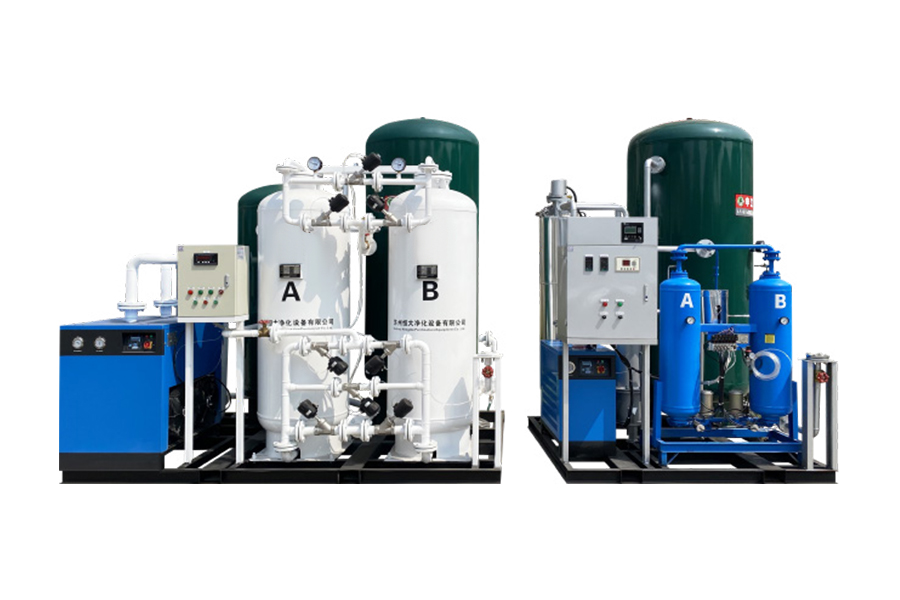
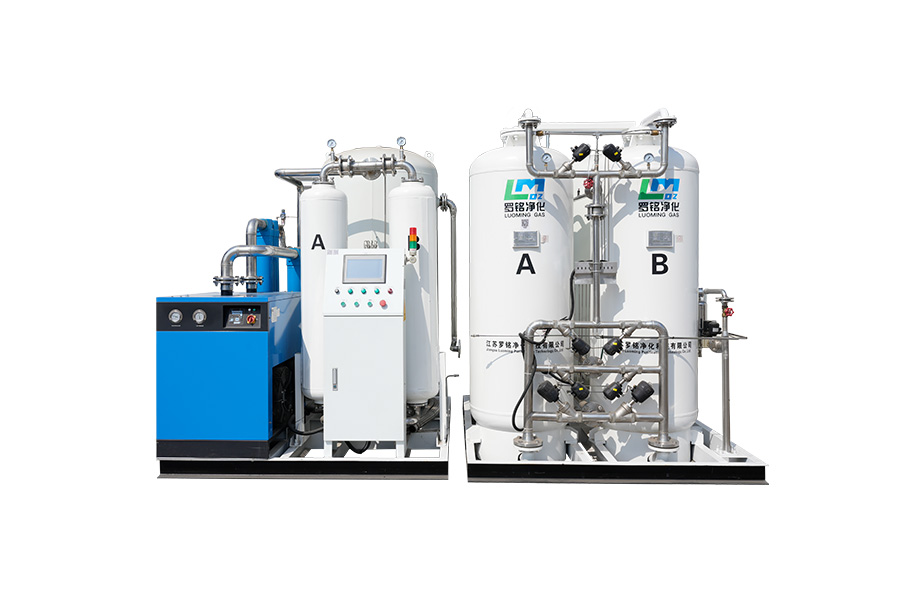
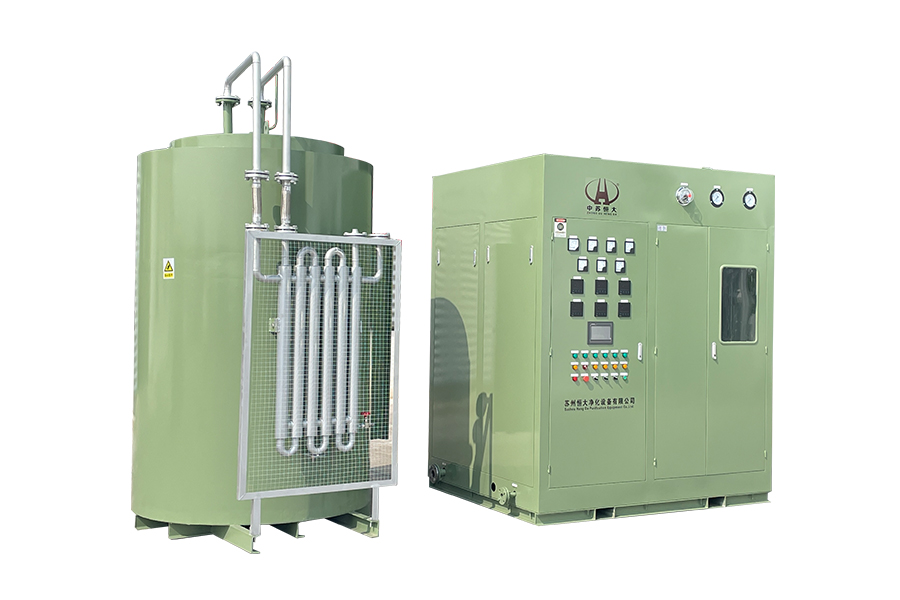
PSA (Pressure Swing Adsorption) Nitrogen Generators are devices designed to produce high-purity nitrogen gas from compressed air. Unlike traditional nitrogen supply methods such as cylinders or liquid nitrogen, PSA generators offer continuous, on-site nitrogen production. They are widely used in industries where a reliable and cost-effective nitrogen source is crucial.
The principle behind PSA technology is selective adsorption. The system uses carbon molecular sieves (CMS) to separate nitrogen from oxygen and other gases in compressed air. When air passes through the CMS at high pressure, oxygen molecules are preferentially adsorbed, while nitrogen passes through as the product gas. This adsorption cycle alternates between two vessels, ensuring a continuous nitrogen supply.
Key Components of a PSA Nitrogen Generator
A typical PSA nitrogen generator consists of several core components that work together to deliver nitrogen efficiently and reliably.
- Compressor: Provides compressed air, which is the raw input for the generator.
- Air Dryer: Removes moisture from compressed air to prevent damage to the CMS and ensure nitrogen purity.
- Filters: Eliminate oil, dust, and particulate matter from the air stream.
- Carbon Molecular Sieve (CMS) Vessels: Separate nitrogen from oxygen using the pressure swing adsorption principle.
- Control System: Automates the cycle of adsorption and desorption, maintaining continuous nitrogen flow.
Operational Principles and Efficiency
The operational cycle of a PSA nitrogen generator involves alternating pressure in two CMS vessels. While one vessel adsorbs oxygen and other impurities, the other vessel undergoes regeneration by releasing the adsorbed gases. This alternating process ensures uninterrupted nitrogen production.
Efficiency is affected by several factors:
- Air Pressure: Higher inlet pressure increases adsorption efficiency, improving nitrogen purity.
- Air Quality: Pre-treatment of compressed air with dryers and filters ensures stable generator performance.
- Cycle Time: Optimizing adsorption and desorption duration minimizes nitrogen losses and maintains consistent output.
Maintaining Optimal Performance
Regular maintenance is crucial for PSA nitrogen generators to operate efficiently over time. Key practices include:
- Checking and replacing air filters to prevent contaminants from reaching CMS vessels.
- Monitoring nitrogen purity using an online analyzer to detect any decline in performance.
- Inspecting valves and control systems for wear and proper operation.
- Draining condensate from air dryers to maintain dry and clean feed air.
Scheduled maintenance reduces downtime and extends the life of both CMS media and the mechanical components.
Industrial Applications of PSA Nitrogen Generators
PSA nitrogen generators have a broad range of industrial applications due to their reliability and cost-effectiveness. Common uses include:
- Food and Beverage: Nitrogen is used for packaging to prevent oxidation and extend shelf life.
- Electronics Manufacturing: Nitrogen provides an inert atmosphere for soldering and assembly processes.
- Pharmaceuticals: It is employed in tablet packaging and storage to preserve product integrity.
- Metal Production: Nitrogen is used in laser cutting, heat treatment, and other metal fabrication processes.
- Chemical Industry: Provides an inert environment to prevent unwanted reactions in sensitive chemical processes.
Selecting the Right PSA Generator
Choosing the appropriate PSA nitrogen generator depends on multiple factors:
- Required Nitrogen Flow Rate: Match the generator capacity with your peak and average consumption.
- Desired Purity Level: Higher purity requires more sophisticated CMS design and optimized operating conditions.
- Ambient Conditions: Temperature and humidity can affect generator performance, so site conditions must be considered.
- Maintenance Availability: Choose models with accessible CMS vessels and user-friendly controls for easy maintenance.
A well-chosen generator ensures cost efficiency, reduced downtime, and consistent nitrogen supply for industrial operations.
Comparing PSA with Other Nitrogen Supply Methods
PSA nitrogen generators are often compared with traditional nitrogen sources like cylinders or liquid nitrogen. Below is a comparison table highlighting the differences:
| Method |
Cost Efficiency |
Supply Reliability |
Operational Flexibility |
| PSA Generator |
Low long-term cost |
Continuous on-site supply |
Adjustable flow and purity |
| Cylinders |
High recurring cost |
Dependent on delivery schedule |
Limited by cylinder size |
| Liquid Nitrogen |
Moderate, but storage required |
Good, but vulnerable to boil-off |
High, but storage logistics are complex |
For many industrial applications, PSA nitrogen generators offer the best balance of cost, reliability, and operational flexibility.





 English
 русский
 Français
 Español
 عربى
عربى