When Site Constraints Rule Out a Fixed Nitrogen Plant
A pipeline crew moving to a new segment every few weeks has no use for a nitrogen plant bolted to a concrete pad. Neither does a chemical turnaround team working inside a facility with no spare square meter, or an event site that has power but no gas infrastructure at all. Fixed PSA systems assume a permanent home; a trailer type portable PSA nitrogen generator assumes the opposite — that the job moves faster than the paperwork for a new pipeline.
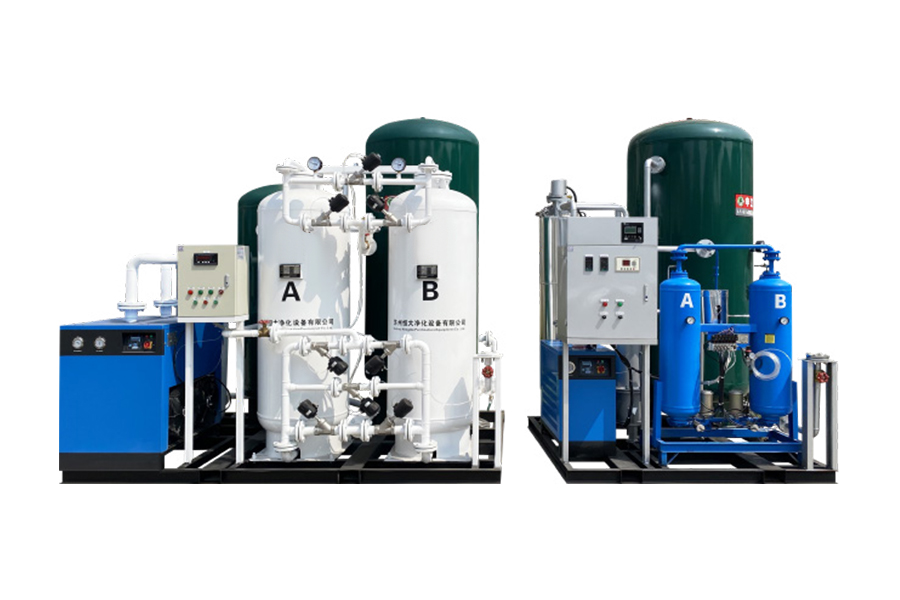
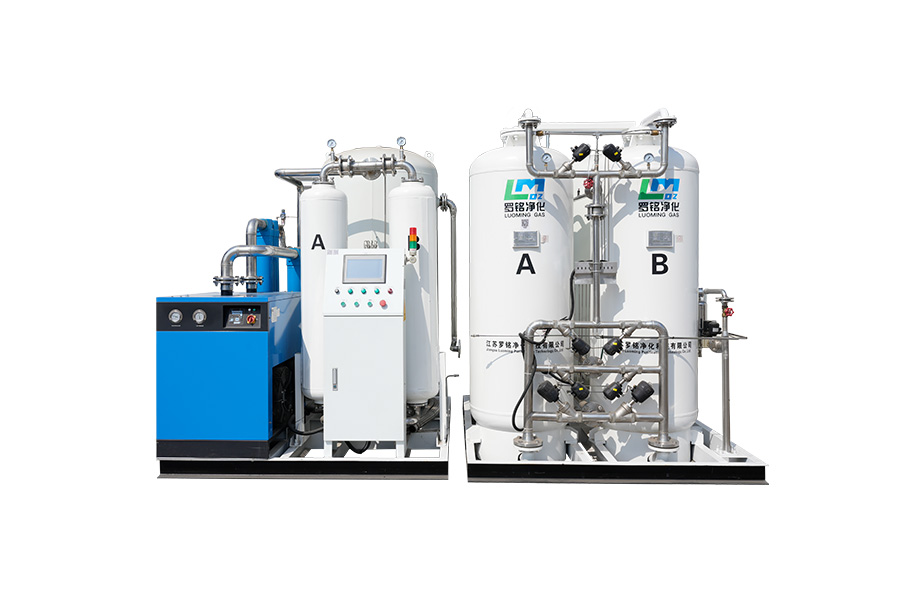
Everything a stationary plant needs a dedicated equipment room for — compressor, dryer, adsorption towers, control panel — is mounted on a road-ready chassis instead. Depending on flow requirements and site access, the same core technology is also available as cabinet-type and van-box PSA nitrogen configurations or a container-type PSA nitrogen generator, so the deployment format follows the site rather than the other way around.
Configuration Range and Technical Parameters
With flow and purity, precision matters more than range. The system runs anywhere between 1 and 500 Nm³/h, with purity settings from 95% up to 99.9995% and a dew point of −70°C at the outlet. Discharge pressure runs 0 to 5.5 bar under normal operation, adjustable to match downstream equipment without an extra booster stage in most cases.
Standard parameter range for the trailer-mounted PSA nitrogen unit
| Parameter |
Value |
| Purity |
95% – 99.9995% |
| N2 Capacity |
1 – 500 Nm³/h |
| Discharge Pressure |
0 – 5.5 Bar (Normal) |
| N2 Dew Point |
−70°C |
| Operation |
Fully Automatic |
A single unit rarely needs the top end of every parameter at once — inert blanketing at 95% purity draws far less air than laser-cutting-grade nitrogen above 99.99%, and sizing the compressor and tower package to the actual requirement is what keeps operating cost down. For applications where 99.9995% is the floor rather than the ceiling, the platform shares its core design with the high-purity PSA nitrogen generator options above 99.9995% used in electronics and specialty chemical lines. Purity is tracked continuously through a nitrogen-oxygen purity analyzer for continuous monitoring, so any drift is caught before it reaches a critical process.
Optional Components: Building the Unit Around the Job
Every trailer leaves the factory configured for the job it's headed to, not a generic spec sheet. A diesel generator gets added when the site has no grid connection, common on early-stage pipeline right-of-ways. Air conditioning goes in when ambient extremes would otherwise push the carbon molecular sieve used in the adsorption towers outside its rated operating window, which matters as much in desert oilfields as in mid-continent winters. Fans handle heat buildup in enclosed, poorly ventilated compounds where a sealed cabinet would otherwise trap compressor heat.
None of these are bundled by default. Each is selected against the site survey, the air compressor tier — entry, mid, or high-end — and the required booster pressure, so the trailer isn't paying for climate control it will never use.
Where Mobility Pays Off
Because the unit ships as one piece, it can be redeployed the moment demand at one location tapers off — a capability a fixed plant simply doesn't have. That flexibility carries real financial weight in industries where nitrogen demand isn't constant across sites. Oilfield operators shift the trailer between petroleum industry nitrogen applications like enhanced recovery and pipeline purging as fields come online and go into maintenance. Contractors running chemical plant nitrogen purging requirements at several facilities rotate the same unit through scheduled turnarounds instead of renting a generator at each stop.
In both cases, the trailer works as a shared asset across a portfolio of jobs, not a fixed cost tied to one address.
Matching the Unit to Your Operation
Specifying the right unit starts with two numbers: the purity your process actually requires, and the peak flow it needs during the busiest hour, not the average. Everything else — pressure, dew point, optional components — follows from there. Buyers still weighing membrane against adsorption technology can work through the PSA vs. membrane nitrogen generator comparison before finalizing flow and purity targets.
Once those are set, sharing a project description, the on-site power situation, and transport constraints with our engineering team is enough to get back a configuration, a dimensional drawing, and a lead time.





 English
 русский
 Français
 Español
 عربى
عربى