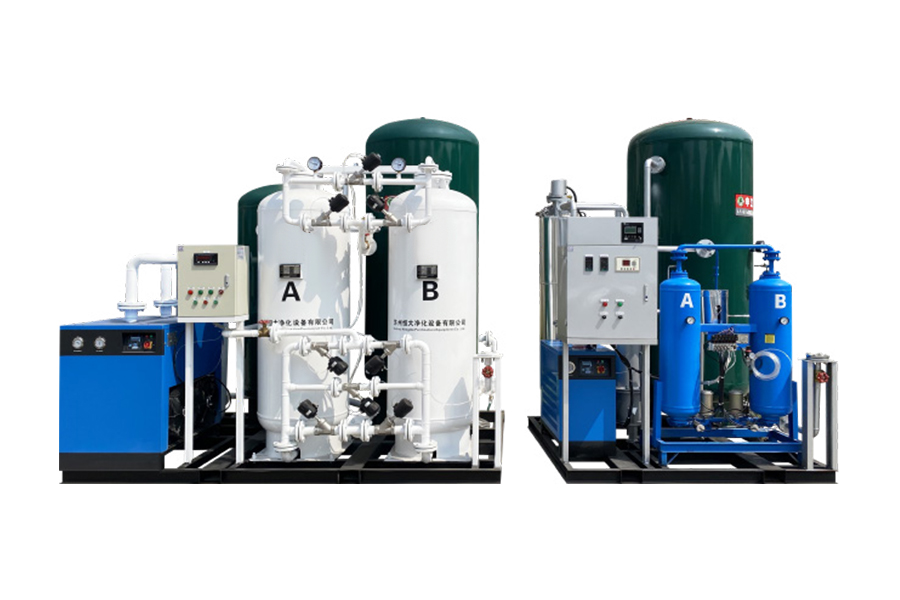
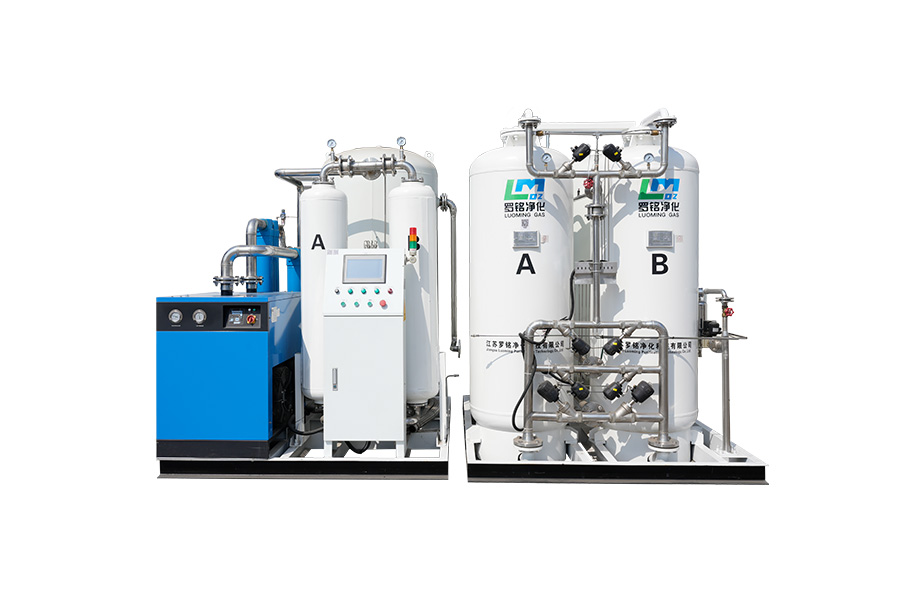
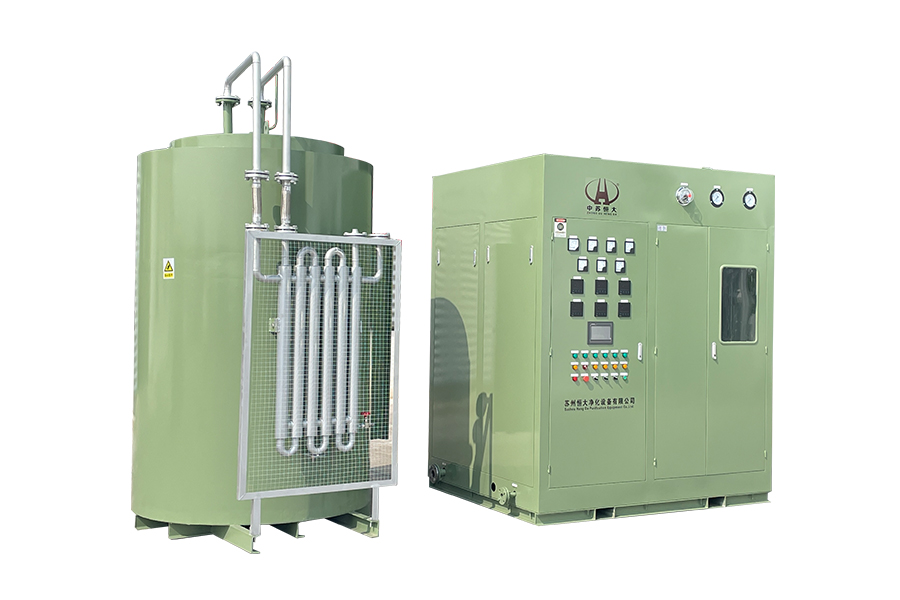
A nitrogen generator is an industrial system that produces nitrogen gas on-site by separating it from compressed air. Rather than relying on delivered nitrogen cylinders or liquid nitrogen tanks, these systems extract nitrogen—which makes up 78% of Earth's atmosphere—and deliver it at purities ranging from 95% to 99.999% depending on application requirements.
The core advantage lies in eliminating the logistics, costs, and safety concerns associated with traditional nitrogen supply methods. Industries from food packaging to electronics manufacturing use nitrogen generators to maintain consistent gas supply while reducing operational expenses by up to 40-60% compared to cylinder delivery.
How Nitrogen Generators Work
Nitrogen generators operate by filtering compressed air through specialized separation technologies. The process begins with an air compressor delivering pressurized air to the generator, which then removes oxygen, water vapor, and other trace gases to isolate nitrogen molecules.
The Basic Process
- Compressed air enters the system at 7-10 bar pressure
- Pre-filtration removes oil, water, and particulates
- Separation technology isolates nitrogen from oxygen
- Purified nitrogen flows to storage or directly to application
- Waste gases (primarily oxygen) are vented to atmosphere
The efficiency of this process depends on the separation technology used, with different methods suited to different purity requirements and flow rates.
Types of Nitrogen Generators
Two primary technologies dominate the nitrogen generation market, each with distinct advantages for specific applications.
Pressure Swing Adsorption (PSA) Generators
PSA nitrogen generators use carbon molecular sieve (CMS) material to selectively adsorb oxygen molecules while allowing nitrogen to pass through. The system contains two towers that alternate between adsorption and regeneration phases every 30-120 seconds.
Key characteristics include:
- Nitrogen purity: 95% to 99.999%
- Operating pressure: 7-10 bar
- Energy efficiency: 0.2-0.4 kWh per cubic meter of nitrogen
- Best for: High purity requirements, pharmaceutical, electronics
Membrane Nitrogen Generators
Membrane systems utilize hollow fiber membranes with different permeation rates for various gas molecules. Oxygen and water vapor permeate through the membrane wall faster than nitrogen, creating a nitrogen-enriched stream.
Key characteristics include:
- Nitrogen purity: 95% to 99.5%
- No moving parts or cycling required
- Lower maintenance costs
- Best for: Lower purity needs, offshore platforms, remote locations
| Feature |
PSA Generators |
Membrane Generators |
| Maximum Purity |
99.999% |
99.5% |
| Moving Parts |
Yes (valves) |
No |
| Energy Efficiency |
Higher |
Lower |
| Initial Cost |
Higher |
Lower |
| Maintenance |
Moderate |
Minimal |
Comparison of PSA and Membrane Nitrogen Generation Technologies
Industrial Applications
Nitrogen generators serve critical functions across diverse industries where inert atmosphere, product preservation, or safety applications require reliable nitrogen supply.
Food and Beverage Industry
Modified atmosphere packaging (MAP) uses nitrogen to displace oxygen, extending shelf life by 200-400% for products like coffee, nuts, and dried fruits. Breweries employ nitrogen for tank blanketing and carbonation, consuming up to 500 cubic meters per day in medium-sized operations.
Electronics Manufacturing
Wave soldering and reflow ovens require nitrogen atmospheres at 99.99% purity to prevent oxidation during PCB assembly. A typical SMT line consumes 50-100 cubic meters of nitrogen hourly, making on-site generation economically essential for high-volume facilities.
Pharmaceutical and Chemical Processing
Reactor blanketing, product drying, and pipeline purging require controlled nitrogen environments. Pharmaceutical facilities often need 99.5-99.9% purity with documentation meeting FDA 21 CFR Part 11 requirements for electronic records.
Oil and Gas Industry
Pipeline purging, pressure testing, and enhanced oil recovery applications consume massive nitrogen volumes. Offshore platforms increasingly use membrane generators due to their zero moving parts design and resistance to motion and vibration.
Metal Processing and Heat Treatment
Laser cutting, brazing, and annealing operations use nitrogen to prevent oxidation and scale formation. A single laser cutting machine can consume 20-40 cubic meters per hour at 99.999% purity for stainless steel applications.
Cost Benefits and ROI Analysis
The financial case for nitrogen generators centers on eliminating recurring supply costs and improving operational flexibility.
Comparative Operating Costs
For a facility consuming 100 cubic meters of nitrogen daily, annual costs break down as follows:
- Cylinder delivery: $30,000-45,000 annually
- Liquid nitrogen bulk delivery: $18,000-25,000 annually
- On-site PSA generator: $8,000-12,000 annually (electricity + maintenance)
With typical system costs ranging from $25,000 to $150,000 depending on capacity and purity requirements, payback periods average 1.5 to 3 years for continuous operations.
Hidden Savings
Beyond direct cost reductions, nitrogen generators eliminate:
- Cylinder rental fees and demurrage charges
- Production downtime from supply interruptions
- Safety risks from high-pressure cylinder handling
- Storage space requirements for cylinder banks
- Administrative overhead for ordering and inventory management
System Sizing and Selection Criteria
Proper nitrogen generator sizing requires analyzing three critical parameters: flow rate, purity level, and operating pressure.
Flow Rate Calculation
Calculate peak hourly consumption by measuring actual usage during maximum production conditions. Add a 20-30% safety margin to account for future growth and process variations. Systems range from small 5 cubic meter per hour units to industrial installations producing over 10,000 cubic meters per hour.
Purity Requirements
Match generator output to actual application needs rather than over-specifying. Each 1% increase in purity above 99% requires 15-25% more energy and larger equipment. Common purity levels include:
- 95-97%: Tire inflation, general blanketing
- 99-99.5%: Food packaging, most chemical processes
- 99.9-99.99%: Electronics, pharmaceutical applications
- 99.999%: Laser cutting, specialty metallurgy
Air Compressor Requirements
Nitrogen generators require clean, dry compressed air at adequate volume. As a general rule, PSA systems need 4-5 cubic meters of compressed air to produce 1 cubic meter of nitrogen at 99% purity. Membrane systems require 5-8 cubic meters per cubic meter of nitrogen output.
Maintenance and Operational Considerations
Nitrogen generators require minimal but critical maintenance to ensure consistent performance and longevity.
PSA Generator Maintenance
Key maintenance tasks include:
- Pre-filter element replacement every 6-12 months
- Carbon molecular sieve replacement every 7-10 years
- Valve seal inspection annually
- Oxygen analyzer calibration quarterly
Membrane Generator Maintenance
Membrane systems require even less intervention:
- Pre-filter changes every 6-12 months
- Membrane bundle replacement every 10-15 years
- No moving parts to service
The most critical factor affecting lifespan is compressed air quality. Oil and water contamination can permanently damage separation media within months, making proper air treatment essential.
Environmental and Safety Advantages
On-site nitrogen generation reduces environmental impact compared to traditional delivery methods while improving workplace safety.
Eliminating delivery truck trips reduces CO2 emissions by 60-80% compared to cylinder delivery. A facility using 100 cubic meters daily saves approximately 15 tons of CO2 annually by avoiding transportation emissions.
Safety Improvements
On-site generation eliminates high-pressure cylinder handling risks and reduces cryogenic liquid exposure. Nitrogen generators operate at 7-10 bar compared to 200+ bar for storage cylinders, significantly reducing catastrophic failure risks. Additionally, continuous availability prevents workers from deferring safety procedures due to gas shortages.
Future Developments and Emerging Technologies
Nitrogen generation technology continues evolving with improvements in energy efficiency, automation, and integration capabilities.
Recent innovations include variable speed drive compressors that reduce energy consumption by 20-35% during partial load operation, IoT-enabled monitoring systems that predict maintenance needs before failures occur, and hybrid systems combining PSA and membrane technologies to optimize efficiency across varying demand profiles.
Advanced carbon molecular sieve formulations now achieve the same purity at lower pressure differentials, reducing compression energy requirements. Some manufacturers report 40% energy savings compared to systems from a decade ago while occupying 30% less floor space.





 English
 русский
 Français
 Español
 عربى
عربى