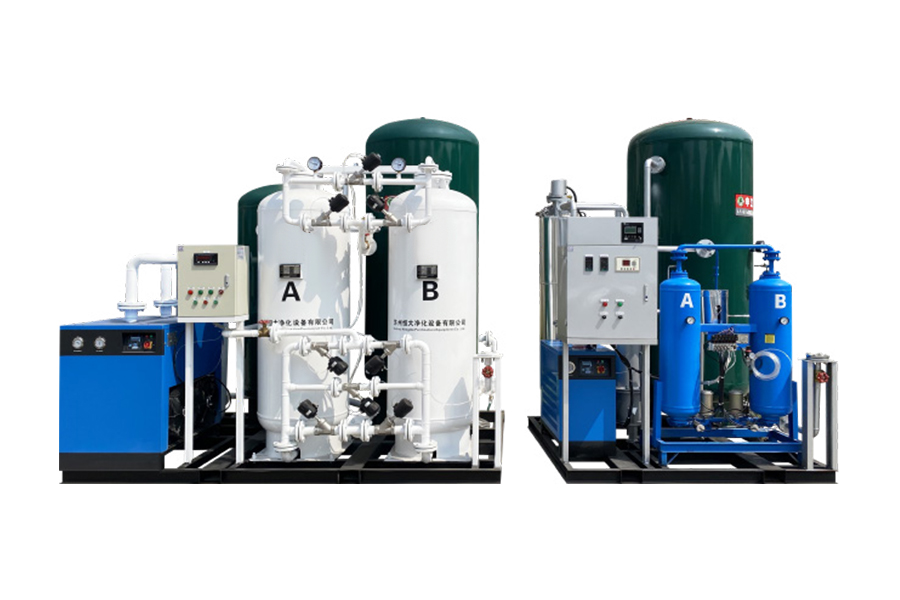
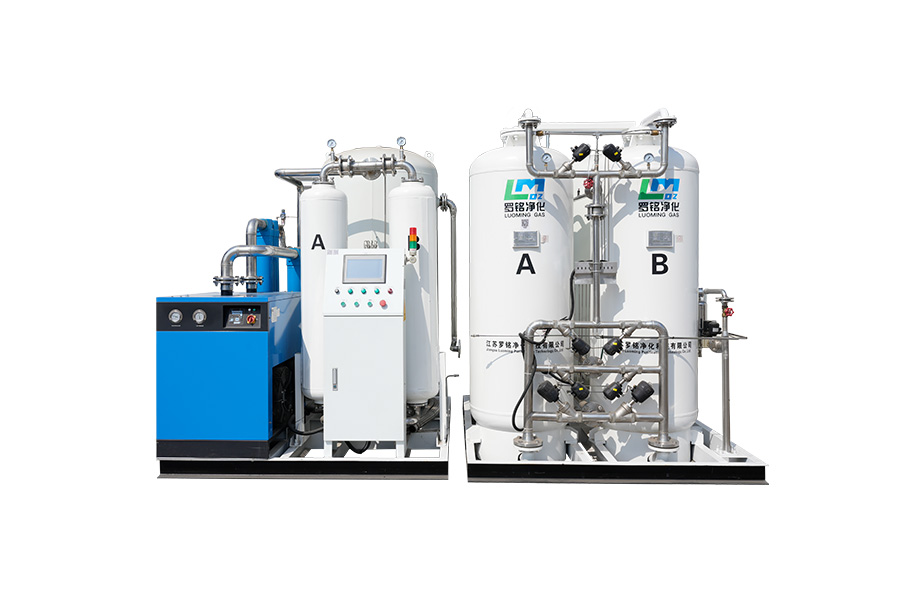
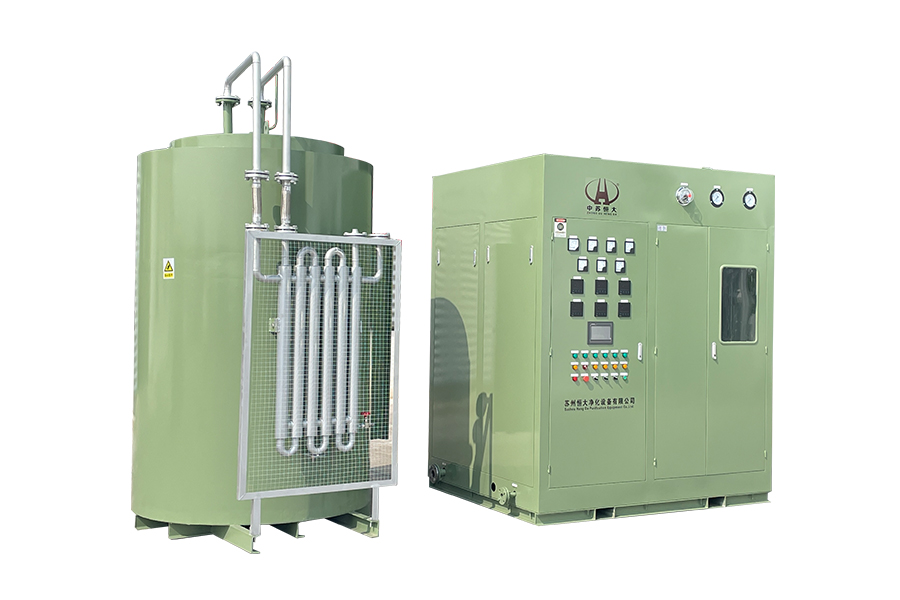
A pipeline crew wins an eighteen-month inerting contract at a remote oil field. The nearest air separation plant sits several hundred kilometers away, weekly cylinder deliveries would erode the margin, and there is no building on site to shelter equipment from dust and heat. This is precisely the job a container type PSA nitrogen generator was designed for: a complete nitrogen plant—air compressor, purification train, adsorption towers, analyzers and controls—pre-installed inside a standard ISO shipping container and ready to produce gas wherever the project moves.
Because the whole plant ships as one weatherproof unit, installation usually reduces to placing the container on level ground, connecting power and a nitrogen offtake line, then commissioning. There is no machine room to build and no piping to engineer piece by piece, and when the contract ends the unit moves to the next site instead of being dismantled. If you want to see how manufacturers package all of this, the container type PSA nitrogen generator page shows a complete factory configuration. Before comparing suppliers, though, it helps to understand what sits inside the box, how the process behaves in real conditions, and which specifications actually drive cost.
What Exactly Is a Container Type PSA Nitrogen Generator?
In plain terms, it is a complete PSA nitrogen plant engineered to fit inside a 20-foot or 40-foot ISO container. Everything the process needs travels in one box:
- A screw air compressor sized to the required nitrogen output
- A refrigerated dryer, dust filters and an activated carbon stage that strip water, oil and particles from the compressed air
- Twin adsorption towers filled with carbon molecular sieve, the heart of the separation process
- A nitrogen buffer tank that stabilizes pressure and purity at the outlet
- An online oxygen analyzer, dew point monitoring and a PLC control panel
- Container lighting, ventilation and, where the climate demands it, heating or cooling
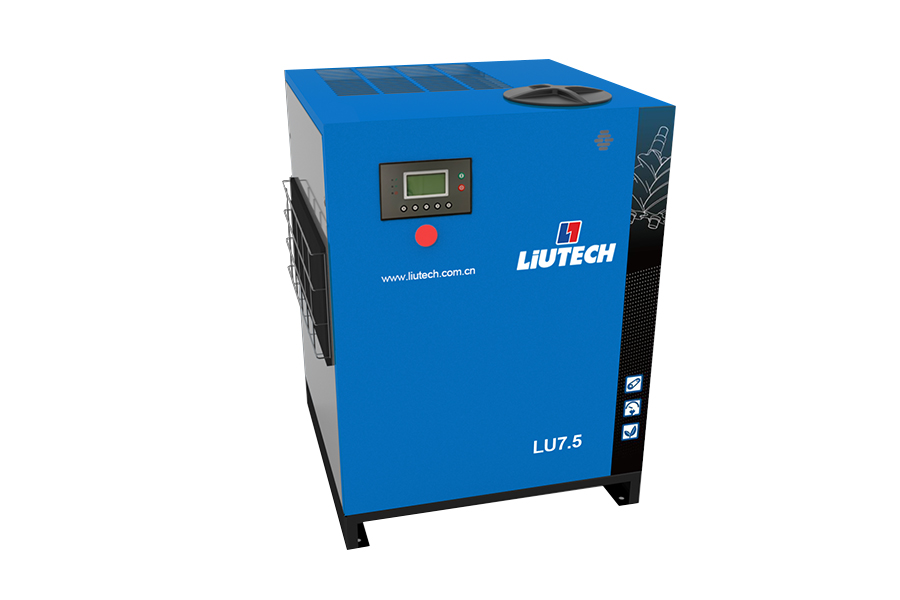 Integrated Compact Screw Air CompressorA pre-packaged screw compressor supplying clean compressed air to the containerized PSA nitrogen plant, with plug-and-play installation, built-in cooling, and reliable performance under high pressure ratios.View Product →
Packaging matters as much as the components. Because the manufacturer assembles, pipes and tests the complete plant before it leaves the factory, the unit arrives as a single certified freight container rather than a pile of skids that must be integrated on site. That one difference removes the most common source of commissioning delays: mismatched interfaces between the compressor, dryer and separation modules that were never run together.
How the PSA Process Works Inside the Box
PSA stands for pressure swing adsorption. The working medium is carbon molecular sieve, a highly porous carbon whose pores admit oxygen molecules slightly faster than nitrogen molecules. Clean, dry compressed air at roughly 7 to 8 bar enters one tower; oxygen, carbon dioxide and residual moisture are captured on the sieve surface while nitrogen flows out at the set purity. After about a minute of adsorption, the valve logic switches flow to the second tower and the first depressurizes, releasing the trapped gases so the sieve is ready for its next cycle. The towers alternate continuously, which is why output stays steady around the clock with no operator input beyond routine checks.
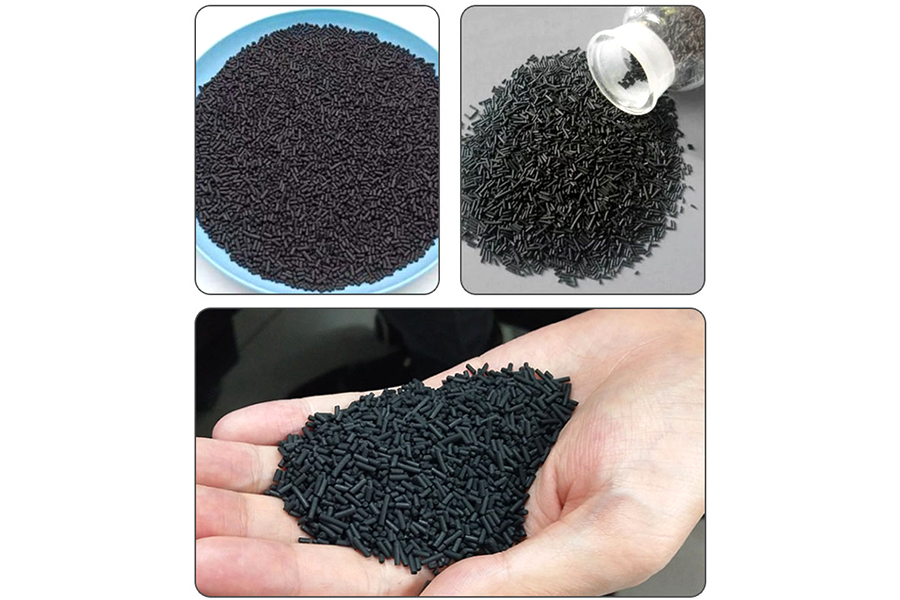 Carbon Molecular Sieve for PSA Nitrogen GenerationThe adsorbent at the heart of the PSA process, whose micropores separate oxygen from nitrogen by diffusion rate, enabling continuous nitrogen output at purities from 95% up to 99.9%.View Product →
Standard single-stage PSA covers purities from roughly 95% to 99.9%. This is where a competent supplier earns their fee: purity should match the process, not be set as high as possible, because every additional point of purity consumes more compressed air per cubic meter of nitrogen. Where an application genuinely requires 99.999%, a purification module with a catalytic deoxygenation stage and final dryer is added downstream. At those settings the nitrogen dew point typically falls between -40°C and -60°C, dry enough for pipeline, instrumentation and powder-transfer duty.
Container, Box or Trailer: Choosing the Mobile Format
Containerization is one of several ways to make a nitrogen plant movable, and the differences become obvious quickly on real projects:
How the common mobile nitrogen plant formats compare on site
| Format |
Best suited to |
Key strengths |
Trade-offs |
| Container type (20/40 ft ISO) |
Remote oil fields, mines, long-duration outdoor projects, export supply |
Fully weatherproof; whole plant tested at the factory; ships as standard freight |
Needs a crane or forklift and level ground; higher tare weight |
| Box/chassis type |
Indoor or sheltered installations with limited space |
Compact footprint; fast positioning; convenient indoor maintenance |
Limited weather protection; capacity usually capped by cabinet size |
| Trailer type |
Frequent relocation, service fleets, emergency standby |
Towable on public roads; fastest moves between sites |
Capacity and air treatment limited by towable weight |
| Fixed skid-mounted |
Permanent plant rooms with stable demand |
Lowest cost per Nm³ at large flows; simplest maintenance access |
Requires a building, foundations and longer on-site assembly |
A practical rule of thumb: if the unit will stay at one site for months and must survive rain, dust and heat, choose the container. If it has to move weekly with a service crew, a trailer wins. If it lives indoors beside the production line, a box-type cabinet unit is usually the more economical answer.
Where Containerized Nitrogen Earns Its Keep
Mobile PSA units see the heaviest use wherever nitrogen demand is remote, temporary, or both:
- Oil and gas: pipeline purging and commissioning, nitrogen injection to support reservoir pressure, and tank blanketing during turnaround maintenance—routine work across the petroleum industry
- Coal mining: injecting inert gas into sealed goaf areas to suppress spontaneous combustion
- Chemical plants: purging vessels and transfer lines to a safe state before maintenance windows
- Agriculture: purging controlled-atmosphere granaries at depots far from any gas pipeline network
- Food processing: backing seasonal modified-atmosphere packaging lines and cold-chain facilities without a long-term gas contract
The common thread is that demand sits far from a dependable supply, or ends when the project does. A containerized generator converts those jobs from a logistics problem—delivery schedules, cylinder rentals, liquid nitrogen lost to boil-off—into an operating cost measured mostly in electricity, with carbon molecular sieve replacement measured in years rather than weeks.
Specifications to Lock Down Before You Buy
Two buyers can ask for "a nitrogen generator" and receive very different machines. Fix these numbers before requesting quotations:
- Flow and purity together. Capacity in Nm³/h must be quoted at the purity you actually need; output drops and air consumption climbs as purity rises, so a figure quoted without purity is meaningless.
- Delivery pressure. PSA units typically discharge around 5 to 8 bar. If your process—downhole injection, for example—needs more, plan for a booster compressor from the start.
- Dew point target. Pipelines, instrumentation and powder conveying each have different moisture tolerances; confirm the dryer design matches.
- Ambient conditions. PSA performance is sensitive to intake air temperature, so in hot or high-altitude locations ask for derating data and confirm the container's ventilation and cooling design.
- Air-to-nitrogen ratio. A high-purity system can consume roughly twice its nitrogen output in compressed air, and more as purity climbs, which makes compressor efficiency and local electricity prices the dominant running cost.
- Monitoring and data. An online oxygen analyzer for purity, a dew point sensor and a PLC with remote access let one operator supervise the plant and catch drift early.
- Documentation. A factory acceptance test with recorded purity, flow and dew point figures, plus general arrangement drawings, should come standard rather than on request.
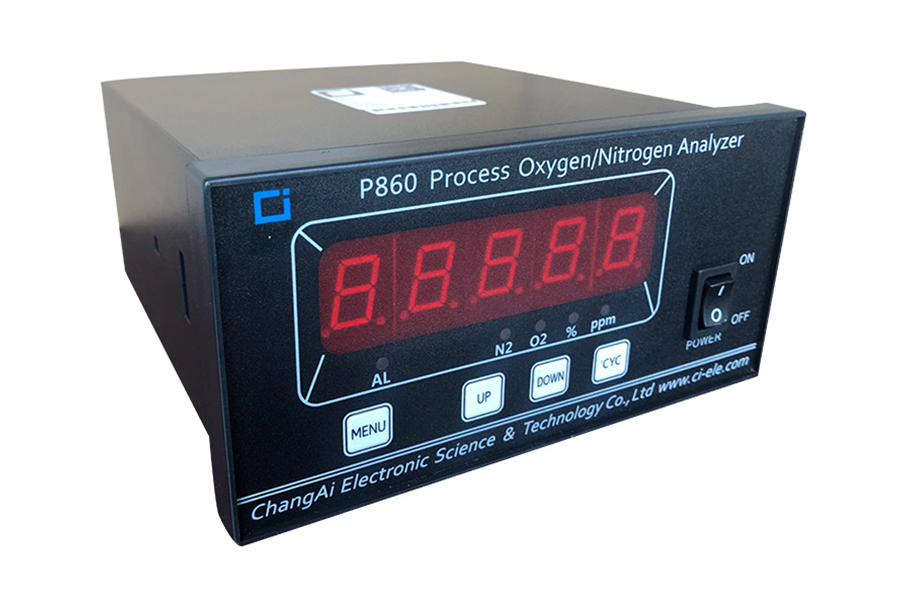 P860 Nitrogen Oxygen AnalyzerAn online analyzer with an ion current oxygen sensor that verifies nitrogen purity in real time, helping buyers confirm the generator keeps meeting its specified purity over years of service.View Product →
Items 1 through 3 define the machine; items 4 through 7 largely decide whether it still performs as promised in year three.
Finally, weigh commissioning and after-sales support as heavily as the technical data sheet. A containerized plant is only "plug and produce" if someone starts it up alongside your operators, trains them, and answers the phone when purity drifts eight months later. This is where a manufacturer's own service record is worth checking: teams that dispatch engineers for on-site commissioning and follow-up maintenance—Luoming handles this for customers ranging from a Jiangsu Yan cheng nitrogen installation to overseas projects—and that produce their own molecular sieve and spare parts will keep a remote container running without waiting on third parties.
Bring your flow profile, purity requirement, delivery pressure, ambient temperature range and expected project duration to the first conversation, and ask the manufacturer to size the container around your data rather than fit your project to a catalog model. That single habit prevents most of the expensive surprises—undersized compressors, purity shortfalls in summer heat, boosters bolted on as afterthoughts—that turn a good mobile nitrogen plant into a constant service call.





 English
 русский
 Français
 Español
 عربى
عربى