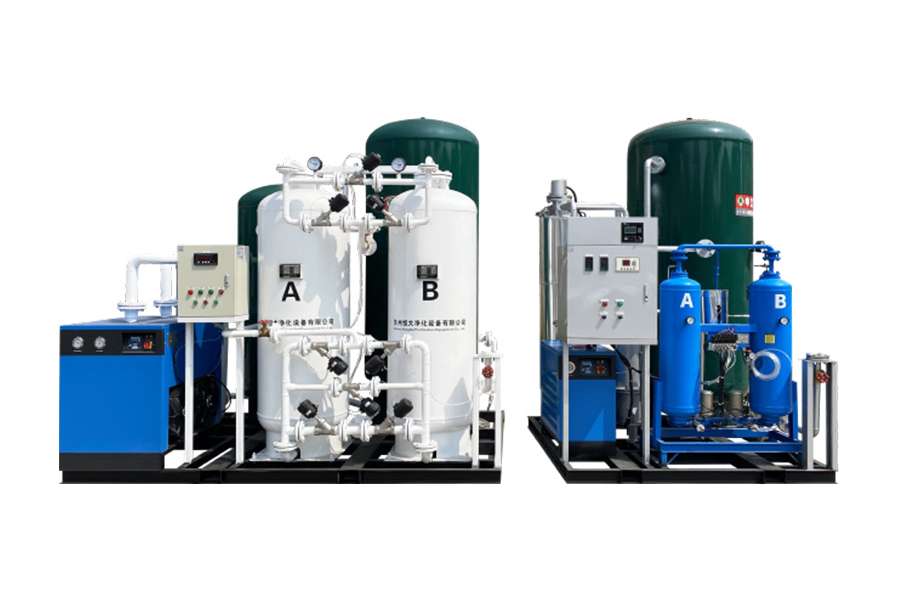
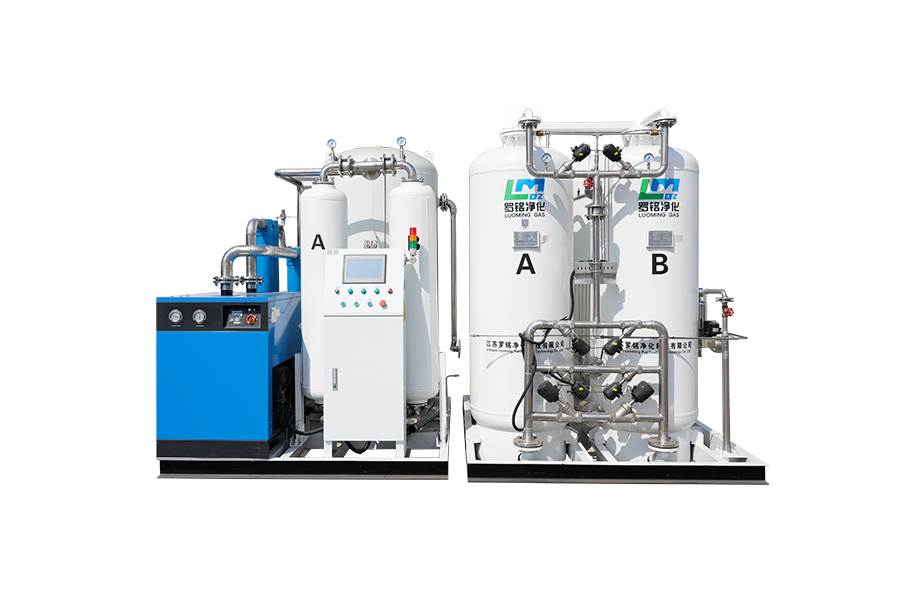
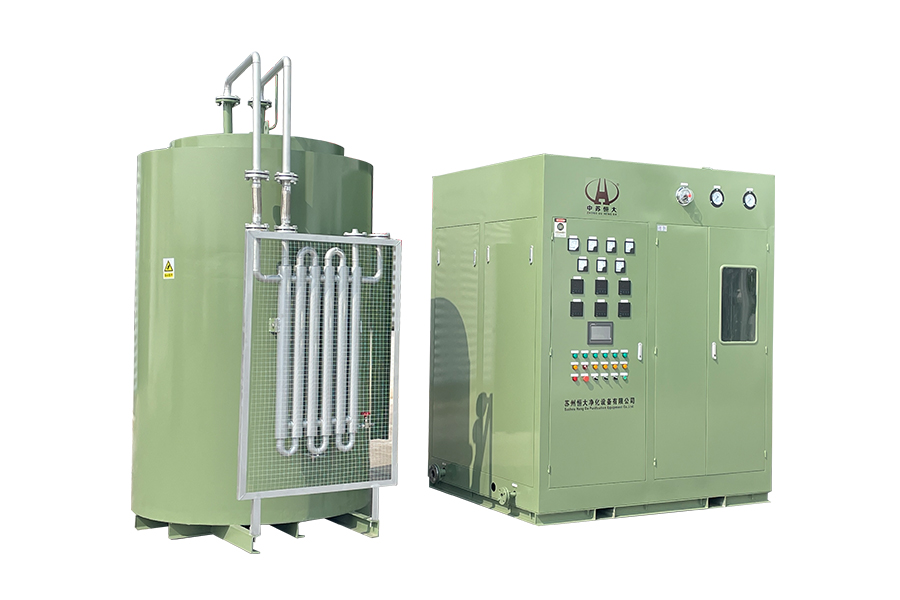
Two suppliers quote 99.999 percent nitrogen at 50 Nm3/h. One needs a hydrogen feed, a heated purifier and a 3.0 MPa rated vessel. The other reaches the same figure with a carbon bed and a standard 0.8 MPa skid. Both quotes are honest and both will pass a factory test, because neither states the measurement basis, the dew point, or the turndown the figure was written against.
That gap between a headline number and a real operating guarantee is where most high purity nitrogen projects lose time. A specification becomes readable only when three things sit next to each other: the purity tier, the conditions the tier is guaranteed under, and the way purity will be measured once the plant is running.
What High Purity Really Means on a Nitrogen Spec Sheet
High purity on a nitrogen spec sheet means residual oxygen and moisture measured at the delivery point, not the headline percentage on the datasheet. The percentage is shorthand; oxygen in ppm and dew point in degrees C are the numbers the process actually experiences.
A practical definition: a high purity PSA nitrogen generator is a pressure swing adsorption system that separates nitrogen from compressed air on carbon molecular sieve, then passes the product gas through a catalytic or adsorptive purification stage so that residual oxygen stays near or below 10 ppm and the pressure dew point stays below about -60 C at the point of use.
Three quoting habits cause most of the confusion. Some suppliers quote oxygen on a dry basis and moisture separately, others quote a combined figure. Some quote purity at the generator outlet with the buffer tank empty, others quote it at a stable continuous draw. And many quote the best number the system reached during commissioning rather than the number it holds at 40 C ambient in August.
Typical purity tiers for PSA nitrogen and the oxygen and moisture limits that normally accompany them.
| Purity tier |
Residual oxygen |
Pressure dew point |
Common duty |
| 99.9 percent |
around 1,000 ppm |
-40 C |
Laser cutting assist gas, tank blanking, pneumatic transfer |
| 99.99 percent |
around 100 ppm |
-55 C |
Reflow soldering, food flushing, pharmaceutical transfer |
| 99.999 percent |
under 10 ppm |
-65 C |
Electronics assembly, bright annealing, glove boxes |
| 99.9995 percent and above |
under 5 ppm |
-70 C |
Semiconductor tool feed, analytical instruments |
Read that table as a cost ladder rather than a quality ladder. Each step up changes air demand, sieve volume and purification hardware, and the process either needs the step or it does not.
How a High Purity System Builds That Purity, Stage by Stage
A high purity system builds its number in five stages, and a weakness in any one of them shows up as a slow drift in outlet oxygen rather than a clean breakdown.
- Compression. A screw compressor delivers air at 0.7 to 1.0 MPa. Above that band, energy is spent with no gain in separation.
- Air treatment. A refrigerated dryer with coalescing and carbon filters brings pressure dew point to about 5 C and residual oil below 0.01 mg/m3. This stage protects the sieve more than it protects the purity reading.
- Adsorption. Twin carbon molecular sieve beds alternate between adsorption at line pressure and regeneration near atmospheric pressure, with cycles between roughly 20 and 60 seconds. Oxygen migrates into the sieve pores while nitrogen passes through.
- Buffering. A product receiver sized for about 30 seconds of peak flow absorbs the pressure swing of each switch so the downstream purifier never sees it.
- Purification. The last stage removes the oxygen and moisture the sieve could not, and this is where the final two nines come from.
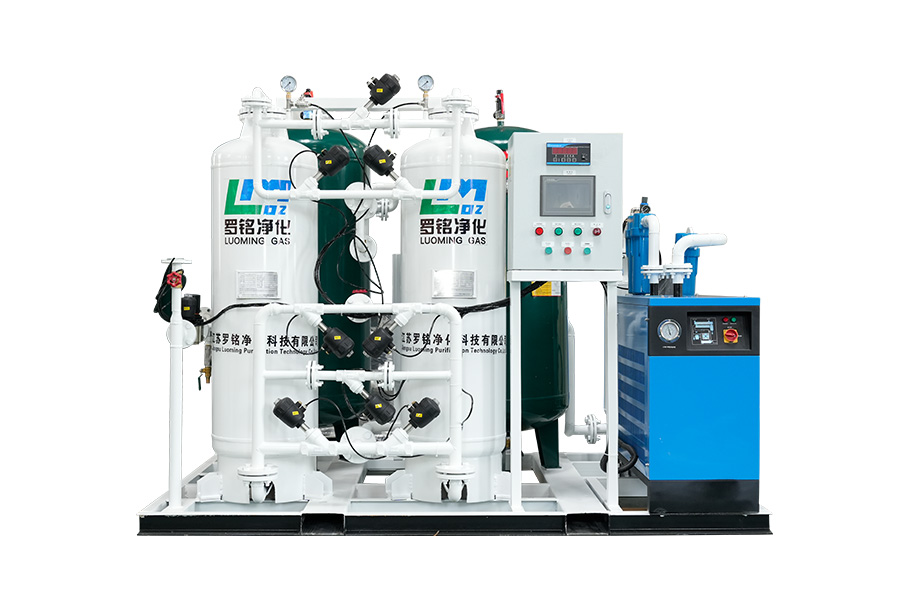 High Purity PSA Nitrogen GeneratorOn-site PSA nitrogen generator using carbon molecular sieve and alternating towers to reach up to 99.999% purity; relevant when sizing sieve capacity for real duty cycles and long-term purity.View Product →
Sieve performance is set by bulk density and cycle time, not by brand alone. A bed that is ten percent undersized for the design flow will still pass a commissioning test at 70 percent load, then fail the same test six months later at full load.
Sizing the sieve for the real duty cycle instead of a nameplate flow is the most reliable way to protect a purity guarantee across a ten-year life.
Getting the Last 100 ppm: Downstream Purification Choices
The final two nines are added, not adsorbed. Carbon molecular sieve alone rarely holds below about 100 ppm oxygen across a full service life, so high purity systems install a purification stage downstream of the buffer tank.
There are two mainstream routes, and the choice is usually made by what the site already has rather than by the purity target. Both appear in the high purity nitrogen generator range and both can be supplied as a skid or retrofitted to an existing PSA plant.
Carbon bed polishing
- No hydrogen supply and no dosing control
- Outlet oxygen typically 5 to 10 ppm
- Suits plants without hydrogen infrastructure
- Bed material needs scheduled replacement
Catalytic deoxygenation
- Small hydrogen addition, residual H2 under 1 ppm
- Outlet oxygen can reach 1 to 3 ppm
- Needs a stable hydrogen source or a small generator
- Reactor and catalyst require periodic service
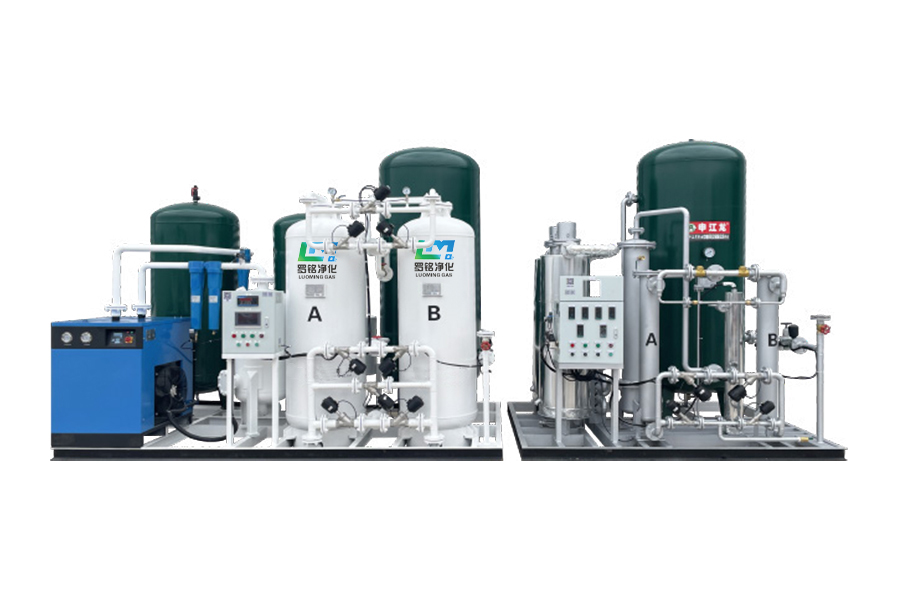 LMFC Series Carbon Purification Nitrogen GeneratorCarbon-purification route for high-purity nitrogen, using alternating reactors and carbon-supported oxygen removal; compare consumable rates and reactor temperature when selecting a supply route.View Product →
Whichever route is chosen, the consumptions belong in the enquiry: catalyst or bed life in hours, hydrogen consumption per cubic metre of nitrogen, and the reactor temperature. Those are the costs that decide whether the last two nines are worth buying.
A purity guarantee without a stated measurement point is not a guarantee. Ask for the sample port location, the analyzer model, and the ambient temperature the figure assumes.
Four Operating Variables That Quietly Break a Purity Guarantee
Inlet air quality, pressure stability, flow turndown and ambient temperature cause most purity complaints that are not equipment faults, and each one is visible in trend data before it becomes a rejection.
0.01mg/m3 residual oil allowed at the sieve inlet
5 Cmaximum inlet pressure dew point
0.05MPa pressure band allowed across a full cycle
35 Cambient ceiling before the plant needs derating
Turndown deserves its own note. A plant designed for 100 Nm3/h at 99.999 percent may only hold that purity between 60 and 100 percent of design flow; below that, cycle times stretch and the sieve never fully regenerates. If the process runs at 30 percent load overnight, say so in the enquiry.
- Plot the analyzer reading against ambient temperature; a purity dip that tracks afternoon heat points to dryer performance, not sieve failure.
- Log differential pressure across the pre-filter; a rise of 0.05 MPa usually means oil carryover is reaching the sieve.
- Compare product flow against the design point; unrecorded demand growth is a common cause of gradual purity loss.
- Record regeneration pressure; a sticking valve appears here weeks before it appears at the analyzer.
A system rated at 99.999 percent in a 20 C test room is not the same machine at 40 C. Derating curves exist for a reason, and they should be requested in writing rather than assumed.
Reading Purity, Flow and Cost Together
Every additional nine costs compressed air, and compressed air is the largest operating cost in a PSA plant, usually outweighing sieve replacement over a ten-year life.
The practical consequence is that purity should be specified per point of use, not per plant. A site running laser cutting, packaging and a small electronics line rarely needs the same tier everywhere, and splitting the supply into two headers is often cheaper than purifying everything to the highest number. Nitrogen purity in electronics manufacturing is a good example: what matters is the level at the specific tool, not at the plant gate.
Rule of thumb: each extra nine roughly doubles sieve volume and adds 25 to 40 percent to specific power. If the process tolerates 99.9 percent, buying 99.999 percent is a permanent operating cost with no return.
Verifying at the Point of Use
Purity should be verified where the gas enters the process, not at the generator outlet, because the delivery system is part of the purity chain.
- Trace oxygen at the point of use, with a sample line short enough that air ingress is impossible.
- Dew point at the same point, measured under line pressure rather than after expansion.
- Carbon dioxide and carbon monoxide wherever food or pharmaceutical contact applies.
- Particle and oil carryover wherever the gas touches a sterile surface.
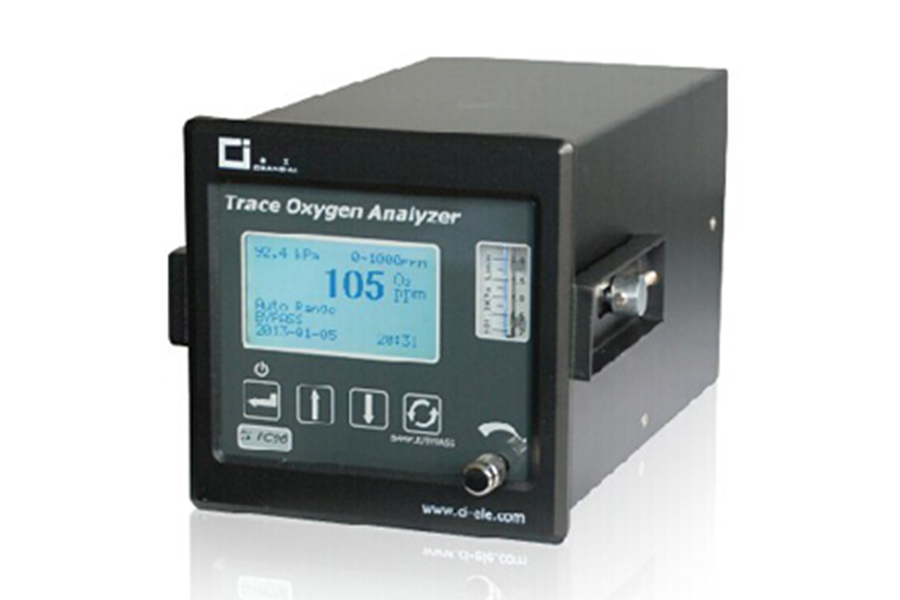 CI-PC96 Trace Oxygen AnalyzerFuel-cell analyzer for trace oxygen measurement with multiple ppm and percent ranges, automatic calibration and RS485/RS232 output, suited to verifying purity at the process entry.View Product →
A permanent trace oxygen analyzer on the header turns purity from a claim into a trend line, and it shows when a purifier bed is exhausting, which is the maintenance signal that matters most.
Sampling error is the most common reason a sound system appears to fail. A three-metre stainless sample line with a proper regulator and a flow of 0.5 to 1 litre per minute reads within a few ppm of truth; a twenty-metre plastic line does not.
Frequently Asked Questions
Short answers to the questions that come up in most high purity nitrogen enquiries.
Is 99.999 percent nitrogen always better than 99.99 percent?
No. The higher tier costs more air, more sieve and usually a purification stage. It is worth paying for where the process is oxygen-sensitive at ppm level, such as tool feed gas or bright annealing of reactive metals. For laser cutting assist gas or general blanking, 99.9 to 99.99 percent is normally sufficient and far cheaper to run.
Can a high purity PSA generator run without hydrogen?
Yes, if it uses carbon bed polishing instead of catalytic deoxygenation. Carbon polishing typically holds outlet oxygen around 5 to 10 ppm with no hydrogen supply, which covers most electronics and heat treatment duties. Catalytic systems reach lower oxygen levels but need a stable hydrogen source and dosing control.
What dew point should be specified?
Specify a pressure dew point at the point of use and state the pressure alongside it. Most high purity duties call for -60 C or lower at line pressure. Quoting an atmospheric dew point without the pressure reference makes the figure impossible to compare between suppliers.
How long does carbon molecular sieve last?
With clean, dry inlet air, eight to ten years is realistic; with oil carryover or a failing dryer, two to three years is common. Sieve life is decided upstream by air treatment far more than by the sieve itself, which is why the pre-filter differential pressure log matters more than most maintenance records.





 English
 русский
 Français
 Español
 عربى