Cylinder deliveries arrive late. Prices spike without warning. And in remote regions or developing markets, finding a reliable oxygen supplier can take days. These are not edge cases — they are the daily reality for thousands of hospitals, clinics, and industrial facilities worldwide. An on-site Oxygen Filling Station cuts through all of that by letting you generate, compress, and fill cylinders in-house, on demand.
This guide covers how the system works, what purity you actually need, which industries benefit most, and what to check before choosing a supplier.
Why On-Site Generation Changes the Economics
The traditional model — buying pre-filled cylinders from a distributor — has three hidden costs most buyers underestimate: the gas itself, the logistics, and the dependency. Once a facility installs an Oxygen Tank Filling Station, those recurring costs collapse into one: electricity to run the system.
The math favors on-site generation quickly for any operation consuming cylinders on a regular schedule. Beyond cost, there is a more important factor: continuity. Supply chain disruptions — whether from customs delays, local shortages, or regional conflict — do not shut down an on-site system. The raw material is ambient air.
For facilities in Africa, Southeast Asia, and Latin America — markets where Luoming's systems are actively deployed — this supply independence is often the primary driver of the purchase decision.
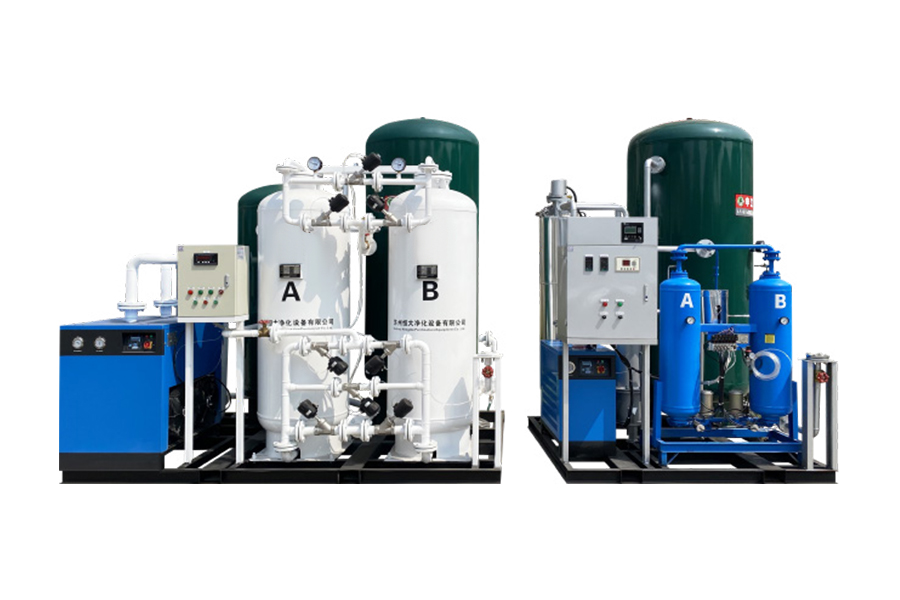
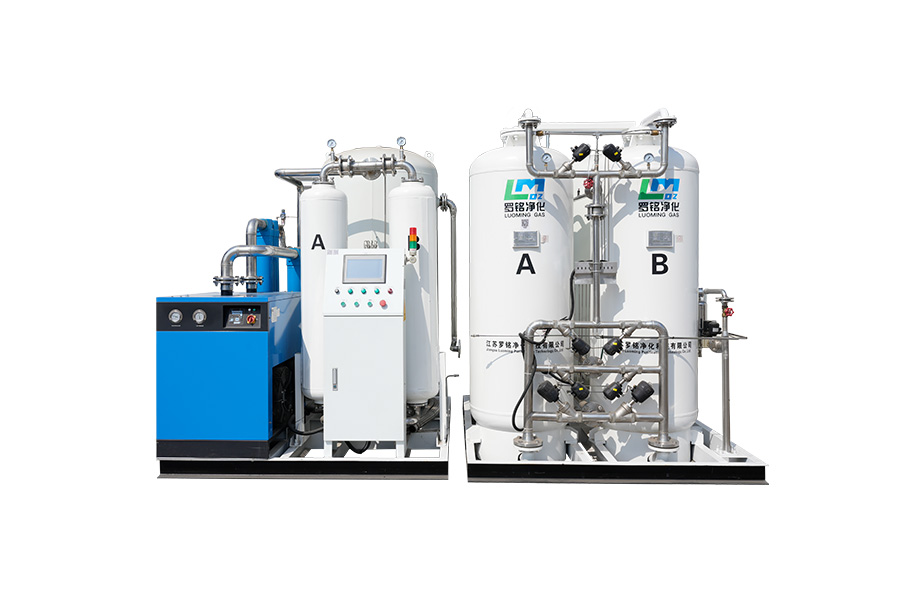
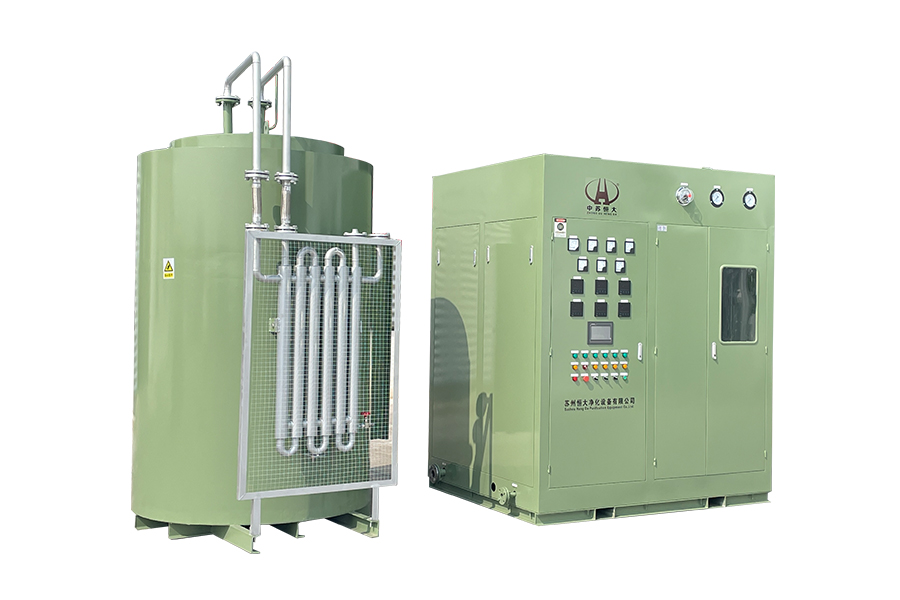
How an Oxygen Cylinder Filling Station Works: 5 Core Components
A complete Oxygen Cylinder Filling Station is not a single machine — it is a linked production chain. Understanding each component helps you size the system correctly and troubleshoot faster once it is running.
- Air Compressor — Draws in ambient air and compresses it as feedstock for the PSA process. Capacity here determines your total oxygen output ceiling.
- Adsorption Dryer — Removes moisture from compressed air before it enters the molecular sieve towers. Skipping or undersizing this step is the most common cause of sieve degradation.
- PSA Oxygen Generator — The core unit. Using high-quality zeolite molecular sieve as the adsorbent, the PSA system separates oxygen from nitrogen under pressure, cycling two adsorption towers alternately via a PLC-controlled pneumatic valve system to produce a continuous oxygen stream at 93%±2% or up to 99.5% purity.
- Gas Booster (Oxygen Compressor) — Raises oxygen pressure high enough to fill cylinders — typically up to 150 bar or higher.
- Gas Filling System with Sterilizing Filter — The manifold and filling rack where cylinders connect. A sterilizing filter on the outlet ensures the gas entering each cylinder meets medical or industrial purity requirements before sealing.
Systems can be supplied as open-frame skids or packaged inside a containerized unit — a popular option for clients who need a deployable, weatherproof setup in regions without purpose-built plant rooms.
Purity Options: 93% vs. 99.5% — Which One Do You Need?
This is the question most buyers ask too late. 93%±2% PSA oxygen meets the requirements of the majority of medical oxygen applications — hospital pipeline systems, ventilators, ICU wards, and surgical theaters — and is recognized under international pharmacopoeia standards when the system carries the appropriate certifications.
99.5% high-purity oxygen is required for specialized industrial processes: precision metal cutting, laser-assisted fabrication, certain semiconductor applications, and laboratory use where trace nitrogen or argon is unacceptable. It demands additional purification steps and a longer production cycle per unit volume.
According to WHO technical specifications for health facility oxygen systems, on-site PSA generators producing oxygen at ≥90% purity are a recognized and viable oxygen source for clinical settings when properly validated and maintained. That threshold is comfortably met by standard PSA output.
Who Benefits Most From an On-Site Oxygen Refill Station?
The business case is strongest wherever cylinder logistics are painful. Three categories of buyer consistently see the fastest return on investment:
- Hospitals and clinics in remote or developing regions — High per-cylinder cost, unreliable delivery, and the ability to serve surrounding medical facilities by selling surplus filled cylinders make on-site generation a clear operational win.
- Industrial facilities with moderate-to-high oxygen consumption — Metal cutting, stone processing, wastewater treatment, and aquaculture operations running more than a few cylinders per week will usually break even within 12–24 months.
- Oxygen distribution businesses — An Oxygen Refill Station can serve as a local production hub, filling cylinders for resale to multiple customers — a model that has proven particularly successful for Luoming's clients in Côte d'Ivoire, Ghana, Congo, and Indonesia.
What to Look for in a Supplier: 4 Non-Negotiables
Not every manufacturer producing these systems is equipped to support a cross-border installation. Here is what actually matters when evaluating a supplier:
- Certifications that match your end market. Medical applications require ISO 13485 and CE at minimum. Industrial systems should carry ISO 9001. Verify these certificates are current and product-specific — not facility-level only.
- Customization capability. Flow rate, discharge pressure, voltage compatibility, and containerization options vary by project. A supplier without in-house engineering will hand you a standard spec sheet and hope it fits.
- Proven track record in your region. Installation logistics, customs documentation support, and spare parts availability differ significantly between markets. Ask for customer cases from your target country or region, not just a list of past projects.
- After-sales support options. Remote video commissioning is acceptable for straightforward installations; complex setups benefit from on-site engineer support. Confirm which is available and at what cost before signing.
Jiangsu Luoming Purification Technology holds ISO 9001, ISO 13485, CE, SGS, and GMP certifications, and has served over 10,000 customers across more than 30 countries. Their team of 52 dedicated R&D engineers means custom system configurations — flow rates, container specs, purity targets — are handled in-house rather than outsourced.
The Bottom Line on Getting Started
Sizing an Oxygen Tank Filling Station correctly requires four inputs: your required oxygen flow rate (Nm³/h), target purity (%), discharge pressure (bar), and local power supply (V/Ph/Hz). With those numbers in hand, a qualified manufacturer can return a detailed proposal within 24–48 hours.
The technology is mature, the economics are well-documented, and for facilities paying monthly cylinder bills, the question is rarely whether to switch to on-site generation — it is which system and which supplier. Get the specifications right first, then evaluate on certification, customization, and support. In that order.





 English
 русский
 Français
 Español
 عربى
عربى