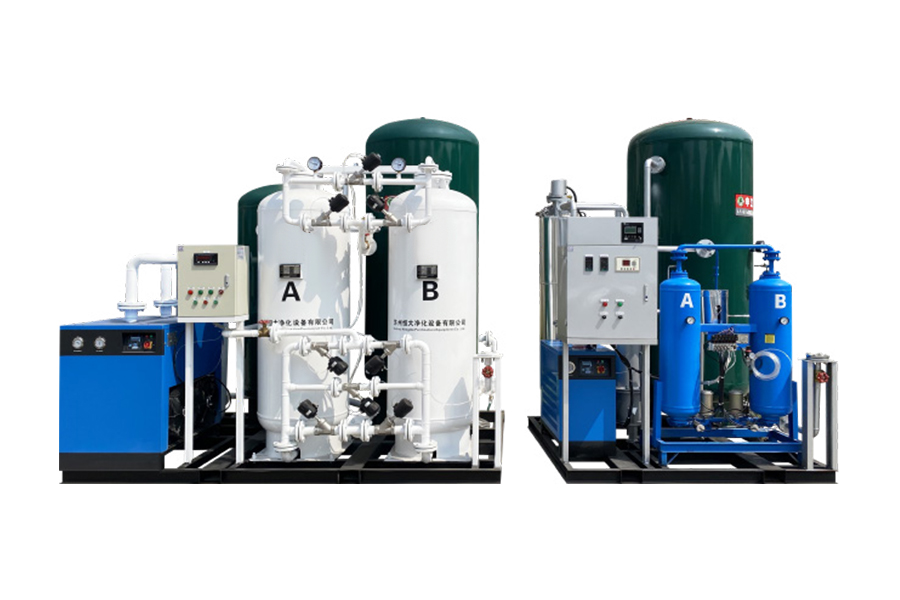
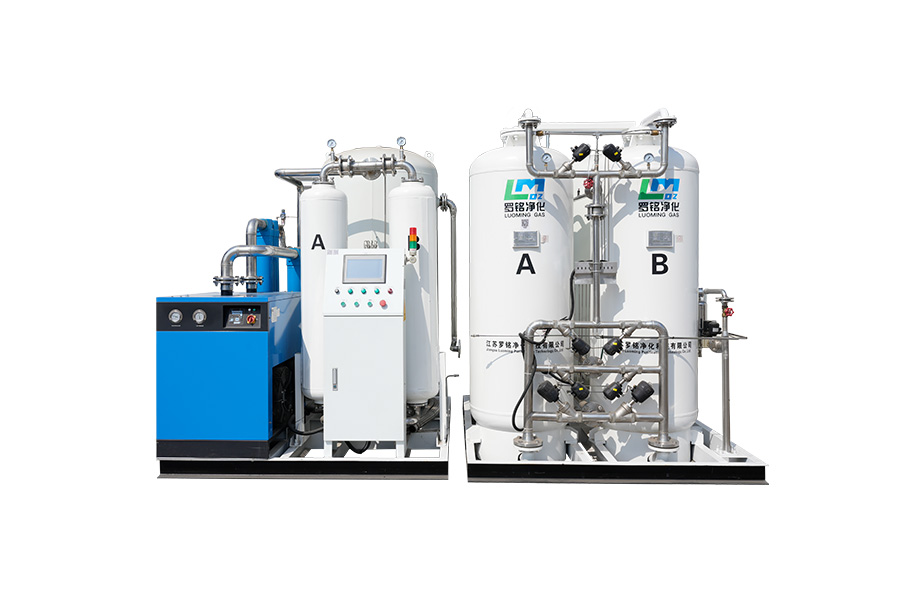
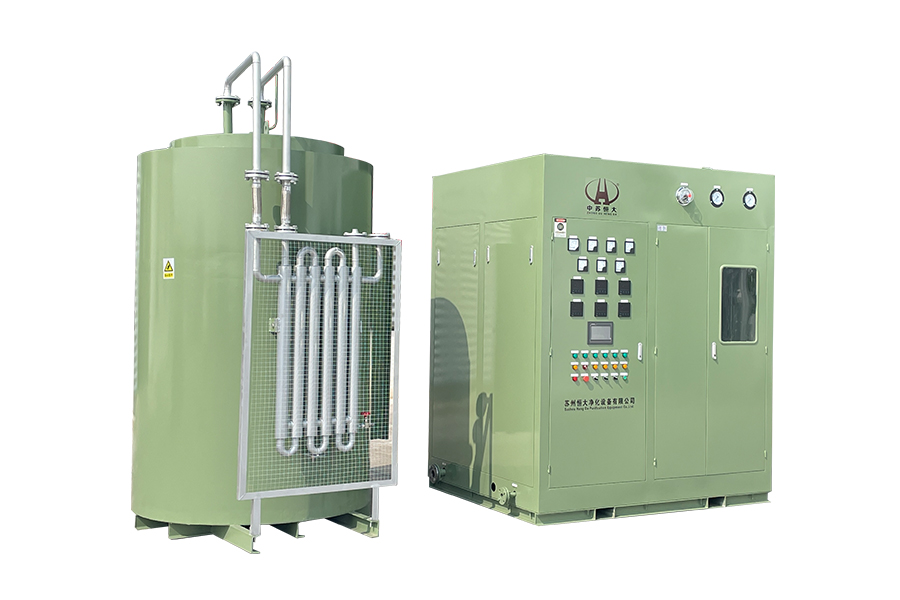
When a heat-treating shop, an electronics line or a laboratory runs short of hydrogen on a Friday afternoon, the problem is rarely the process itself. Cylinder and tube-trailer hydrogen carries delivery lead times, residual-pressure losses and a delivered price that can be several times the cost of making the same gas on site. The real question is whether the feedstock, purity grade and flow profile behind an onsite generator match the process it is meant to feed.
What an Industrial Hydrogen Generator Actually Delivers
An industrial hydrogen generator is a packaged system that produces hydrogen at the point of use from a feedstock such as water, ammonia or a hydrogen-rich process stream, and delivers it at a specified purity, pressure and flow rate.
The term is stretched in two directions that deserve separating. A laboratory unit feeding a gas chromatograph makes a few hundred millilitres per minute. A water-electrolysis kit sold for demonstration makes a mixed hydrogen and oxygen stream, usually labelled HHO, and is not a process-gas device. Industrial machines sit far above both, at roughly 1 to 3,000 Nm3/h of hydrogen and 0.5 to 3.0 MPa at the skid outlet.
Hydrogen generator: a unit that converts water, ammonia or a hydrogen-rich feed into a controlled hydrogen supply. Purity, pressure and turndown decide whether it fits a process; the name on the skid does not.
- Electrolysis systems split water with electricity and reach 99.999% after drying.
- Ammonia decomposition units crack liquid ammonia into a 75% hydrogen, 25% nitrogen mixture.
- PSA purification skids upgrade a hydrogen-rich feed on molecular sieve and carbon beds.
Feedstock Routes Compared: Electrolysis, Ammonia and PSA
The route is decided by three inputs: which feedstock you can buy reliably, what impurity level the process tolerates, and what the operating cost per kilogram of hydrogen looks like across a full year.
Onsite hydrogen generation routes compared by feedstock, outlet purity and dominant operating cost.
| Route |
Feedstock |
Typical outlet purity |
Practical scale |
Dominant operating cost |
| Water electrolysis |
Demineralised water plus electricity |
99.99% to 99.999% after drying |
1 to 500 Nm3/h |
Electricity |
| Ammonia decomposition |
Liquid ammonia plus furnace heat |
75% H2 and 25% N2 as cracked, above 99.99% after purification |
10 to 1,000 Nm3/h |
Ammonia supply and furnace duty |
| PSA purification |
Reformate, purge gas or cylinder banks |
99.9% to 99.999% |
10 to 3,000 Nm3/h |
Feed gas and adsorbent replacement |
The ranges above are typical for commercial skids. Verify every figure against a guaranteed performance point at rated flow before signing anything.
Buy the feedstock, not the machine. A generator that looks cheaper on the quotation can cost more per kilogram of hydrogen if electricity, ammonia or feed gas is expensive or unreliable where you operate.
How an Onsite Hydrogen Generator Works, Step by Step
Every route follows the same five-stage sequence, and each stage is a place where a specification can quietly go wrong.
Feed conditioning
Water is demineralised, ammonia is vaporised, or feed gas is filtered and pressure-regulated so that downstream beds see a stable, clean stream.
Conversion
Electrolysis cells, an ammonia cracking furnace or a reformer breaks the feedstock into a hydrogen-rich gas.
Purification
Pressure swing adsorption, catalytic deoxygenation or membrane stages remove the impurities the process cannot tolerate.
Analysis
Online dew point and trace oxygen analysers, plus ammonia slip measurement where relevant, prove the gas still meets specification at the outlet.
Pressure and delivery
A booster raises the gas to the pressure of the buffer bank, filling manifold or process header.
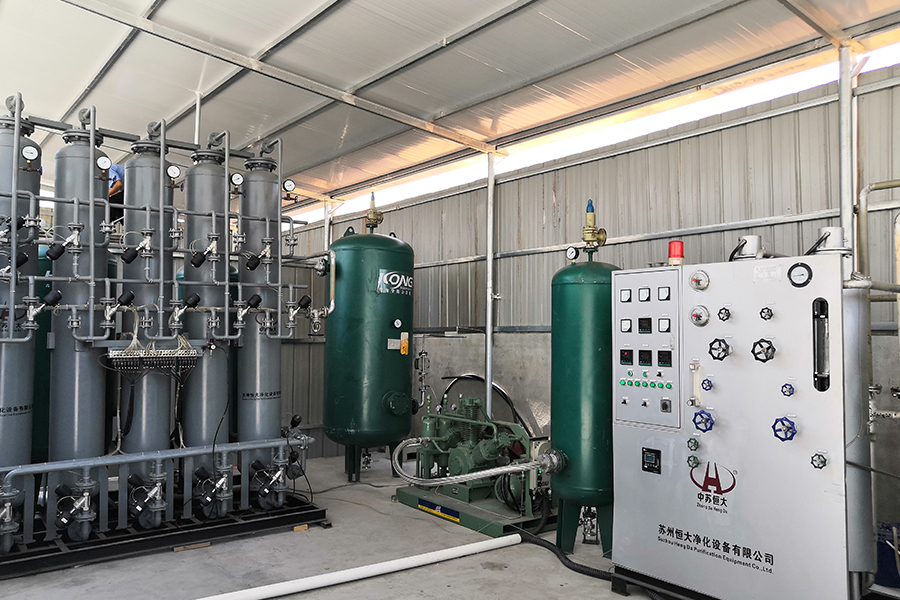 PSA High Purity Hydrogen Generator Purification DeviceUsed with ammonia decomposition gas generation, this purification device removes moisture and residual content and can deeply dry hydrogen, helium, oxygen, and other gases.View Product →
A PSA high-purity hydrogen generator normally packages purification, analysis and pressure control on one skid, which is why the analyser should be specified together with the adsorbent beds rather than added afterwards.
Purity Grades, Impurities and What the Analyser Must Catch
Purity is a stack of limits rather than a single number. Two suppliers can both quote 99.999% hydrogen and still differ by an order of magnitude on moisture, carbon monoxide or total hydrocarbons.
99.99%
Industrial grade for metallurgy, glass and general heat treatment
99.999%
Five-nines grade for electronics and semiconductor lines
ppm
Trace oxygen and moisture limits are written in parts per million
0.5-3.0 MPa
Typical skid outlet pressure before a booster stage
Ask for the impurity table, not the headline purity number. In bright annealing and sintering it is residual oxygen and moisture that decide whether an oxide layer forms, not the third decimal of the hydrogen figure.
The sample point matters as much as the number. A reading taken at the adsorber outlet during steady running is not the same as one taken at the end of a filling manifold after boosting.
Where Onsite Hydrogen Generation Pays Off
The payback is clearest where demand is steady, purity is demanding, and the alternative is delivered cylinders or a tube trailer.
- Metal heat treatment and bright annealing, where hydrogen and nitrogen are blended into a protective atmosphere.
- Electronics and semiconductor manufacturing, where moisture and trace oxygen drive device yield.
- Chemical and pharmaceutical hydrogenation, where catalyst poisons must stay below single-digit ppm.
- Glass, optical fibre and quartz processing, where hydrogen is part of the atmosphere rather than the fuel.
- Laboratory carrier and detector gas, where a generator replaces a cylinder that empties mid-sequence.
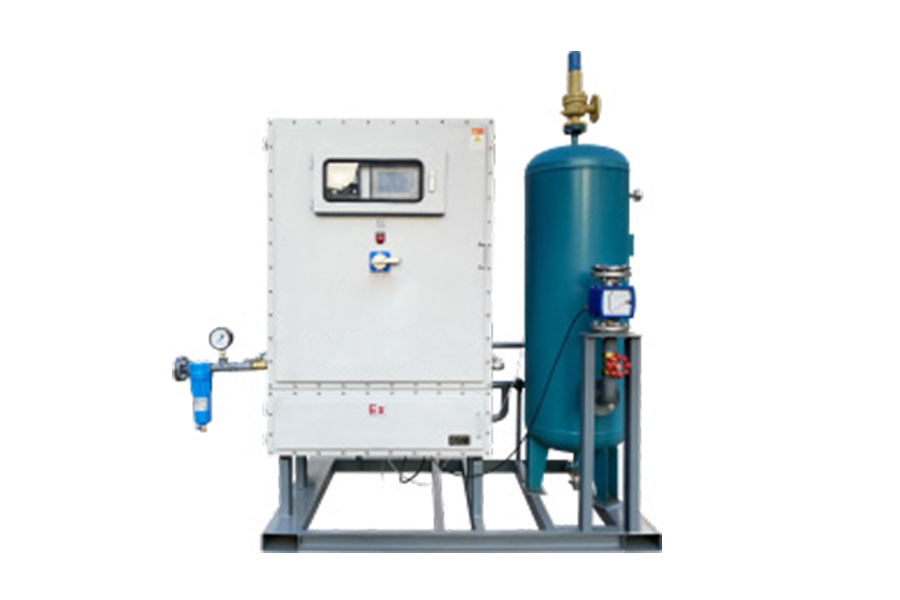 Hydrogen Nitrogen Ratio Device for Gas MixingMixes hydrogen and nitrogen to a specified ratio by controlling and continuously adjusting the lower-content gas flow, allowing heat treatment lines to trim atmosphere.View Product →
On heat treatment lines, a hydrogen-nitrogen ratio device trims the atmosphere to a set hydrogen fraction instead of running the generator at full output.
Hydrogen demand is rarely flat. Size for the peak flow, control for the average flow, and keep a small cylinder bank as a buffer for maintenance windows.
Ammonia Decomposition: Hydrogen Where You Cannot Pipe It
Ammonia decomposition makes hydrogen on site from liquid ammonia, which is far easier to transport and store than compressed hydrogen.
The reaction runs at roughly 800 to 850 degrees Celsius over a nickel-based catalyst. Two volumes of ammonia yield one volume of nitrogen and three volumes of hydrogen before purification, so the cracked gas is a 75% hydrogen, 25% nitrogen mixture with a small ammonia slip that must be adsorbed.
Cracked gas used directly
Feeds furnaces, brazing, sintering and atmosphere lines where a reducing gas is enough. No PSA stage, lower capital cost, one less service item.
Cracked gas plus purification
Adds a PSA or catalytic stage that removes nitrogen and residual ammonia. Required for electronics, laboratory and hydrogenation duty above 99.99%.
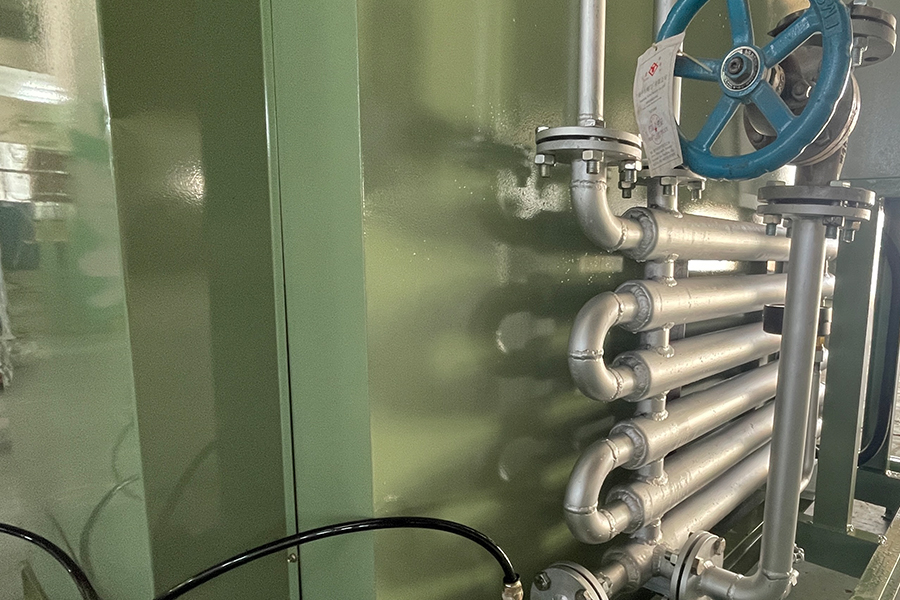 Square Ammonia Decomposition Hydrogen Production UnitHigh-capacity unit generates 75% hydrogen and 25% nitrogen mixed gas for large-scale metal heat treatment and chemical processes; review before furnace duty and catalyst life.View Product →
For the reaction side of the decision, the technical points of hydrogen production from ammonia decomposition are worth reading before you fix furnace duty and catalyst life.
Where ammonia is cheap and hydrogen logistics are difficult, this route is often the only one that keeps a furnace running through a full shift without a delivery.
Specification Checklist Before You Place an Order
Most hydrogen projects that disappoint are not badly built; they are badly specified.
- Flow profile: minimum, average and peak demand, plus how fast the process ramps.
- Purity and impurity limits for oxygen, moisture, nitrogen, carbon monoxide and total hydrocarbons, each with a number.
- Outlet pressure, and whether a booster or filling manifold sits inside or outside the supply scope.
- Utilities: power quality, cooling water, demineralised water quality, or ammonia storage and its permitting.
- Ventilation, gas detection and the classification of the room the skid will stand in.
- Service access: how adsorbent and catalyst beds are replaced, and how long the process can run without them.
Ask for one guaranteed performance point that applies to flow, purity and pressure at the same time. Three best-case figures from three separate tests do not protect your process.
Frequently Asked Questions About Hydrogen Generators
What is the difference between a hydrogen generator and an HHO generator?
An HHO system deliberately keeps hydrogen and oxygen mixed and is aimed at demonstrations or combustion experiments. An industrial hydrogen generator separates, dries, purifies and analyses the hydrogen before delivery, so the gas can be used in a process with a documented purity limit.
What purity can an onsite hydrogen generator reach?
Commercial skids reach 99.9% to 99.999% hydrogen, with moisture and trace oxygen usually the limiting impurities. The guaranteed figure must be quoted at rated flow and at the agreed sample point.
Can a hydrogen generator replace cylinder or tube-trailer supply completely?
In most steady-demand processes it can, but keeping a small backup bank is normal practice for maintenance windows and short peaks. Sizing the generator on peak flow alone inflates capital cost and lowers the load factor.
How long do adsorbent and catalyst beds last?
Molecular sieve and carbon beds in PSA skids are typically replaced every two to four years, and nickel catalyst in ammonia crackers every three to five years, depending on feed quality and start-stop cycles.
Rule of thumb: a clean feed and continuous operation push bed life to the long end of every range. Daily cycling pulls it to the short end.





 English
 русский
 Français
 Español
 عربى
عربى