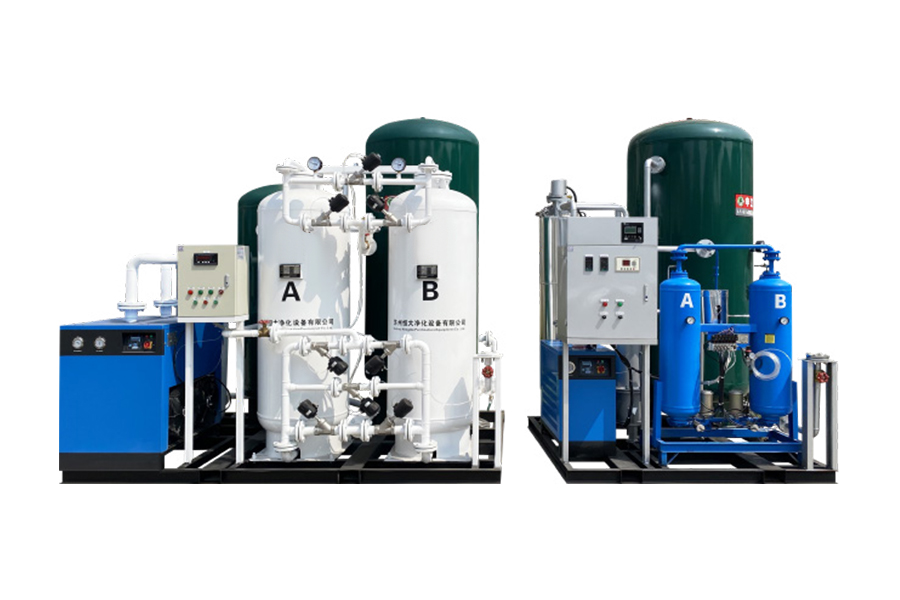
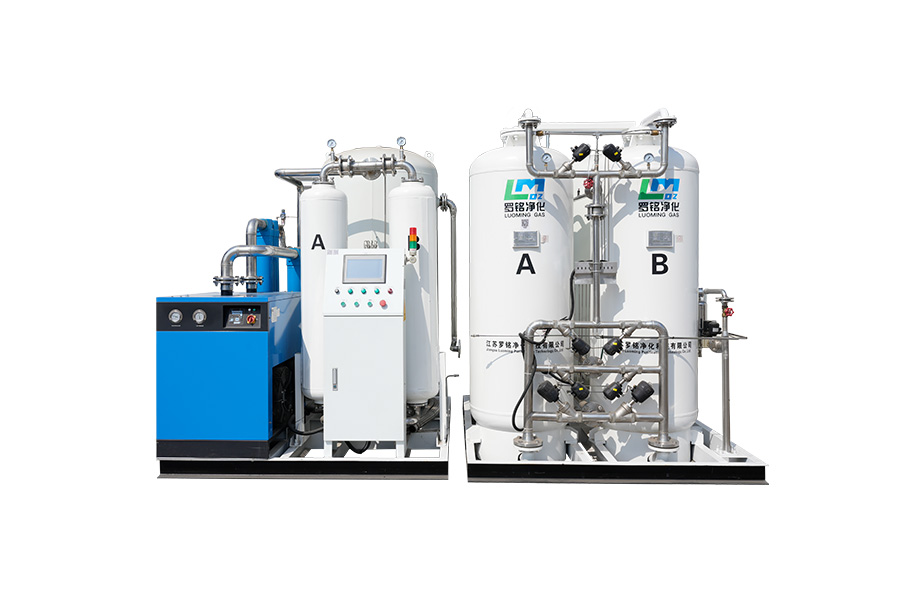
A plateau oxygen generator is a pressure swing adsorption (PSA) plant that has been re-sized, re-timed and re-rated for thin air, so it still delivers its rated flow at 3,000 m or 4,500 m instead of quietly losing a third of it on the first cold morning.
That distinction is commercial, not academic. Two machines can carry the same 20 m3/h nameplate and behave completely differently at the same site gate, because one was engineered around sea-level air density and the other around the ambient pressure where the customer actually operates.
Altitude correction figures in this article are preliminary planning estimates for equipment selection, not certified site performance data.
What a Plateau Oxygen Generator Actually Is
A plateau oxygen generator is a PSA oxygen system whose compressor, sieve beds, cycle timing and control logic are all designed around the ambient pressure of the installation site, rather than a standard sea-level machine carrying a different label.
Core definition
A plateau oxygen generator is an on-site pressure swing adsorption oxygen plant rated for site elevations of roughly 2,500 m to 5,000 m, where thinner air reduces both the mass of air a compressor can move and the oxygen partial pressure available to the separation process.
The separation chemistry itself does not change with altitude. Filtered and dried compressed air enters a vessel packed with zeolite molecular sieve, which adsorbs nitrogen in preference to oxygen and lets oxygen-rich gas pass. When the bed approaches saturation, pressure is released, nitrogen desorbs, and a second bed takes over. What changes on the plateau is the working fluid feeding that cycle: fewer molecules per cubic metre, on every stroke, all day.
- Compressor displacement sized for site air density, not for a sea-level test bench.
- Larger sieve volume and adjusted cycle times to hold purity with a weaker adsorption driving force.
- Purge flow re-balanced against recovery, because extra purge raises concentration while wasting product.
- Intake filtration, drying and cooling specified for cold nights and wide day-night temperature swings.
 Plateau Oxygen GeneratorThe plateau environment is a challenge to human survival and has a negative impact on the healthy life of personnel. The company is committed to improving the health o...View Product →
Why Sea-Level Ratings Do Not Hold Above 2,500 m
Above 2,500 m three effects compound: the compressor moves less air by mass, the adsorption driving force weakens, and the machine runs in colder and drier ambient air than it was tuned for.
Compressor ratings are normally quoted as inlet volume at reference conditions. At 4,000 m ambient pressure is roughly 60 percent of sea level, so the same swept volume carries far fewer molecules into the sieve beds. The pressure ratio the compressor works against also shifts, which changes valve timing and motor loading. Meanwhile a lower oxygen partial pressure means the zeolite has to work harder for every kilogram of product oxygen, and the regeneration step has less margin to clear the bed.
Sea-level datasheet
- Inlet air at 101 kPa and roughly 20 degrees C
- Nameplate flow quoted at reference conditions
- Standard purge ratio and cycle time
- Ambient cooling assumed adequate all year
On the plateau
- Inlet air at 58 to 74 kPa, often below 5 degrees C at night
- Delivered flow falls without a correction factor
- Longer cycles and re-tuned purge flow required
- Enclosure heating and frost protection become mandatory
PSA research carried out at plateau test sites points the same way: raising purge flow lifts oxygen concentration but lowers recovery, so the optimum operating point has to be found at the site rather than copied from a lowland commissioning report.
Sizing a Plateau System: Flow, Purity and Altitude Correction
Sizing starts from the oxygen the site genuinely needs at site altitude, then divides by an altitude correction factor to find the sea-level equivalent machine that will actually deliver it.
Preliminary altitude correction factors for planning a plateau oxygen generator installation.
| Site elevation |
Typical ambient pressure |
Output lost by a sea-level rated unit |
Planning correction factor |
| Sea level (0 m) |
101 kPa |
None |
1.00 |
| 1,500 m |
84 kPa |
6 to 9 percent |
1.10 |
| 2,500 m |
74 kPa |
12 to 16 percent |
1.18 |
| 3,500 m |
66 kPa |
20 to 24 percent |
1.30 |
| 4,500 m |
58 kPa |
28 to 34 percent |
1.45 |
8-12%
Additional compressor and sieve capacity to plan for every 1,000 m of elevation gain above 1,500 m, applied on top of the site flow requirement.
Purity is the second lever. Medical duty normally settles at 93 percent with a tolerance of plus or minus three points, which is the practical ceiling of a well-tuned two-bed PSA cycle. Pushing toward 99.5 percent requires an additional purification stage and costs flow, energy and maintenance attention, so it should only be specified where the process genuinely needs it.
Medical and Industrial Duty Cycles at Altitude
On the plateau one generator often serves several duties at once, so duty cycle rather than peak flow decides the configuration.
A county hospital may need piped oxygen at the ward manifold, a care facility nearby may need room-level enrichment, and a clinic two valleys away may need cylinders refilled weekly. Those duties have different flow profiles: manifold demand is continuous and moderate, room-level demand is daytime heavy, and filling is intermittent and high pressure. Specifying one machine for all three without separating the profiles is the most common sizing error on high-altitude projects.
Continuous duty is the plateau norm. A medical supply has to hold its purity at three in the morning, not only on commissioning day.
For hospitals, clinics and care facilities, the practical route is a dedicated plateau oxygen supply arrangement that separates continuous piped demand from cylinder filling. For hotels, staff quarters and residential blocks, enrichment is usually handled room by room, and the engineering logic behind that approach is set out in this note on diffusive oxygen generation for buildings.
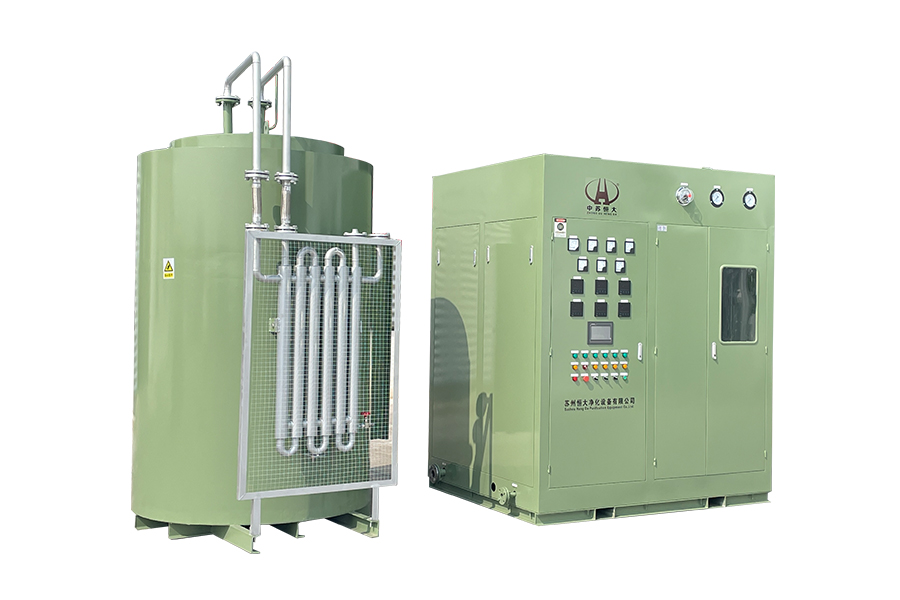
 Plateau Dispersion Oxygen GeneratorThe plateau environment is prone to causing hypoxia of the human brain, dizziness, tightness of the chest, fatigue, lethargy, slow reaction, lack of concentration and ...View Product →
Industrial duty looks different again. Cutting, metallurgy and furnace enrichment are specified by mass of oxygen per hour, so the same altitude correction applies, while aquaculture and wastewater aeration at altitude need the correction applied to oxygen transfer into water rather than to burner output.
Components That Decide Reliability at Altitude
Five components decide whether a plateau installation holds its rating: the compressor, the dryer and filtration train, the sieve beds, the booster, and the analyser chain.
93%
Typical medical oxygen purity at the outlet, plus or minus three points
0.6-1.0
kWh of specific energy per cubic metre of oxygen, larger PSA plants
150-200
Bar of filling pressure after the oxygen booster stage
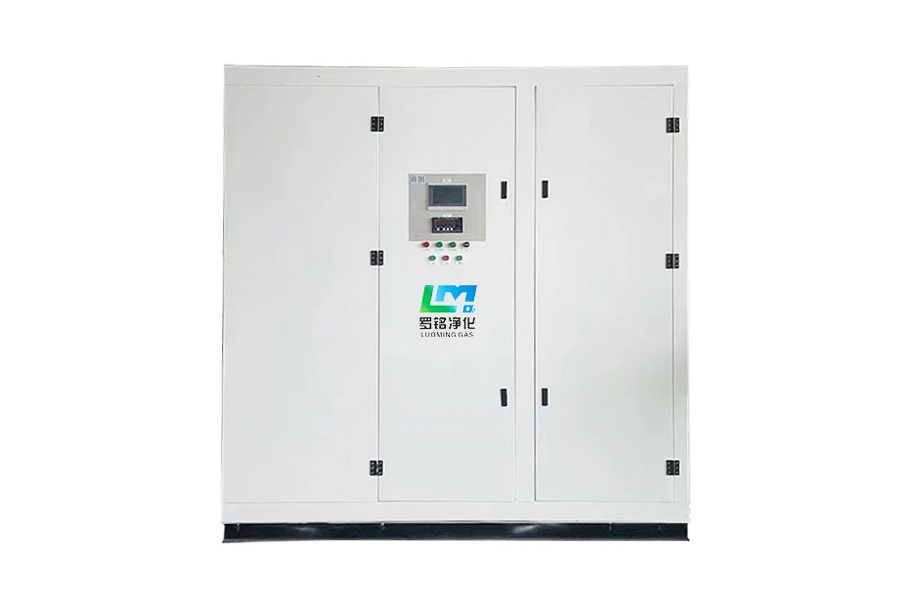
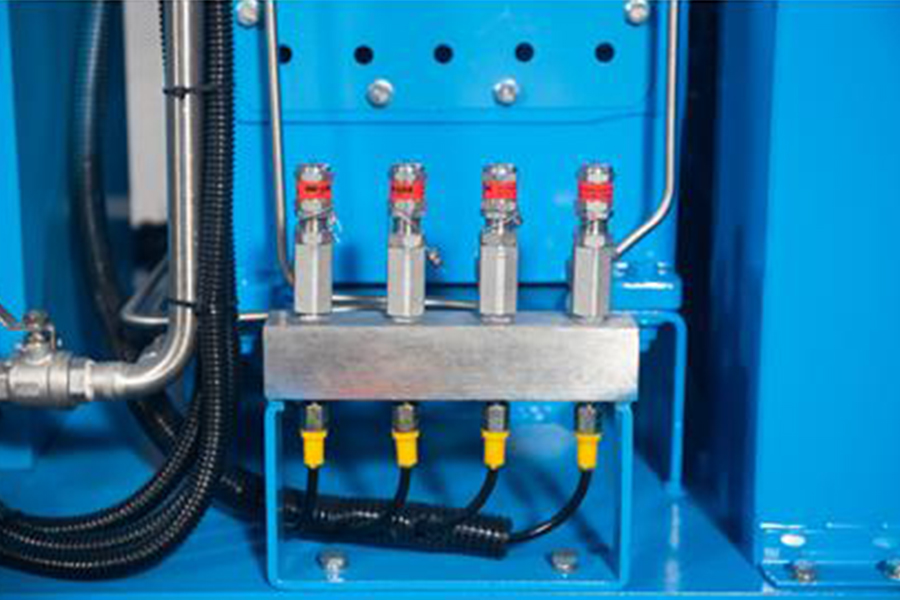 High Pressure Oxygen Booster CompressorJiangsu Luoming offers professional oil-free high-pressure oxygen booster compressors for cylinder filling and industrial applications. 150-200 bar discharge pressure....View Product →
The compressor sets the ceiling on everything downstream, and at altitude a machine that is merely large enough on paper is usually not large enough in practice. The dryer and filtration train protect the sieve charge from moisture and oil, which matters more in cold conditions where condensate behaviour changes. The sieve charge is a consumable with an expected life of roughly eight to twelve years. A booster is required whenever oxygen leaves the plant as cylinders or a high-pressure header, and the analyser chain, meaning dew point and trace oxygen instruments, is what turns a claim of purity into an auditable record.
Procurement, Installation and Maintenance Sequence
Put the altitude-corrected performance guarantee in writing before the purchase order is issued, because the gap between sea-level and plateau performance is where most commercial disputes begin.
- State site elevation, ambient temperature range, required purity and duty profile in the enquiry, including whether cylinder filling is part of the scope.
- Ask for a performance curve referenced to site conditions, not a reference-condition datasheet with a footnote.
- Confirm utilities and civil work: power quality, drainage, ventilation, foundation, and whether the enclosure needs heating.
- Commission with the analyser log recorded at site across at least one full day-night cycle, and keep that log as the baseline.
- Agree a consumables plan covering filters, desiccant and the sieve replacement interval of eight to twelve years.
After handover, the two numbers worth watching are dew point at the dryer outlet and oxygen purity at the buffer tank. A slow purity drift usually means moisture carryover or a shifting purge balance, and both are far cheaper to correct early than after the sieve charge is exhausted.
FAQ: Plateau Oxygen Generator Questions
Can a standard oxygen generator be used at high altitude?
It can run, but it will not deliver its nameplate flow or purity. Above roughly 2,500 m a sea-level rated unit loses 12 to 16 percent of output, and the loss grows with elevation, so the machine must be re-sized or derated to a realistic site figure.
What purity can a plateau oxygen generator hold?
Two-bed PSA systems typically hold 93 percent oxygen with a tolerance of plus or minus three points, which meets normal medical duty. Higher purity needs an additional purification stage and should be justified by the process, not by preference.
Plan for 8 to 12 percent additional compressor and sieve capacity for every 1,000 m above 1,500 m, and verify that figure against a site-referenced performance curve rather than a nameplate rating.
Does a plateau oxygen generator replace cylinder deliveries?
For continuous piped demand it usually does. Where cylinders are still needed for transport or backup, an oxygen filling station or booster stage is added so the same plant refills its own cylinders on site.
Planning rule of thumb: size for the coldest night, the highest occupancy and the altitude correction together. Each factor alone looks small; combined they are the difference between a working installation and a permanent complaint.





 English
 русский
 Français
 Español
 عربى
عربى