Nitrogen makes up 78% of the air around us — yet sourcing it reliably for industrial use has historically meant juggling cylinder deliveries, storage logistics, and unpredictable costs. An industry PSA nitrogen generator eliminates all of that by producing high-purity nitrogen on-site, continuously, from ordinary compressed air. For manufacturing plants, chemical facilities, and food processing lines, this shift from supply-chain dependency to self-sufficiency is one of the most impactful infrastructure decisions a facility can make.
How PSA Technology Actually Works
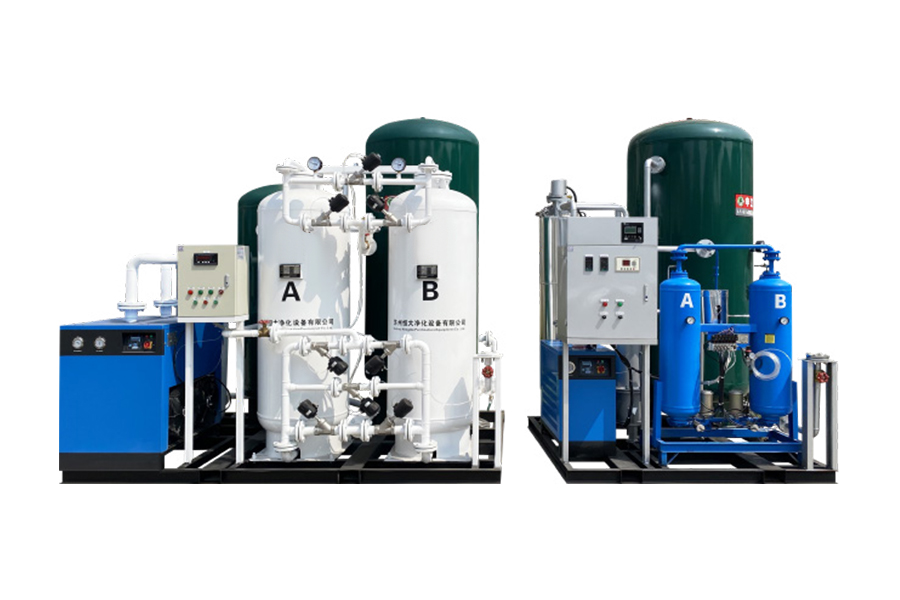
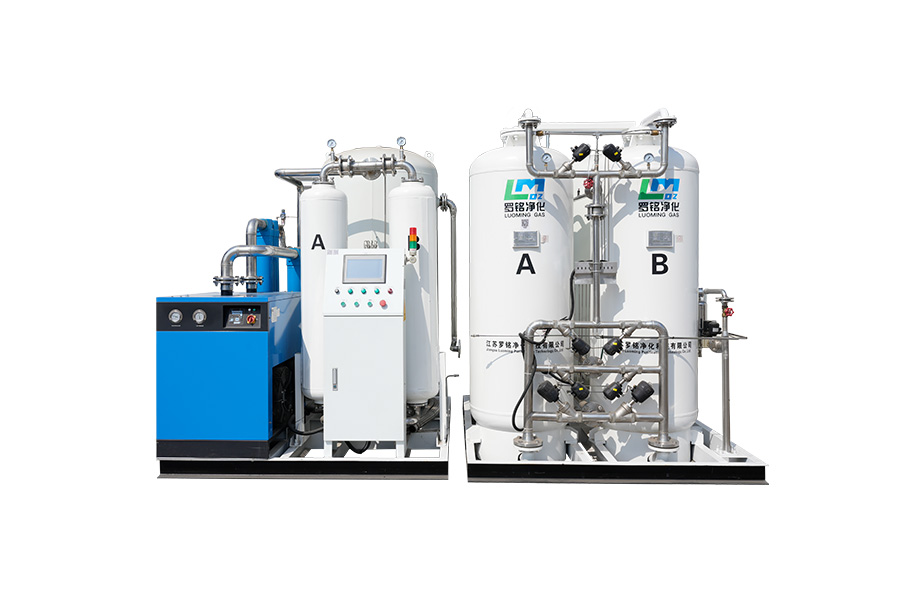
PSA stands for Pressure Swing Adsorption. The process is elegantly simple: compressed air is pushed through a vessel filled with Carbon Molecular Sieve (CMS), a porous material that selectively traps oxygen, CO₂, and moisture — while nitrogen molecules, being slightly larger, pass straight through. The result is a continuous stream of high-purity nitrogen gas ready for direct use or storage.
Most industrial systems use a twin-tower design. While one tower is actively separating nitrogen (adsorption phase), the other is regenerating — releasing trapped oxygen to the atmosphere at low pressure. The towers alternate automatically every few minutes, ensuring an uninterrupted nitrogen supply. A downstream buffer tank smooths out any minor pressure fluctuations, delivering stable output purity and flow.
This process operates at near-ambient temperature, requires no cryogenic equipment, and can be scaled from small lab units to high-flow industrial plants delivering thousands of Nm³/hr. industrial-duty PSA nitrogen generation systems are engineered specifically for continuous 24/7 operation under demanding conditions.
Purity Levels: What You Actually Need
PSA generators can deliver nitrogen purity ranging from 95% to 99.9995%. Choosing the right purity level isn't just a technical decision — it directly determines your air-to-nitrogen ratio (and therefore your energy cost). Over-specifying purity wastes money; under-specifying it risks product quality or process safety.
Typical purity requirements by industry application
| Purity Level |
Residual O₂ |
Typical Applications |
| 95–99% |
1–5% |
Tire inflation, fire prevention, general inerting |
| 99–99.9% |
0.1–1% |
Food packaging (MAP), laser cutting assist gas, metal heat treatment |
| 99.9–99.999% |
10–1,000 ppm |
Pharmaceuticals, SMT reflow soldering, electronics manufacturing |
| 99.999–99.9995% |
<10 ppm |
Semiconductor fabrication, analytical instrumentation, 3D metal printing |
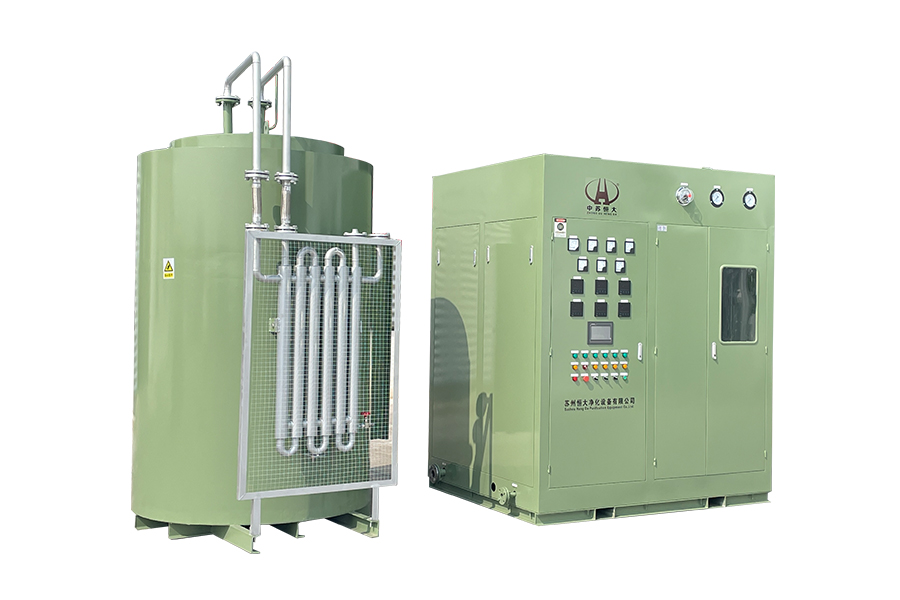
For applications requiring purity above 99.999%, a downstream purification stage — using catalytic deoxidation — can push residual oxygen below 1 ppm. high-purity PSA nitrogen generation with purification stages covers this requirement without switching to costlier cryogenic alternatives.
Key Industries and Why They Use PSA Nitrogen
PSA nitrogen generators have become standard infrastructure across a wide range of sectors, each relying on nitrogen for fundamentally different reasons:
The Real Cost Advantage: On-Site vs. Delivered Gas
The economics of PSA nitrogen generation are compelling. Delivered nitrogen — whether in cylinders, dewars, or bulk liquid — includes not just the gas cost but logistics, rental fees, minimum order quantities, and the hidden cost of production downtime when supply runs short. PSA systems, once installed, produce nitrogen for essentially the cost of electricity and periodic maintenance.
Payback periods typically range from 18 months to 3 years depending on consumption volume, local gas pricing, and purity requirements. Systems have an operational lifespan of 15–20 years, meaning the return on investment accumulates significantly over time. Facilities with high nitrogen consumption — food processors, electronics manufacturers, metal fabricators — often see cost reductions of 50% to 70% against their previous gas supply contracts.
Beyond direct cost savings, on-site generation removes supply chain risk entirely. There are no deliveries to schedule, no cylinder management, no risk of running out mid-shift.
What to Evaluate Before Purchasing
Selecting the right PSA nitrogen generator requires clarity on five parameters before comparing suppliers:
- Required purity (%): Define the minimum acceptable oxygen content for your process. Don't over-specify — every extra decimal of purity increases energy consumption and capital cost.
- Flow rate (Nm³/hr): Calculate peak demand across all consuming points, not average demand. Size for peak plus a 15–20% buffer.
- Inlet air quality: PSA systems require clean, dry compressed air (typically oil-free, dew point ≤ -40°C). Factor in upstream air treatment costs.
- Outlet pressure: Some applications (laser cutting, pressure transfer) need nitrogen at high pressure. Confirm whether a nitrogen booster compressor is required downstream.
- Ambient conditions: CMS performance is temperature-sensitive. Systems installed in hot or humid environments may need derating or additional air pre-treatment.
A reputable supplier will perform a proper demand audit and provide a system sized to real operating conditions — not just a catalogue model. For complex or high-volume applications, custom-engineered nitrogen generation solutions tailored to specific flow, purity, and pressure requirements deliver better long-term results than off-the-shelf units.
Maintenance: What's Actually Involved
PSA nitrogen generators have a well-earned reputation for low maintenance requirements. There are no moving parts in the adsorption vessels themselves — the CMS material operates passively, and the main active components are switching valves and controls. Routine maintenance covers filter replacement (typically every 3–6 months), periodic valve inspection, and monitoring of outlet purity via an inline oxygen analyzer.
CMS replacement is the main long-term consideration. With properly conditioned inlet air and correct operating pressures, CMS beds last 5–10 years or longer. Premature degradation is almost always traceable to oil contamination or moisture carryover from the compressed air supply — underscoring the importance of proper upstream air treatment. carbon molecular sieve selection and replacement is a critical factor in long-term system performance.
Real-time purity monitoring — using an inline oxygen analyzer — is strongly recommended for any application where purity directly affects product quality or process safety. It removes guesswork and provides an early warning of any degradation in system performance.
Portable and Modular Options
Not every application calls for a fixed installation. Oilfield operations, pipeline commissioning, construction projects, and remote industrial sites often require nitrogen on a temporary or mobile basis. Trailer-mounted, cabinet-type, and container-type PSA generators address this need — delivering full PSA performance in a deployable package.
Modular designs also offer a path to capacity expansion without replacing the entire system. Individual modules can be added in parallel as demand grows, protecting the initial investment while preserving flexibility. portable and trailer-mounted PSA nitrogen generator configurations are available for both temporary deployment and permanent mobile applications.
The Bottom Line
An industry PSA nitrogen generator is not a commodity purchase — it's a production infrastructure decision. The right system, properly sized and installed, eliminates gas supply dependency, reduces operating costs substantially, and delivers consistent, verifiable nitrogen purity for the life of the facility. The key is matching system specifications to actual process requirements, investing in proper inlet air treatment, and choosing a supplier with the engineering depth to back the installation with real technical support.
For facilities currently relying on delivered nitrogen, the question is rarely whether to switch to on-site generation — it's which system is right for the specific application.





 English
 русский
 Français
 Español
 عربى
عربى