Why More Plants Are Making Their Own Nitrogen
A delivery truck runs late. A cylinder rack sits half-empty on a Monday morning. A production line waiting on inert gas is a production line losing money. These are the moments that push plant managers to stop buying nitrogen and start making it.
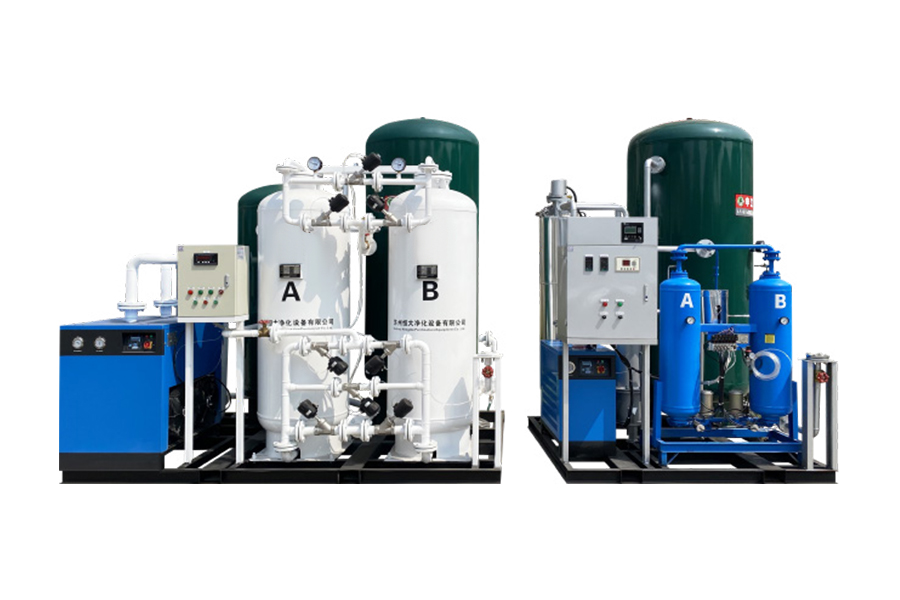
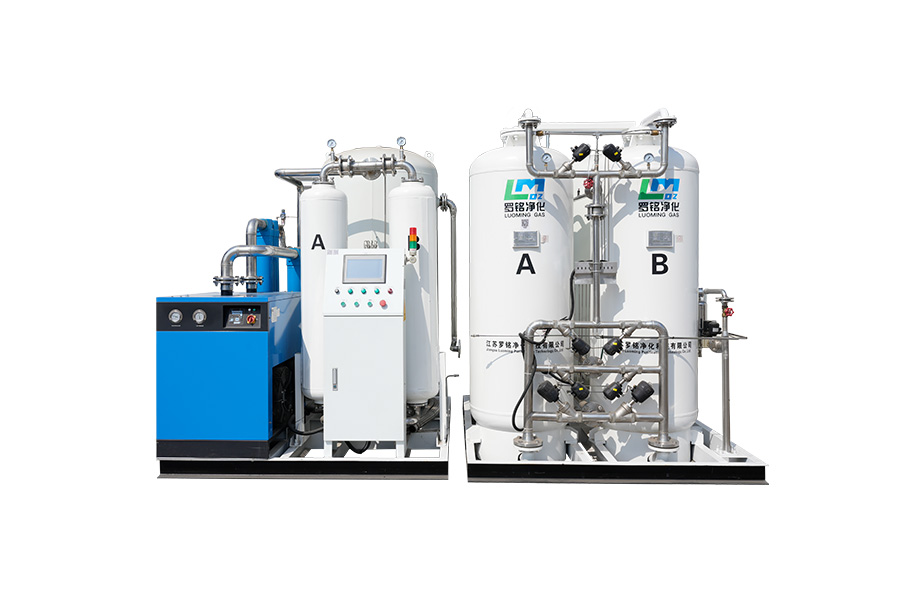
An industry-grade PSA nitrogen generator built for continuous 24/7 output removes that dependency entirely. Air comes in, nitrogen goes out, and the supply chain risk disappears along with the recurring delivery invoices.
How a PSA Nitrogen Generator Actually Works
Pressure Swing Adsorption relies on a simple physical fact: oxygen molecules are smaller and move faster through a porous material than nitrogen molecules do. Compressed air enters one of two towers packed with carbon molecular sieve that drives the separation process. Under pressure, the sieve captures oxygen, carbon dioxide, and moisture, letting purified nitrogen flow out the top.
While one tower is producing, the other regenerates by releasing its trapped gases at lower pressure. The two towers alternate every few minutes, which is why the system delivers continuous, uninterrupted nitrogen flow rather than a batch-by-batch output. No cryogenic cooling, no chemical additives, no high temperatures — just compressed air and a smart valve sequence running at room temperature.
Purity Levels and Where Each One Fits
Not every process needs the same nitrogen. Matching purity to the actual requirement saves both capital cost and operating expense, since higher purity always demands more compressed air per unit of nitrogen produced.
Typical purity requirements by industry
| Purity Range |
Common Applications |
| 95% – 98% |
Tire inflation, general packaging, metal cutting |
| 99% – 99.9% |
Food modified-atmosphere packaging, chemical blanketing |
| 99.95% – 99.999% |
Electronics reflow soldering, pharmaceutical processing, aerospace |
For facilities running highly sensitive processes, a high-purity PSA nitrogen generator for ultra-sensitive processes can be configured to hold tight purity tolerances without the swings that bulk-delivered gas sometimes shows batch to batch. You can also explore nitrogen applications across different industries to see how purity choices play out in real production settings.
Nitrogen Safety: What Every Operator Should Know
Nitrogen is inert, but inert does not mean harmless. It has no color, no smell, and no taste — which means a nitrogen-enriched space gives no warning before oxygen levels drop below what a person needs to stay conscious. Confined spaces, tank interiors, and poorly ventilated rooms near a generator's vent line are the areas where this risk concentrates.
A few practices keep operations safe: install oxygen deficiency monitors in any enclosed area near nitrogen use, route vent and purge lines away from occupied spaces, post clear signage on any space that could become oxygen-deficient, and train staff to never attempt an unassisted rescue in a suspected low-oxygen area — call for help instead. Treating nitrogen with the same procedural discipline as any other industrial gas is what turns a reliable utility into a safe one.
Choosing the Right Supplier and System
Sizing a system correctly comes down to three numbers: required flow rate, target purity, and the compressed air capacity already on site. Undersizing forces the generator to run flat out with no buffer for demand spikes; oversizing wastes capital and energy. A supplier who asks detailed questions about your process before quoting equipment is usually the one who gets the sizing right the first time.
It also helps to understand how PSA stacks up against alternative technology before committing — a detailed comparison between PSA and membrane nitrogen technology can clarify which approach fits your flow and purity needs best. Jiangsu Luo Ming Purification Technology designs and manufactures gas generation equipment across a 16,000-square-meter facility covering R&D, production, and after-sales service, with a Class II Medical Device Production License backing its quality systems. If you're evaluating an on-site nitrogen solution for your facility, get in touch with our engineering team to talk through the right configuration for your process.





 English
 русский
 Français
 Español
 عربى
عربى