Luo Ming Fully Automated Medical Oxygen Systems Support Remote Monitoring and Minimal On-Site Staffing
For primary health centers, especially those in mountainous or remote areas, medical oxygen supply is closely connected with daily treatment, emergency care, surgery, maternity services, inpatient care, and patient transfer.
However, many primary healthcare facilities do not have dedicated personnel for medical gas operation and maintenance. Traditional cylinder-based oxygen supply requires regular handling, replacement, inspection, and record-keeping. These tasks add to the daily management burden and may take medical staff away from their core responsibilities. When an equipment or oxygen-supply issue occurs, the long distance from major urban areas can also extend the response time for professional maintenance services.
To address the limited staffing, remote locations, and restricted maintenance capacity of primary healthcare facilities, Luo Ming medical oxygen generators use PLC-based intelligent control and support remote online monitoring, operating-status access, and fault early warnings. This helps health centers establish a more stable, traceable, and lower-maintenance on-site oxygen supply solution.
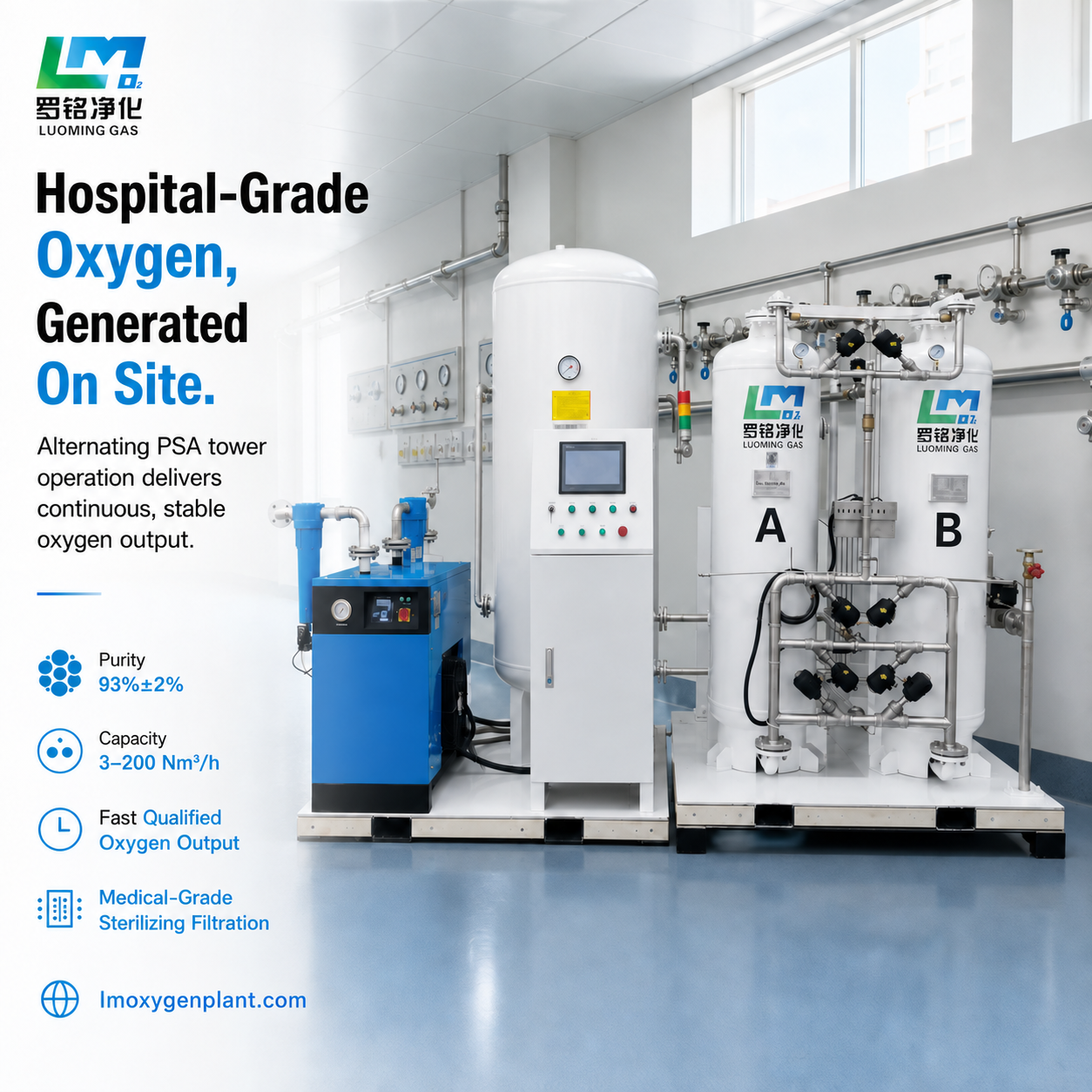
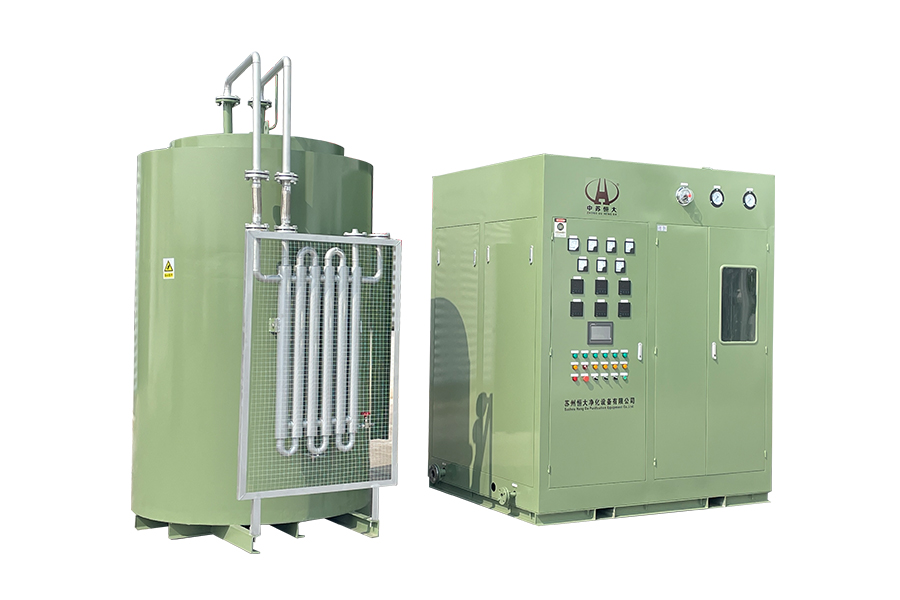
Luo Ming PSA medical oxygen generator: alternating twin-tower operation for continuous, stable oxygen output on site.
1. What Management Challenges Does Cylinder-Based Oxygen Supply Create?
A. Cylinder Handling and Replacement Consume Medical Staff Time
Cylinder-based oxygen supply requires purchasing, transportation, receiving, storage, and replacement according to actual oxygen demand. At primary health centers with limited personnel, in-house staff may need to assist with cylinder handling and gas-source changeover.
When oxygen demand is distributed across different departments, changes throughout the day, or increases suddenly during emergency treatment, staff must also check inventory and remaining gas levels. This makes oxygen management difficult to rely solely on a fixed manual routine.
B. Inspections and Operating Records Can Become Fragmented
Traditional oxygen management may involve cylinder quantities, pressure, changeover times, usage records, and abnormal conditions. Without a unified digital management approach, information can remain in paper records or separate staff logs, making later review, statistics, and quality traceability more difficult.
C. Remote Locations Present Practical Maintenance Constraints
Some primary health centers are located far from urban areas, and it may take time for professional technicians to reach the site. For medical oxygen systems, detecting an abnormal condition early helps the facility arrange troubleshooting and backup-source changeover more promptly. The ability to check equipment status remotely therefore has practical value for daily operation and maintenance.
2. How Does the Luo Ming Fully Automated Medical Oxygen System Reduce On-Site Maintenance Pressure?
A. PLC Intelligent Control Reduces Repetitive Manual Operations
Luo Ming medical oxygen generators use a PLC-based intelligent control system to manage the operating status of the oxygen generation unit centrally. The equipment can run according to configured programs, reducing some repetitive manual start-up, shutdown, and inspection tasks.
In actual projects, operating modes, alarm thresholds, and control logic should be configured according to the equipment arrangement, oxygen demand, backup source, and healthcare-facility management requirements. Automation is not intended to eliminate necessary human oversight; it helps personnel shift their attention from repetitive operations to status confirmation and abnormal-condition handling.
B. Remote Online Monitoring Is Available on Computers and Mobile Devices
With remote monitoring, authorized personnel can view the operating status of the unit from a computer or mobile device. They can check whether the system is running normally, whether an alarm has been triggered, and whether relevant operating parameters show abnormal changes.
For primary health centers that are far from technical service teams or cannot assign personnel to remain in the equipment room throughout the day, remote access can reduce unnecessary site visits and support communication and preliminary assessment among facility managers, equipment operators, and technical service personnel.
C. Fault Early Warnings Help Identify Abnormal Conditions Earlier
The system supports fault early warnings and alarm notifications. When an abnormal operating condition occurs, relevant personnel can review the alarm information, arrange an on-site inspection, switch to a backup gas source if necessary, or contact technical support based on the available data.
Remote monitoring does not replace necessary site inspections, scheduled maintenance, or safety management. Medical oxygen systems still require regular checks and servicing of filters, molecular sieves, valves, pipelines, storage equipment, and terminal devices according to equipment instructions and the project maintenance plan.
D. Operating Logs and Quality-Control Data Are Automatically Retained
Luo Ming medical oxygen systems can automatically retain operating logs and relevant quality-control data. This allows staff to review equipment operation, identify the time of an abnormal event, and maintain a more complete oxygen-supply record.
Recording oxygen generation, operating status, and quality-control information makes internal management, equipment servicing, and oxygen-supply traceability easier to conduct. These records can also support equipment management and inspection activities at healthcare facilities. Specific documentation requirements should follow the applicable local health-authority, healthcare-facility management, and project acceptance requirements.
3. On-Site Oxygen Generation Reduces Dependence on Cylinder Deliveries
Luo Ming medical oxygen generators use air as the feedstock to produce medical oxygen on-site. With the corresponding storage, pressure-regulation, and medical gas pipeline components, oxygen can be delivered to the required points of use within the facility.
Compared with a supply model that relies entirely on external cylinder deliveries, on-site oxygen generation can reduce the need for frequent purchasing, transportation, handling, and cylinder replacement. For primary health centers with difficult transportation conditions or long delivery distances, on-site generation can reduce the influence of external logistics on routine oxygen management.
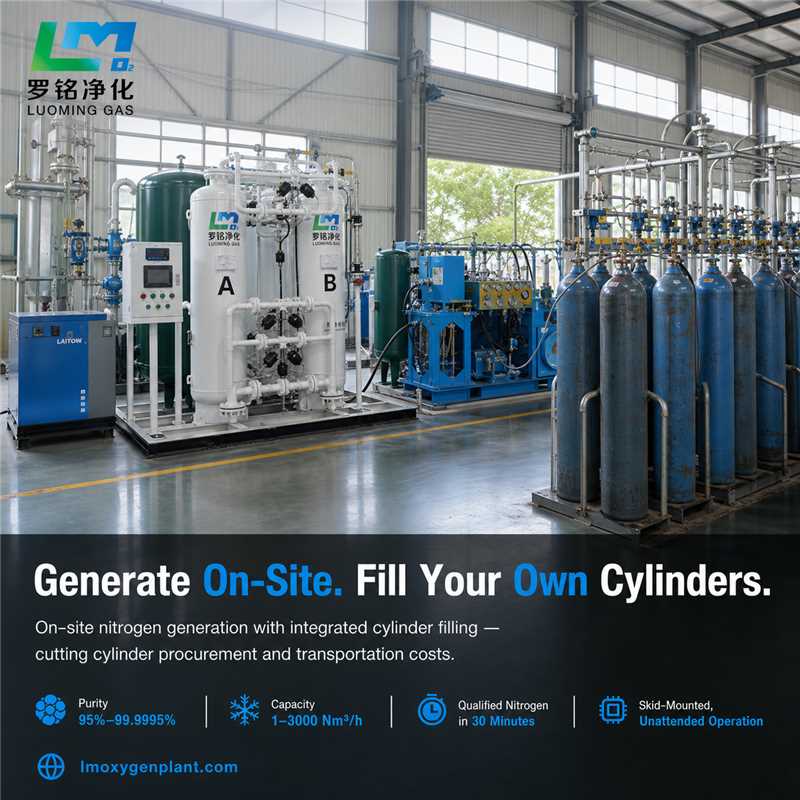
On-site gas generation with integrated cylinder filling: a skid-mounted unit that reduces cylinder procurement and transportation.
During system design, the facility should evaluate the number of beds, key departments, peak oxygen demand, pipeline size, backup gas source, and applicable medical gas requirements. Where necessary, a cylinder manifold or another backup source can be configured together with the medical oxygen generator to build a continuous oxygen-supply arrangement.
4. Skid-Mounted, Modular, and Containerized Deployment for Primary Healthcare Projects
Primary health centers differ in site conditions and construction schedules. Some projects involve modifications to existing buildings, while others involve temporary medical facilities, modular healthcare units, or medical facilities in remote locations.
Luo Ming medical oxygen systems can be designed for skid-mounted, modular, or containerized integration according to project conditions. This supports deployment based on available space, transportation conditions, installation requirements, and future expansion needs.
A project plan may cover:
Overall arrangement of the oxygen generator and auxiliary equipment;
Ventilation, heat dissipation, and safety conditions in the equipment room or designated area;
Medical oxygen pipelines and terminal points of use;
Storage, pressure regulation, and backup gas-source design;
Remote monitoring and alarm-information management;
Maintenance access and future servicing conditions;
Local acceptance, management, and operating requirements.
5. Lower-Maintenance Oxygen Supply Does Not Mean Maintenance-Free Operation
The purpose of an automated medical oxygen system at a primary health center is to reduce repetitive manual operations, improve visibility of equipment status, and increase the efficiency of abnormal-condition response. It is not to eliminate maintenance altogether.
To support long-term stable operation, the healthcare facility should establish a basic equipment-management procedure that includes:
Assigning responsible personnel and remote-alarm recipients;
Conducting scheduled inspections and servicing according to the manufacturer's requirements;
Replacing filters, seals, and other consumables in a timely manner;
Regularly checking oxygen purity, pressure, flow, and other operating indicators;
Retaining operating logs, quality-control records, and maintenance records;
Establishing a backup-gas-source changeover procedure for abnormal conditions;
Maintaining an effective technical communication channel with the manufacturer or service team.
A suitable lower-maintenance oxygen-supply model is built by combining automated control, remote monitoring, and standardized maintenance.
6. What Support Can Luo Ming Provide for Primary Health Centers?
Based on the facility's oxygen demand, site conditions, pipeline layout, and staffing arrangements, Luo Ming can provide medical oxygen system planning and related services, including:
On-site requirements communication and project-condition assessment;
Selection of the medical oxygen generator and auxiliary equipment;
Skid-mounted, modular, and containerized oxygen-supply planning;
PLC automatic control and remote-monitoring configuration;
Recommendations for operating-log and quality-control data management;
Main and backup oxygen-source combination planning;
Installation, commissioning, operator training, and maintenance support.
Conclusion: Make Oxygen-Supply Management More Controllable at Primary Health Centers
For primary health centers without dedicated maintenance personnel, the value of a medical oxygen system lies not only in its ability to generate oxygen. It also depends on whether the equipment is easy to manage, whether operating status is visible, whether abnormal conditions can be identified promptly, and whether a clear maintenance-support path is available.
Through PLC intelligent control, remote online monitoring, fault early warnings, operating-data retention, and on-site oxygen generation, the Luo Ming fully automated medical oxygen system helps primary health centers reduce dependence on cylinder deliveries and repetitive manual operations. It can also reduce routine maintenance pressure and improve the continuity and traceability of oxygen-supply management.
If your healthcare facility is looking for a lower-maintenance medical oxygen solution with remote management capabilities, leave a message. Luo Ming can provide system-planning recommendations based on your site conditions and oxygen requirements.





 English
 русский
 Français
 Español
 عربى