On-Site Nitrogen Generation is the Superior Choice for Gas Supply
For industries requiring a consistent flow of nitrogen, the choice has never been clearer: on-site nitrogen generation reduces gas costs by up to 80% compared to traditional cylinder or liquid dewars supply. By investing in a nitrogen generator, businesses eliminate recurring rental fees, delivery surcharges, and the administrative burden of managing gas inventory. Modern generators produce nitrogen at the point of use, ensuring an uninterrupted supply at the exact purity required for the specific application, from food packaging to laser cutting.
Two Core Technologies: PSA vs. Membrane Generators
Selecting the right nitrogen generator depends entirely on your required purity, flow rate, and operational environment. All industrial generators utilize compressed air to separate nitrogen from oxygen, but they do so via two distinct methods.
Pressure Swing Adsorption (PSA) Generators
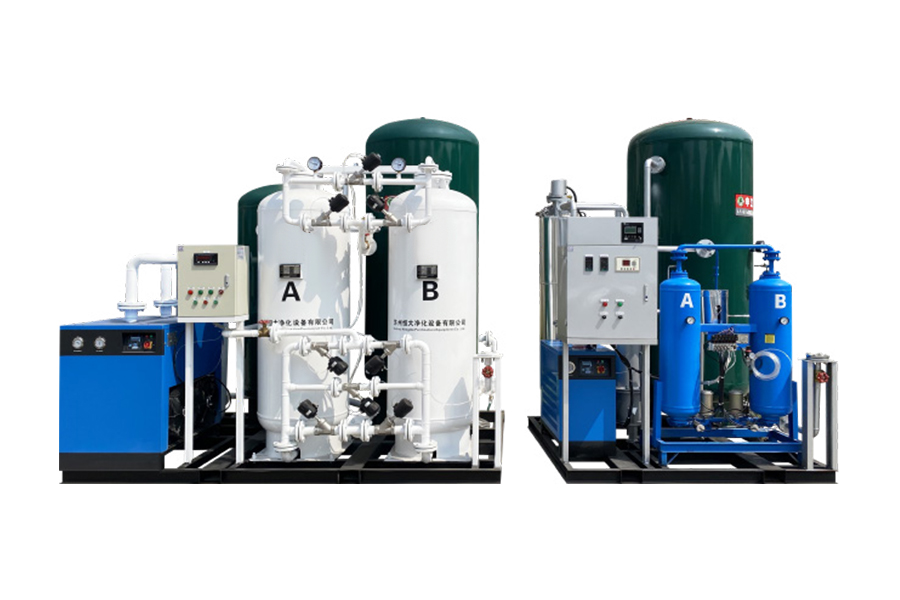
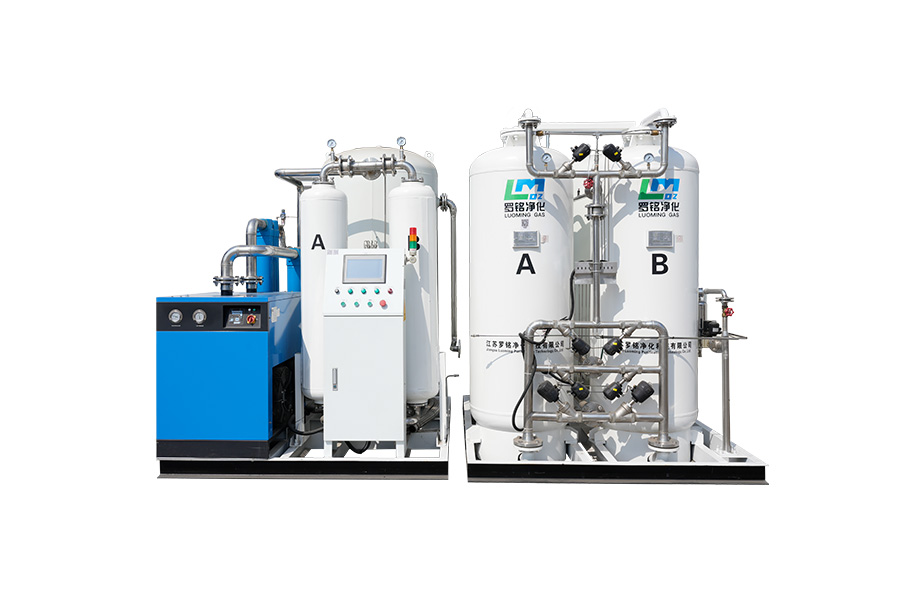
PSA systems are the workhorses of high-purity applications. They use a carbon molecular sieve (CMS) to adsorb oxygen under pressure. When one vessel becomes saturated, the pressure "swings" to depressurize it, releasing the oxygen and regenerating the sieve. PSA generators consistently achieve nitrogen purities from 95% to 99.9995%.
- Best For: Laser cutting, heat treatment, electronics manufacturing, and pharmaceutical packaging where ultra-high purity is non-negotiable.
- Performance: They typically offer higher flow rates at higher purity levels compared to membranes.
Membrane Generators
Membrane technology utilizes thousands of hollow polymer fibers. As compressed air passes through the fibers, oxygen and water vapor permeate the membrane walls faster than nitrogen, which travels to the end of the tube. This is a steady-state process with no moving parts in the separation stage. Membrane generators typically produce nitrogen purities between 95% and 99.5%.
- Best For: Inerting fuel tanks, modified atmosphere packaging (MAP) for fresh produce, tire inflation, and blanketing stored chemicals.
- Advantage: They are compact, modular, and can be started and stopped instantly without the gradual ramp-up time of a PSA system.
Technology Comparison at a Glance
Table 1: Key differences between PSA and Membrane nitrogen generators.
| Feature |
PSA Generator |
Membrane Generator |
| Purity Range |
95% - 99.9995% |
95% - 99.5% |
| Dew Point |
Extremely Low (-40°F to -100°F) |
Moderate (Depends on inlet air) |
| Moving Parts |
Pneumatic valves (cycling) |
None in separation module |
| Ideal Application |
High-purity laser cutting |
High-flow inerting |
Calculating the Financial Impact: Cost Per 100 SCF
The economic argument for a nitrogen generator is rooted in the cost of electricity versus the cost of delivered gas. Compressed air is required to produce nitrogen, and this carries an energy cost. However, the savings are dramatic.
Consider a facility using 20,000 standard cubic feet (SCF) per hour at 98% purity. Bulk liquid nitrogen might cost $0.35 to $0.65 per 100 SCF, while on-site generation typically costs $0.10 to $0.20 per 100 SCF. For a facility operating one shift (2,000 hours/year), the annual savings can exceed $150,000. This calculation does not include the elimination of hazmat fees, rental charges for the storage tank, or the carbon footprint of delivery trucks.
Matching Purity to Application: Why "Too Pure" Wastes Money
A common pitfall in specifying a nitrogen generator is over-specifying the purity. Producing 99.999% nitrogen requires significantly more compressed air and energy than producing 99.5% nitrogen. In fact, dropping from 99.5% to 99% purity can increase the nitrogen output of a generator by up to 25% using the same amount of compressed air.
- Food Packaging (MAP): 99.5% is typically sufficient to displace oxygen and prevent spoilage in potato chips or coffee. Higher purities offer no additional shelf-life benefit.
- Laser Cutting: This requires 99.99% or higher. Oxygen impurities at the 99.5% level can cause oxidation on the cut edge of mild steel, ruining the part.
- Fire Prevention (Inerting): 95% purity is often adequate to reduce oxygen levels below the combustion threshold in coal storage silos or chemical reactors.
Selecting a generator with an integrated purity monitor and control valve allows operators to dial in the exact purity needed, preventing waste and saving energy.
Essential Pre-Installation Checklist
Before purchasing a generator, a site audit of the compressed air system is mandatory. The generator is only as reliable as the air feeding it.
- Compressor Capacity: Verify that your existing air compressor has enough excess capacity to feed the generator. Producing 100 SCF of nitrogen requires approximately 150 to 250 SCF of compressed air, depending on the purity level.
- Air Quality: Nitrogen generators require clean, dry air. A coalescing filter and a refrigerated or desiccant dryer are essential to remove oil and moisture, which can permanently damage membrane fibers or carbon sieves.
- Receiver Tank Placement: Installing a buffer tank downstream of the generator ensures that peak demand spikes are met without over-working the system, stabilizing pressure for sensitive equipment.
Maintenance and Longevity
Modern nitrogen generators are designed for low maintenance, but they are not "fit and forget" devices. A well-maintained generator should last 10 to 15 years. The primary maintenance items are the pre-filters, which require annual element changes to protect the core separation media. The carbon molecular sieve in a PSA generator typically needs replacement only after 8 to 10 years, while membrane modules can last even longer if the pre-filtration is maintained meticulously. Most manufacturers recommend an annual service kit replacement to keep valves and solenoids operating correctly, ensuring the generator continues to deliver the promised purity and flow.





 English
 русский
 Français
 Español
 عربى
عربى