Why Hospitals Are Moving Away from Oxygen Cylinders
Every year, healthcare facilities around the world face the same painful cycle: ordering oxygen cylinders, managing deliveries, tracking inventory, and scrambling during supply shortages. For a hospital that runs through hundreds of cylinders a month, the logistics alone become a full-time job — and a vulnerability. A PSA Medical Oxygen Generator eliminates this dependency by producing oxygen on-site, continuously, from ordinary ambient air.
The technology is not new, but its adoption in clinical settings has accelerated dramatically over the past decade. Today, thousands of hospitals across more than 50 countries rely on on-site PSA medical oxygen systems as their primary oxygen source.
How PSA Technology Produces Medical-Grade Oxygen
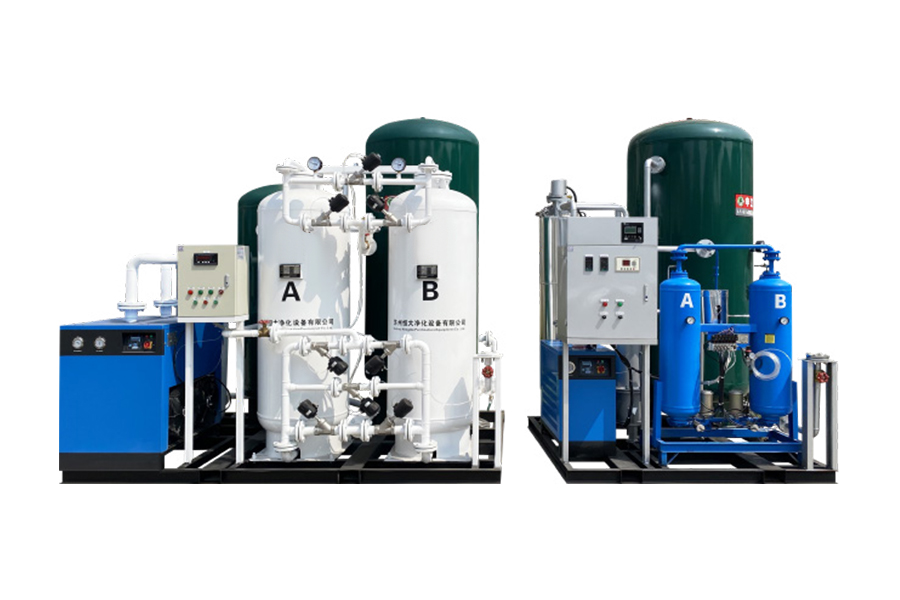
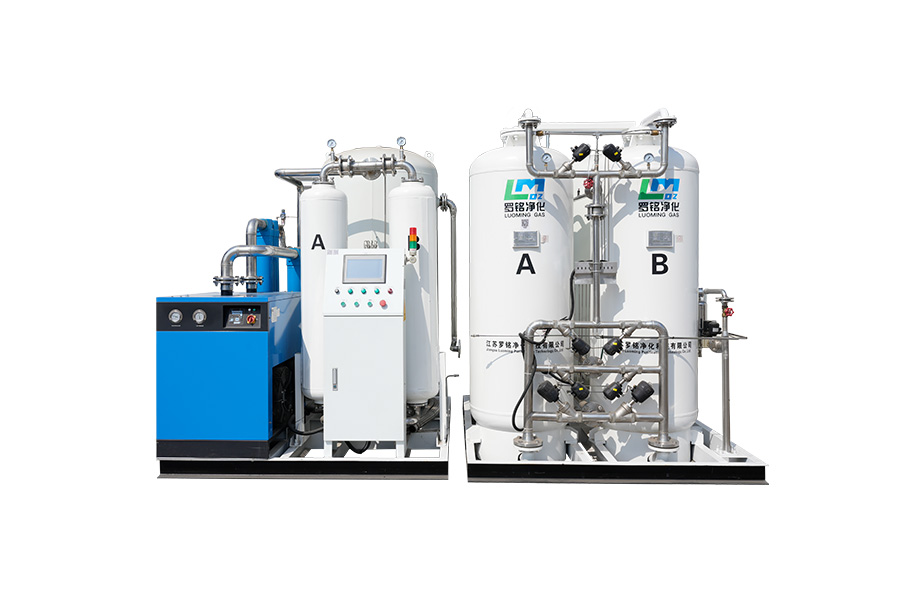
PSA stands for Pressure Swing Adsorption — a process that separates oxygen from the nitrogen in compressed air using zeolite molecular sieves. Here is how the cycle works in practice:
- An oil-free air compressor draws in ambient air and pressurizes it.
- The compressed air passes through a pre-treatment stage to remove moisture and particulates.
- The dry, clean air enters one of two adsorption towers packed with zeolite. At high pressure, zeolite selectively captures nitrogen while oxygen flows through at up to 93%–96% purity.
- When the zeolite in the first tower becomes saturated, the system automatically switches to the second tower. The first tower depressurizes and releases the trapped nitrogen, regenerating itself for the next cycle.
- The purified oxygen collects in a buffer tank, then flows into the hospital's pipeline at a stable pressure.
This two-tower alternating cycle runs continuously with no manual intervention. The oxygen purity remains constant regardless of peak demand — a critical requirement in ICUs and surgical theatres where consistent concentration is non-negotiable.
Purity Standards and Regulatory Compliance
Medical oxygen produced by PSA systems must meet pharmacopoeia standards before it can be used clinically. The key benchmark, accepted by both the US Pharmacopeia (USP) and the European Pharmacopoeia (Ph. Eur.), is 93% ± 3% oxygen by volume — defined as the "Oxygen 93" monograph. This range (90%–96%) is clinically equivalent to cylinder oxygen and is approved for all hospital applications: mechanical ventilation, anesthesia, neonatal care, ICU therapy, and emergency resuscitation.
Beyond purity, a complete compliance framework includes:
- ISO 7396-1 — the international standard governing medical gas pipeline systems, covering design, installation, testing, and commissioning.
- ISO 13485 — quality management systems for medical device manufacturers.
- CE Marking / EU MDR 2017/745 — required for generators sold in European markets, classifying the system as a Class IIB medical device.
Facilities should verify that any system they procure carries the relevant certifications for their region. An uncertified generator — no matter how capable — creates regulatory and liability risk.
Key Specifications to Evaluate Before Purchasing
Not all PSA generators are sized for the same environment. The table below summarizes the primary parameters you need to define before requesting a quote:
Core sizing parameters for PSA medical oxygen systems
| Parameter |
Typical Range |
Why It Matters |
| Flow Rate |
8 LPM – 2,500+ LPM |
Must cover peak simultaneous demand across all oxygen points |
| Oxygen Purity |
90% – 96% |
Must meet pharmacopoeia standard for the target application |
| Output Pressure |
3–7 bar (50–100 psi) |
Must match the hospital pipeline's operating pressure |
| Power Consumption |
Varies by capacity |
Affects operating cost; UPS backup required for uninterrupted supply |
For hospitals treating more than 20–30 patients per day on continuous oxygen, an on-site PSA system typically recovers its capital cost within 12 to 24 months, compared to ongoing cylinder procurement expenses.
Medical Applications Covered by PSA Oxygen
A properly sized and certified PSA generator supports the full spectrum of clinical oxygen needs. The most common use cases include:
- Respiratory therapy — patients with COPD, asthma, pneumonia, or COVID-related complications requiring supplemental oxygen.
- ICU and critical care — continuous high-flow oxygen for ventilated patients where supply interruption is life-threatening.
- Surgical and anesthesia use — precise, consistent purity required throughout procedures.
- Neonatal units — controlled oxygen delivery for premature infants.
- Emergency resuscitation — immediate availability without waiting for cylinder changeovers.
Beyond hospitals, the same PSA technology serves nursing homes and long-term care facilities and community health care centers where smaller, self-contained units provide cost-effective on-site oxygen without the infrastructure demands of a hospital installation.
System Maintenance: What to Expect
PSA generators are designed for long-term, low-intervention operation. Under normal operating conditions, zeolite molecular sieves have an almost indefinite service life provided the incoming air is properly pre-treated (dry, oil-free, and filtered). A documented preventive maintenance schedule should cover:
- Regular filter replacement and air quality checks
- Valve inspection and actuator testing
- Oxygen analyzer calibration (at minimum annually, or per local regulatory requirement)
- Independent laboratory verification of oxygen purity on a periodic basis
For facilities in high-humidity climates or dusty environments, pre-filtration quality directly impacts system longevity. Investing in a high-quality air purification stage upstream of the PSA unit is not optional — it is what protects the zeolite and maintains purity over time. Backup power (UPS or generator) is also essential: oxygen production stops when power does.
Choosing the Right Manufacturer
The generator itself is only part of the equation. Equally important is the manufacturer's ability to provide correct system sizing, installation support, commissioning documentation, and after-sales service — particularly for facilities in regions where local technical expertise may be limited.
Look for manufacturers with proven hospital references, regional service capability, and full certification documentation. For facilities evaluating complete on-site gas solutions — including industrial PSA oxygen generators or paired nitrogen generation systems — working with a single supplier simplifies integration and accountability.
Medical oxygen supply is too critical to optimize purely on upfront price. The right question is not "what is the cheapest system?" — it is "what is the most reliable system we can operate and maintain over a 15-year horizon?"





 English
 русский
 Français
 Español
 عربى
عربى