Stop Buying Cylinders: Why On-Site Oxygen Generation Changes the Math
Facilities that rely on delivered oxygen cylinders or liquid oxygen dewars face a recurring problem: variable costs, supply chain risk, and storage overhead that never goes away. An on-site PSA oxygen generation system eliminates all three. Once installed, it draws oxygen directly from ambient air—continuously, at a fixed operating cost—with no resupply logistics. Industry data consistently shows facilities recovering capital costs within two years and reducing oxygen-related expenses by up to 60% over the same period.
The decision isn't whether to switch. It's which system fits your operation.
PSA vs. Cryogenic: Match the Technology to Your Scale
Two technologies dominate industrial oxygen generation, and choosing the wrong one costs money from day one.
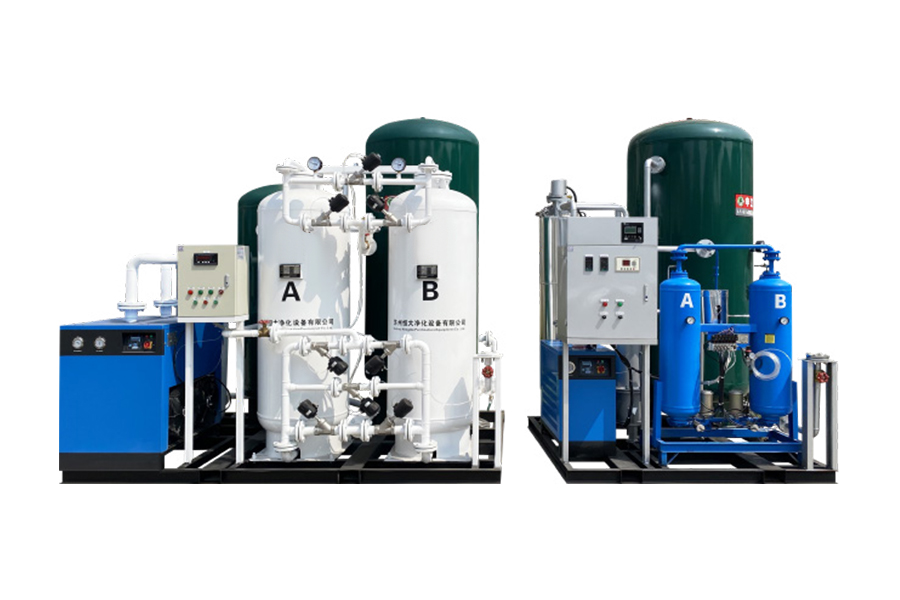
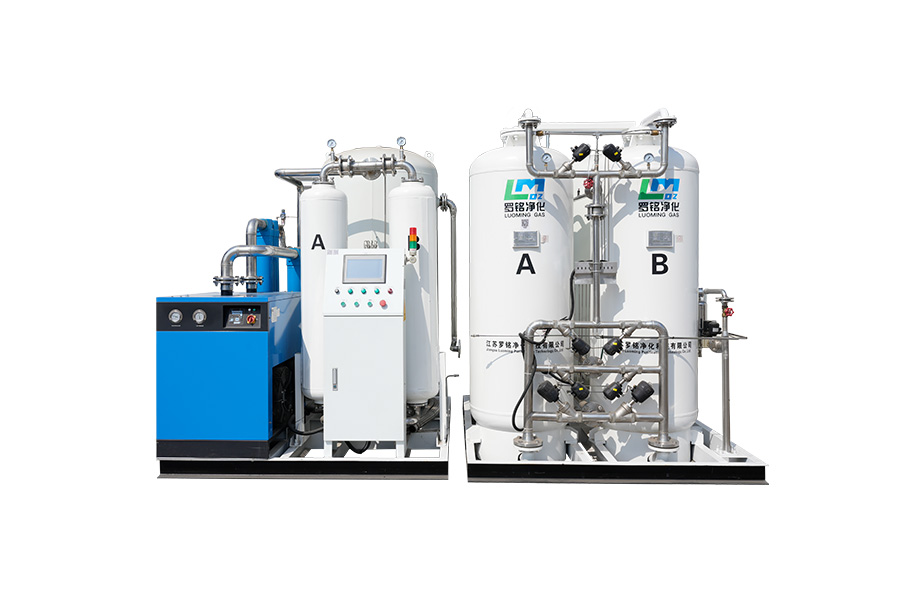
Pressure Swing Adsorption (PSA) is the workhorse for the vast majority of industrial users. It works by cycling compressed air through zeolite molecular sieve beds, which selectively adsorb nitrogen and allow oxygen to pass through. The output purity usually remains above 93%., with flow rates scalable from a few Nm³/h up to several hundred. PSA systems start up in minutes, require no cryogenic infrastructure, and are well-suited to metal cutting, welding, aquaculture, wastewater treatment, and medical supply applications.
Cryogenic separation is reserved for operations demanding 99.5%+ purity at very high volumes—think large refineries, aerospace manufacturing, or steelmaking at industrial scale. The process chills air to −183°C to liquefy and separate oxygen, requiring significant capital and floor space. For most buyers, PSA is the practical and cost-effective answer.
PSA vs. Cryogenic: Quick Comparison
| Parameter |
PSA Oxygen Generator |
Cryogenic System |
| Typical Purity |
93%+ |
99.5%+ |
| Best Scale |
Small to large industrial |
Very large industrial |
| Startup Time |
Minutes |
Hours |
| Capital Cost |
Moderate |
High (often $100,000+) |
| Typical Applications |
Cutting, medical, aquaculture, wastewater |
Steel, petrochemical, aerospace |
Four Parameters That Determine the Right Spec
Before requesting a quote, nail down these four numbers. Everything else—price, footprint, energy draw—flows from them.
- Required purity: Metal cutting and welding typically operate at 93–95%. Aquaculture and wastewater treatment work well at 90–93%. Medical-grade applications require compliance with ISO 13485 and may need 93%+ with validated monitoring. If your process can tolerate lower purity, you save on capital and energy.
- Flow rate (Nm³/h): Calculate your peak daily consumption, not your average. Size for peak demand with a 10–15% buffer. Undersizing forces you to supplement with cylinders; oversizing wastes capital and energy.
- Operating pressure: Standard PSA systems deliver oxygen at 3–5 bar. If your process needs higher pressure—cylinder filling, for example—pair the generator with an oxygen booster compressor to reach 150–200 bar without purchasing a separate high-pressure system.
- Installation footprint: PSA units range from compact skid-mounted modules to containerized systems. For remote sites or temporary deployments, a portable or containerized oxygen generator eliminates the need for permanent infrastructure.
Industry Applications: What Purity Level Do You Actually Need?
Purity requirements vary significantly across sectors, and overpaying for purity you don't need is one of the most common purchasing mistakes.
- Metal cutting and stone processing: 93–95% oxygen improves cut speed and quality compared to air alone. Higher purity yields diminishing returns for most cutting operations.
- Aquaculture: Dissolved oxygen injection at 90–93% purity accelerates fish growth and increases stocking density. PSA systems are purpose-built for this continuous, moderate-purity application.
- Wastewater treatment: Oxygen injection enhances aerobic bacterial activity, improving BOD removal efficiency. 90–93% purity is standard.
- Medical facilities and hospitals: Require certified medical-grade oxygen generation with validated purity monitoring. Systems must comply with relevant local medical device regulations. A dedicated medical oxygen generator with integrated alarm systems and redundancy is essential—not optional.
- High-altitude and plateau environments: Diffusion-type oxygen supply systems address the specific challenge of low ambient oxygen partial pressure, used in hotels, military installations, and plateau hospitals.
What to Verify Before You Buy
The generator itself is only part of the system. Incoming air quality directly affects output purity and sieve bed lifespan. Any installation should include proper air treatment—dryers, filters, and storage tanks—upstream of the generator. Compressed air containing oil, moisture, or particulates degrades the zeolite molecular sieve prematurely, the single most common cause of early performance loss in PSA systems.
Also verify: warranty length, availability of local service technicians, and whether the supplier stocks replacement sieve material. The molecular sieve beds that make PSA work have a finite lifespan—typically 8–10 years under proper operating conditions—and sourcing replacements from a third party can be both expensive and time-consuming.
For installations subject to regulatory oversight—particularly medical and food-grade applications—confirm that the system carries the appropriate certifications (CE, ISO 9001, ISO 13485 for medical devices) before procurement.
The Bottom Line on Total Cost of Ownership
Evaluating an oxygen generator on purchase price alone misses the point. The real figure is total cost of ownership over 10 years: capital, installation, energy consumption, maintenance, and the avoided cost of cylinder purchases. For a mid-scale operation consuming 20–50 Nm³/h, the math almost always favors on-site generation within 18–24 months. Energy is the dominant ongoing cost—prioritize systems with efficient air compressors and low specific power consumption (kWh per Nm³ of O₂ produced).
Before finalizing any purchase, request a detailed ROI analysis from your supplier based on your actual consumption data. A reputable supplier will provide it. One that can't—or won't—is a warning sign worth heeding.





 English
 русский
 Français
 Español
 عربى
عربى