Stop Paying for Nitrogen You Don't Own: The Case for On-Site Generation
Nitrogen cylinders and liquid dewars have one thing in common: you pay for the gas, the tank rental, the delivery logistics, and the downtime when a shipment is late. For any facility consuming nitrogen at scale, that adds up fast. Manufacturers in food packaging, electronics, pharmaceuticals, and metal processing are increasingly making a permanent switch — installing on-site nitrogen generators that produce N2 continuously from ambient air, eliminating the entire supply chain dependency.
The math is straightforward. A mid-sized PSA system typically recovers its capital cost within 18 to 36 months, then runs at a fraction of the price of delivered gas for the rest of its service life — often 10 to 15 years. The savings compound as gas prices and delivery costs rise.
How PSA Technology Actually Separates Nitrogen From Air
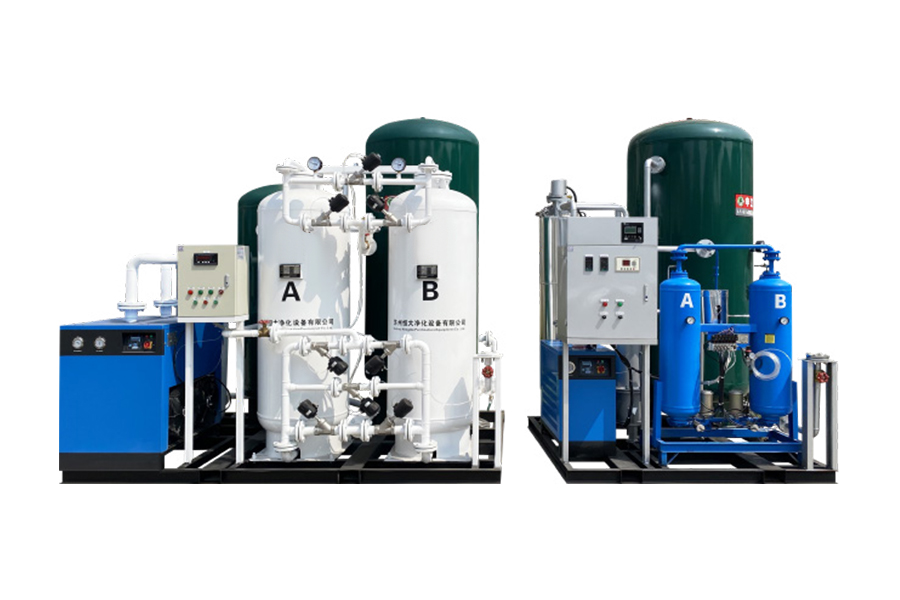
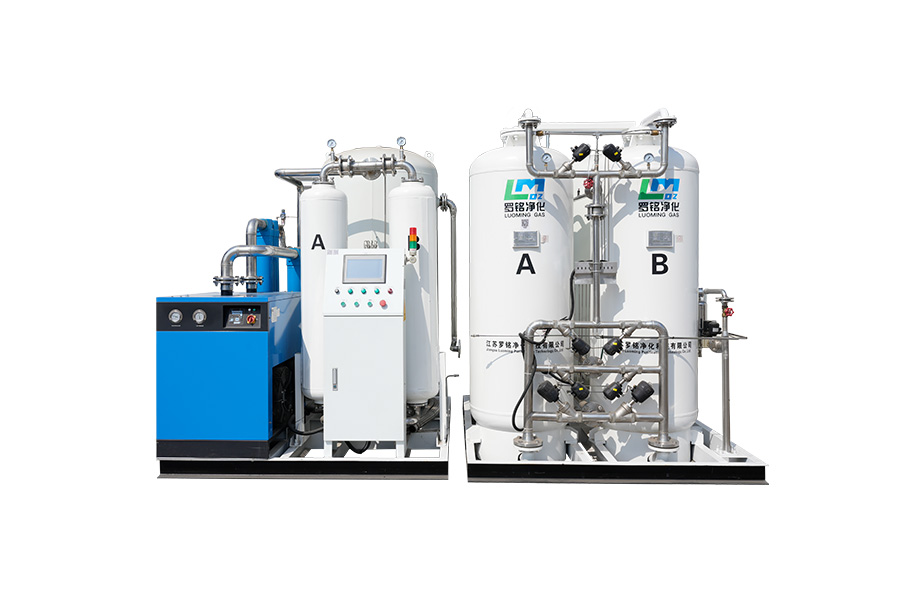
The atmosphere is 78% nitrogen. Pressure Swing Adsorption (PSA) technology exploits this abundance. Compressed air is pushed through towers packed with Carbon Molecular Sieve (CMS) — a material that adsorbs oxygen, CO₂, and moisture preferentially, allowing nitrogen to pass through. While one tower adsorbs, the other regenerates by depressurizing, creating a continuous output of high-purity N2.
A well-engineered PSA nitrogen gas generator can achieve purities from 95% up to 99.9995%, adjustable to match your exact process requirement. Higher purity demands more CMS and slower cycle times — so matching purity to application directly controls operating costs. Over-specifying purity is one of the most common and expensive mistakes buyers make.
Which Industries Get the Most Value From On-Site N2
Not every application needs the same thing, but several industries see especially strong ROI:
- Food & Beverage Packaging — Modified atmosphere packaging (MAP) requires consistent nitrogen at 95–99.5% purity to displace oxygen and extend shelf life. A reliable N2 supply directly ties to product quality and waste reduction. See how nitrogen generators serve the food industry.
- Electronics & SMT Soldering — Reflow soldering in nitrogen atmosphere prevents oxidation on PCB joints, reducing defect rates significantly. Purity requirements typically fall between 99.9% and 99.999%. Explore nitrogen use in electronics manufacturing.
- Laser Cutting — Stainless steel and aluminum cut cleanly with nitrogen assist gas, producing bright, oxide-free edges without post-processing. High flow rates at moderate purity (99–99.5%) are the norm. Learn how laser cutting facilities use on-site N2.
- Pharmaceuticals & Chemical Processing — Blanketing, inerting, and purging applications require continuous nitrogen at controlled purity. Regulatory compliance and process safety both depend on supply reliability.
- Metal Heat Treatment — Bright annealing and sintering require inert atmospheres to prevent surface oxidation during high-temperature processes.
Four Criteria That Determine the Right System for You
Before requesting a quote for any industrial nitrogen plant, nail down these four parameters:
- Required purity level — Every percentage point above 99.5% increases capital and energy costs. Match purity to your strictest process, not to a round number.
- Flow rate (Nm³/h) — Calculate peak demand, not average. A system undersized for peak load becomes the bottleneck in your production line.
- Inlet air quality — PSA systems need clean, dry compressed air. Factor in the cost of air treatment (dryers, filters) if your facility doesn't already have it.
- Output pressure — Standard PSA output is typically 4–8 bar. If your process needs higher pressure, a downstream nitrogen booster compressor is required.
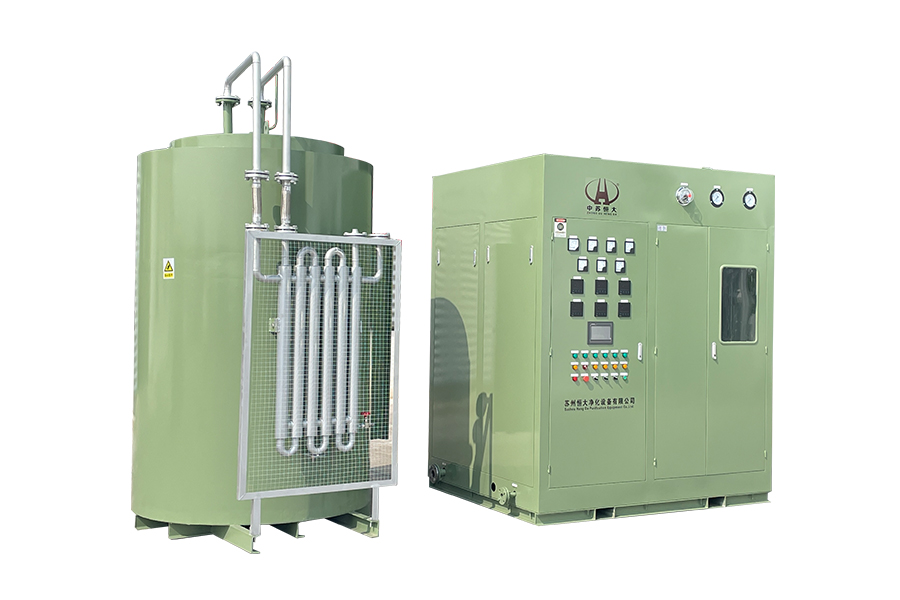
For applications requiring purity above 99.999%, a standard PSA unit can be paired with a catalytic purification stage. High-purity N2 generator configurations are available for exactly these demanding use cases.
Safety Considerations You Cannot Skip
Nitrogen is an asphyxiant. It is colorless, odorless, and displaces oxygen without any sensory warning. OSHA standards covering compressed gas handling and hazard communication apply to all facilities generating or using nitrogen on-site. Key requirements include proper ventilation in the generator room, oxygen-depletion alarms, worker training, and clearly labeled pipelines.
A reputable nitrogen generator manufacturer will not just sell you equipment — they will provide installation guidance and commissioning support that helps you meet these regulatory requirements from day one. Do not evaluate suppliers purely on price; after-sale technical support is a real operational cost.
PSA vs. Membrane: A Clear Decision Framework
PSA vs. Membrane Nitrogen Generator Comparison
| Factor |
PSA Generator |
Membrane Generator |
| Max purity achievable |
Up to 99.9995% |
Up to ~99.5% |
| Best for flow scale |
Small to very large |
Small to medium |
| Maintenance complexity |
Moderate (valve cycling) |
Low (no moving parts) |
| Capital cost |
Higher |
Lower |
| Ideal application |
Electronics, pharma, heat treatment |
Tire inflation, low-spec blanketing |
For the vast majority of industrial applications requiring purity above 99.5%, PSA is the correct choice. Membrane technology suits applications where simplicity and compact size matter more than purity ceiling.
Making the Transition: What to Expect
Switching from delivered gas to on-site generation is not a rip-and-replace project. Most facilities run both systems in parallel during commissioning, then phase out cylinder or dewar deliveries once the generator proves stable. Typical lead time from order to commissioning for a standard PSA unit is 6 to 12 weeks, depending on system size and site preparation requirements.
The operational shift is also cultural. Your maintenance team needs basic training on CMS condition monitoring, valve inspection schedules, and air quality checks. Well-designed systems include built-in purity analyzers and remote monitoring ports — making this straightforward in practice. Over a 10-year lifecycle, the total cost of ownership of an on-site system routinely runs 40–60% below the cumulative cost of equivalent delivered nitrogen.
If your facility currently spends more than $800/month on nitrogen supply, the economics of switching almost certainly work in your favor. The only question is which configuration fits your process.





 English
 русский
 Français
 Español
 عربى
عربى