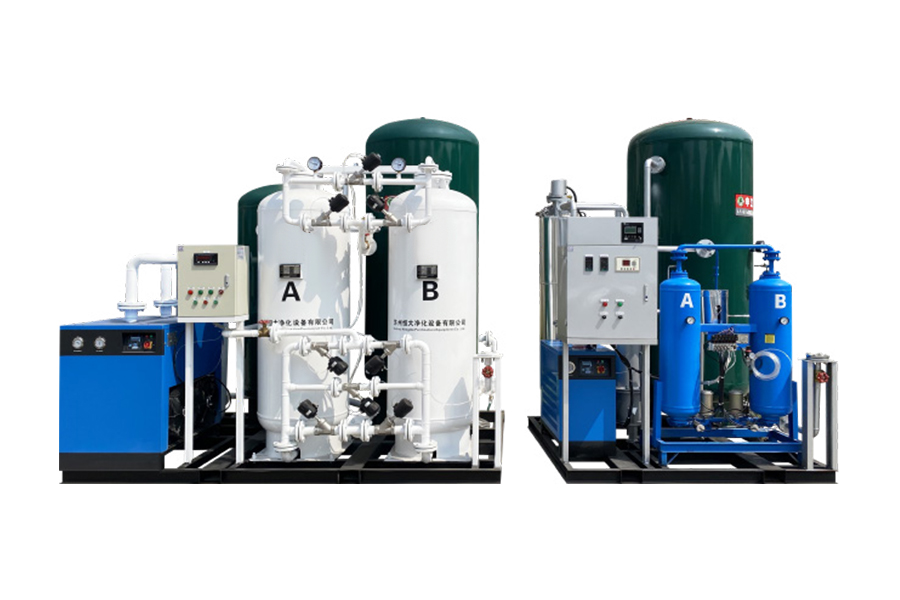
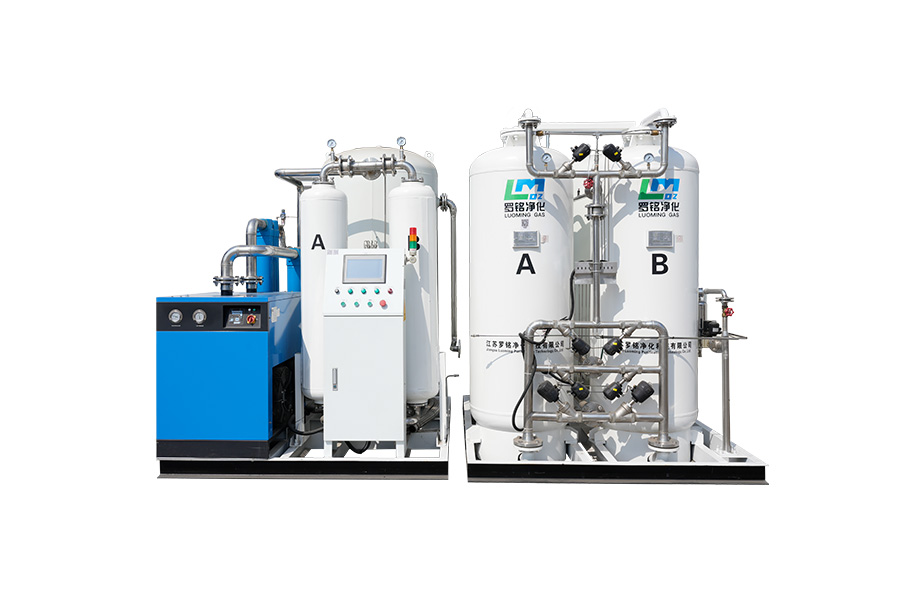
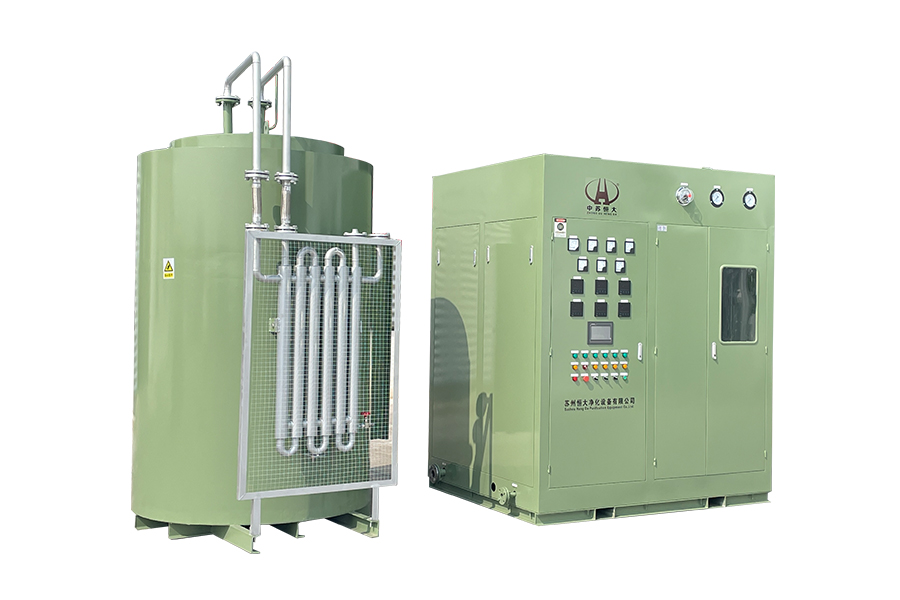
A hospital filling its own cylinders, a laser shop cutting 12 mm stainless steel and an ozone plant all run into the same problem: delivered oxygen is priced by the truckload, and the price moves on someone else's schedule.
Renting a liquid tank or swapping cylinders works until a delivery slips, evaporation losses climb or the contract is renegotiated. A 99.5% high purity oxygen generator removes that dependency by producing pharmacopoeia-grade oxygen on site, from compressed air, whenever the process needs it.
What 99.5% Purity Actually Means
A 99.5% high purity oxygen generator is a pressure swing adsorption plant whose product meets a 99.5% v/v oxygen specification, with the remaining half a percent made up of argon, residual nitrogen, moisture, carbon dioxide and trace contaminants.
That definition matters, because the gap between 93% and 99.5% is not a dial setting. A conventional two-bed PSA unit with zeolite molecular sieve tops out at 90 to 93% oxygen. Argon behaves almost identically to oxygen on zeolite, so it passes straight through the beds, and in a 93% product it can account for 4 to 5% of the gas. Removing that argon is the entire engineering problem behind a high purity machine.
A 99.5% oxygen generator is not a larger version of a 93% medical concentrator. It is a PSA plant plus a second purification stage, and the second stage carries most of the design effort and a large share of the cost.
When a quotation arrives, treat the headline purity number as the start of the specification rather than the end of it. Four items decide whether the machine will still hold 99.5% after a year in service:
- Oxygen content: 99.5% v/v minimum, normally quoted with a tolerance such as plus or minus 0.2%.
- Argon and nitrogen: the balance of that 0.5%, and the figure most often missing from a quotation.
- Moisture: a pressure dew point between minus 40 and minus 60 degrees Celsius, set by the dryer rather than the adsorber.
- Carbon dioxide and carbon monoxide: the limits that decide whether the gas may be labelled medicinal.
How a 99.5% High Purity Oxygen Generator Works
Reaching 99.5% takes three stages in series: air preparation, zeolite separation, then a purification stage that strips the residual argon and nitrogen.
Stage one: clean, dry, temperature-stable air
Oil carryover poisons zeolite permanently, and every degree above the design inlet temperature reduces capacity. A refrigerated dryer with coalescing and activated carbon filtration is the standard front end, and it is the cheapest place in the plant to prevent an expensive failure.
Stage two: PSA separation
Two vessels of zeolite molecular sieve alternate between adsorption under pressure and regeneration at low pressure. Nitrogen is held on the sieve while oxygen passes through. Cycle time, purge ratio and bed geometry decide how close the product gets to the 93% ceiling, and how much feed air is lost as purge.
Stage three: purification to 99.5%
This is where suppliers diverge. Some packages add a polishing adsorber using an adsorbent selected for argon rejection; others use a compact cryogenic column that separates argon and nitrogen by distillation. Both routes add pressure drop, heat exchange and extra regeneration logic, and both lengthen cold start. Because the three stages must be tuned together, integrated skids generally hold their rating better than equipment assembled from separately sourced stages.
99.5% Minimum oxygen content, v/v
45 min Typical cold start to rated purity
-40 C Typical pressure dew point at outlet
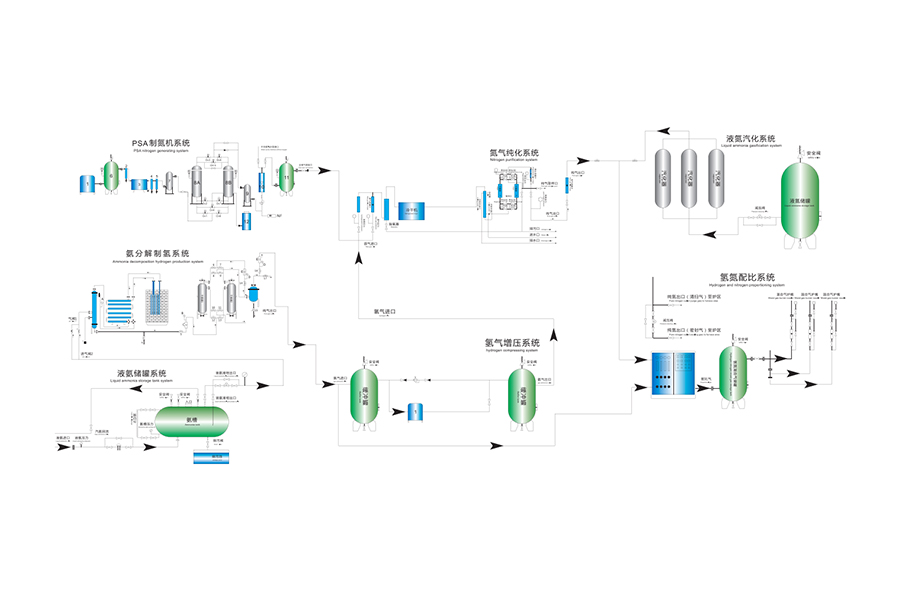 Air Separation On-site Production SolutionsThe protective gas station is composed of a pressure swing adsorption (PSA) nitrogen production device, a nitrogen production device, an ammonia decomposition hydrogen...View Product →
Verifying Purity Rather Than Trusting It
Purity is a measured value, not a nameplate value, so the instrumentation matters as much as the adsorber itself.
A percent-level oxygen analyzer confirms the headline number but says nothing about what the remaining 0.5% contains. Two streams can both read 99.5% oxygen while carrying very different argon and moisture loads, and those differences decide whether the gas is acceptable for filling, cutting or medicinal use.
Acceptance and periodic testing
- Gas chromatography or certified laboratory analysis for argon, nitrogen and carbon dioxide.
- Dew point measurement at the outlet under full flow, not at idle.
- A full-flow test at the highest ambient temperature the site will ever see.
Continuous online monitoring
- An inline oxygen analyzer with trend logging, so drift appears before a batch fails.
- A dew point transmitter downstream of the dryer.
- Alarm set-points wired into the control system rather than into a clipboard.
A factory purity certificate proves the design can reach 99.5%. Only instrumented records from your own installation prove that it still does after a year of service.
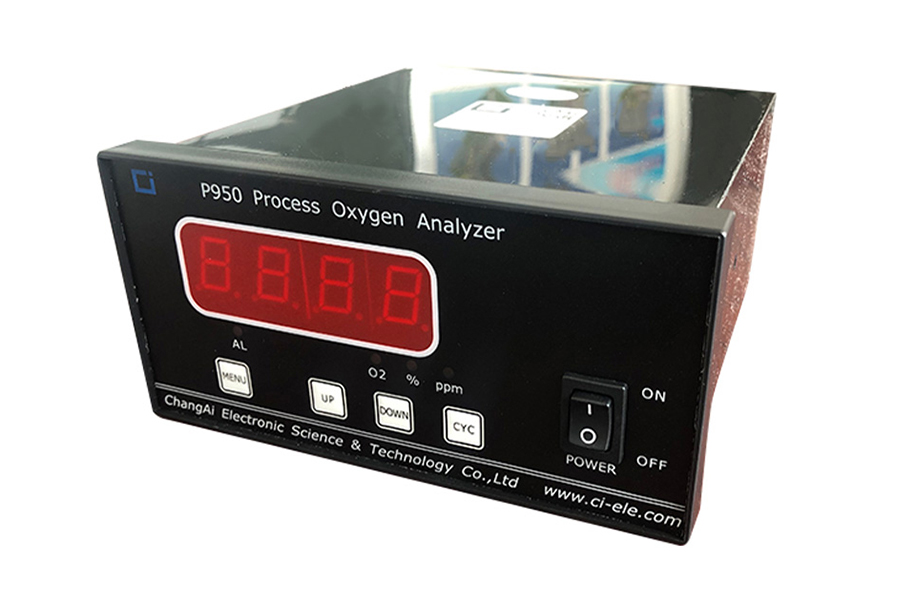 P950 Oxygen AnalyzerP950 Process Oxygen Analyzer is based on a microprocessor, which adopts the ion flow oxygen sensor as a measuring unit. It will display oxygen concentration in oxy-nit...View Product →
Specification Benchmarks Worth Comparing Line by Line
Two quotations for a 99.5% oxygen generator can look identical on page one and diverge completely on page two, so compare the parameters below before you compare price.
Indicative parameter ranges for 99.5% high purity oxygen generator packages; confirm every value against your own process duty and local rules.
| Parameter |
Typical range |
What to verify |
| Oxygen purity |
99.5% v/v, adjustable 99.0 to 99.9% |
Tolerance stated at rated flow |
| Capacity |
5 to 200 Nm3/h |
Rated at what inlet temperature |
| Outlet pressure |
0.3 to 0.6 MPa from the PSA stage |
Whether a booster is included |
| Filling pressure |
15 to 20 MPa after boost |
Gas temperature entering the booster |
| Pressure dew point |
Minus 40 to minus 60 degrees Celsius |
Dryer type and ambient rating |
| Argon plus nitrogen |
0.5% or less, combined |
The argon figure stated separately |
| Start-up time |
10 to 20 minutes warm, 30 to 45 minutes cold |
Time to rated purity, not to first flow |
| Turndown |
30 to 100% of rated flow |
Whether purity holds at 40% load |
| Control system |
PLC with purity and dew point trending |
Export format for audit records |
Rated capacity means nothing without the conditions attached to it. A unit quoted at 50 Nm3/h may deliver that figure at 20 degrees Celsius inlet air and lose 10 to 15% of it at 40 degrees Celsius.
Where the gas will be filled into cylinders, a booster stage lifts the PSA outlet from a few bar to 150 or 200 bar, and it is the component most often undersized in a first quotation. Where the gas is destined for medicinal use, purity alone is not enough; documentation, validation and a licensed production chain carry equal weight. Medical-grade oxygen supply is a regulated activity, and the equipment has to fit into it.
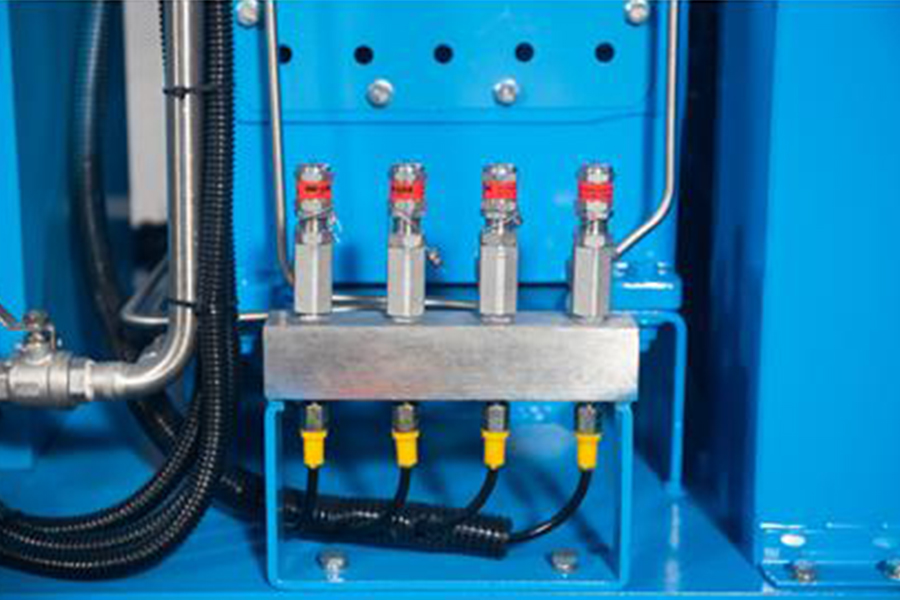 High Pressure Oxygen Booster CompressorJiangsu Luoming offers professional oil-free high-pressure oxygen booster compressors for cylinder filling and industrial applications. 150-200 bar discharge pressure....View Product →
Where 99.5% Oxygen Pays Off
Paying for 99.5% is only justified where the last few percent change the outcome. Below that threshold, a 93% unit is usually the better investment.
Medical and filling
Pharmacopoeia-grade supply
Cylinder filling stations, hospital manifold backup and any process where the gas must satisfy a 99.5% v/v medicinal oxygen monograph.
Cutting and welding
Laser and plasma cutting
Higher oxygen purity raises cutting speed on stainless and carbon steel, sharpens the cut edge and reduces dross, with the largest gains on thicker plate.
Process oxidation
Ozone and chemical oxidation
Ozone yield and oxidation reaction rates rise with oxygen purity and fall sharply when moisture is present in the feed gas.
Medical gas filling 99.5%
Laser cutting 99.5%
Process oxidation 99.0%
Wastewater and aquaculture 93%
Combustion enrichment 93%
Bar length is scaled for readability; the values are typical starting points rather than fixed requirements.
The lower rows are not compromises, they are the correct engineering choice. Reaching 99.5% costs energy, consumables and maintenance attention, so buying it for an application that runs happily at 93% only raises the operating bill. In industries such as laser and plasma cutting, on the other hand, the purity difference shows up directly in edge quality and cycle time.
Onsite Generation or Delivered Oxygen
Onsite generation wins on cost predictability and control, and loses on capital outlay and maintenance responsibility. The crossover point depends on how much oxygen the site actually consumes.
Onsite 99.5% generation
- Cost per cubic metre largely fixed by the electricity tariff
- No evaporation losses, no cylinder handling, no return logistics
- Purity available on demand, including outside delivery hours
- Maintenance, spares and analyzer calibration become your responsibility
Liquid or cylinder supply
- Low capital cost and fast deployment
- Exposure to liquid oxygen price swings and delivery scheduling
- Evaporation and residual losses on every tank and bundle
- Purity guaranteed by the supplier, with documentation handled for you
Onsite generation rarely wins on day-one cost. It wins on the ten-year cost of gas, and on not having to schedule production around a delivery truck.
Procurement and Maintenance Checklist
Most disappointing high-purity installations fail at the front end of the process rather than in the adsorber, so work through the following steps in order.
- Define the duty point at worst case: flow, purity, pressure and dew point at the highest ambient temperature the site will ever see, not at mild design conditions.
- Ask for the impurity breakdown. A 99.5% figure without an argon number is not a verifiable specification.
- Confirm the purification route. Adsorption polishing and cryogenic polishing behave differently on start-up, turndown and maintenance intervals.
- Instrument the acceptance test: percent-level oxygen plus dew point, logged and archived, with alarm set-points wired into the control system.
- Budget the consumables. Sieve replacement, filter elements, dryer service and annual analyzer calibration belong in the operating plan from year one.
Feed air quality is the single largest determinant of long-term purity stability. An oil-laden or overheated feed stream will degrade output months before the sieve reaches the end of its rated life.
Frequently Asked Questions
Can an existing 93% PSA oxygen generator be upgraded to 99.5%?
Rarely at reasonable cost. The purification stage needs its own vessels, piping, regeneration logic and control sequence, and the existing PSA stage often cannot supply the pressure and flow profile it requires.
Is 99.5% oxygen from a generator the same as medical oxygen?
Purity is necessary but not sufficient. Medicinal oxygen also has limits on carbon dioxide, carbon monoxide, moisture and hydrocarbons, plus documentation and quality-system requirements, so the generator has to sit inside a validated medical gas chain. Pharmacies, hospitals and health authorities normally review the whole chain, not just the machine.
What capacity should I specify?
Start from peak demand rather than average demand, then add a margin of 20 to 30% for fouling, high ambient temperature and future growth. If cylinders will be filled, size the generator for the filling station's daily output instead of the pipeline load alone.
How long does a 99.5% oxygen generator take to start?
Warm restarts typically reach rated purity in 10 to 20 minutes. A cold start after a long shutdown can take 30 to 45 minutes, because the purification stage has to stabilise before the gas is acceptable, so filling systems need buffer storage to cover that window.
Choose the purification route first, the instrumentation second and the capacity third. In that order, 99.5% stays a measurable commitment rather than a claim on a brochure.





 English
 русский
 Français
 Español
 عربى
عربى