The Classification Question That Matters Before You Buy
If you are sourcing an oxygen generator for a hospital, clinic, nursing home, or any healthcare facility, the question of medical device classification is not a formality — it has direct consequences for compliance, liability, and patient safety. The short answer is: it depends on the intended use. An oxygen generator designed and approved for medical applications is classified as a medical device in most regulatory frameworks worldwide. An industrial oxygen generator used for welding or aquaculture is not. Understanding this distinction is essential before making a procurement decision.
As a manufacturer that produces both medical-grade and industrial oxygen generators, we frequently address this question with buyers who need clarity on what certifications to require and what standards apply to their specific use case.
How Regulatory Bodies Define a Medical Oxygen Generator
Regulatory agencies in major markets classify oxygen generators based on their intended purpose and the risk level they present to users. Here is how the most relevant frameworks approach this:
United States — FDA Classification
Under the U.S. Food and Drug Administration (FDA), oxygen-generating equipment intended for medical use falls under 21 CFR Part 868, covering anesthesiology devices. Medical oxygen concentrators are classified as Class II medical devices, subject to 510(k) premarket notification and performance standards. Industrial oxygen generators sold without medical claims do not fall under FDA jurisdiction.
European Union — CE Medical Device Regulation (MDR)
In the EU, the Medical Device Regulation (EU 2017/745) governs oxygen generating equipment used in clinical settings. A medical oxygen generator requires CE marking under the MDR, which involves conformity assessment by a Notified Body for higher-risk classifications. The applicable harmonized standard is ISO 80601-2-69, specifically covering oxygen concentrators for medical use.
China — NMPA Classification
China's National Medical Products Administration (NMPA) classifies medical oxygen generators as Class II medical devices. Manufacturers must obtain a Medical Device Production License and a Medical Device Registration Certificate before supplying these products to healthcare facilities. The standard YY/T0298 applies specifically to medical molecular sieve oxygen generators produced domestically.
International — ISO 13485
Beyond country-specific rules, ISO 13485 is the internationally recognized quality management standard for medical device manufacturers. Suppliers holding ISO 13485 certification have demonstrated that their quality systems meet the requirements for consistent design, production, and delivery of medical devices — a key indicator when evaluating overseas suppliers.
Medical vs. Industrial Oxygen Generator: Key Differences
Both types use Pressure Swing Adsorption (PSA) technology to separate oxygen from ambient air. However, the design requirements, output standards, and regulatory obligations differ significantly.
| Criteria |
Medical Oxygen Generator |
Industrial Oxygen Generator |
| Oxygen Purity |
93% ± 3% (per medical standards) |
Variable; 90–95%+ depending on application |
| Regulatory Approval |
Required (FDA, CE MDR, NMPA, etc.) |
Not required for medical use |
| Quality Management |
ISO 13485 required |
ISO 9001 typically sufficient |
| Filtration Standard |
Multi-stage, including bacterial/HEPA filtration |
Standard particulate filtration |
| Monitoring & Alarms |
Real-time purity, flow, pressure alarms required |
Not mandated by medical regulation |
| Intended Users |
Hospitals, clinics, nursing homes, home therapy |
Aquaculture, welding, wastewater, metallurgy |
Comparison of medical-grade and industrial oxygen generators across key procurement criteria
Using an industrial oxygen generator in a clinical setting is not a compliant substitute for a certified medical device, even if the purity levels appear similar. Regulatory authorities in most countries explicitly prohibit this practice, and institutions doing so expose themselves to significant legal and safety risk.
Why the Medical Device Classification Directly Affects Your Facility
For healthcare procurement managers and administrators, the medical device status of an oxygen generator has several practical implications:
Hospital Accreditation and Inspection
Accreditation bodies such as JCI (Joint Commission International) and national health ministries require that all equipment supplying medical gases to patients must be certified medical devices with traceable documentation. During inspections, auditors will request the device registration certificate and manufacturing license from the supplier. A facility operating non-certified equipment risks losing accreditation or failing government audits.
Liability and Insurance
In the event of a patient adverse event linked to oxygen supply, the use of a non-certified device creates significant liability exposure for the institution and its clinical staff. Medical malpractice insurers in several jurisdictions explicitly exclude coverage for incidents involving uncertified medical equipment. This is a risk no hospital administrator should accept.
Tender and Procurement Requirements
Government hospital tenders in the vast majority of countries — including those in Africa, Southeast Asia, the Middle East, and Latin America — now explicitly require suppliers to provide valid medical device registration certificates and ISO 13485 certification as part of the bidding documentation. Suppliers without these credentials are disqualified at the evaluation stage regardless of price.
What Certifications to Require From Your Supplier
When evaluating a medical oxygen generator supplier, the following documentation should be mandatory, not optional:
- Medical Device Production License — confirms the manufacturer is legally authorized to produce medical devices
- Medical Device Registration Certificate — confirms the specific product model is registered and approved for medical use
- CE Certification (for EU markets) — demonstrates conformity with European Medical Device Regulation requirements
- ISO 13485 Certificate — validates the quality management system for medical device manufacturing
- ISO 9001 Certificate — general quality management, expected as a baseline
- Compliance with applicable standards — such as YY/T0298 (China), ISO 80601-2-69 (international), or equivalent national norms
Requesting and verifying these documents before finalizing any purchase protects your facility from compliance failures and ensures you are sourcing a genuinely medical-grade product. Be cautious of suppliers who present only general industrial certifications and claim their product is "suitable for medical use" — suitability claims without registration documentation carry no regulatory weight.
PSA Technology: The Standard for On-Site Medical Oxygen Generation
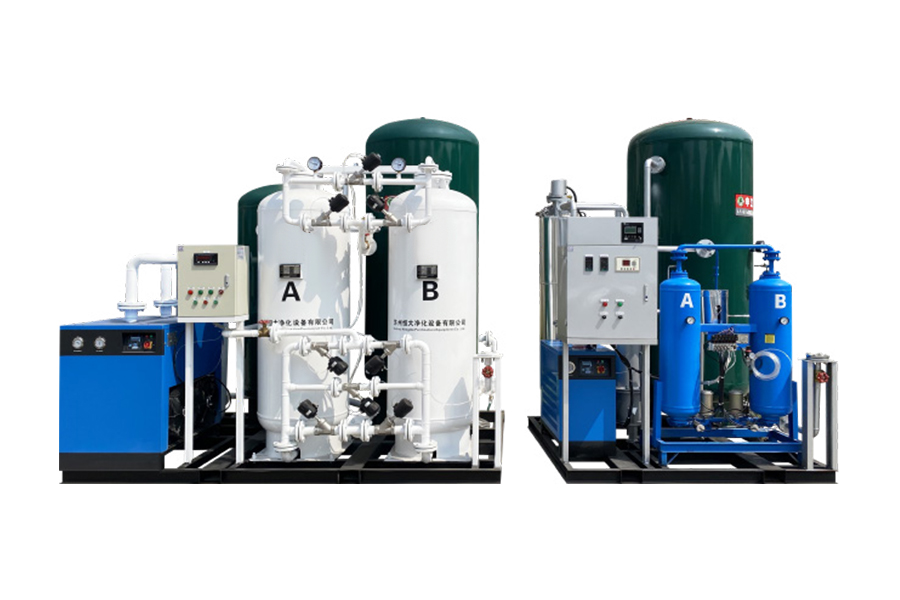
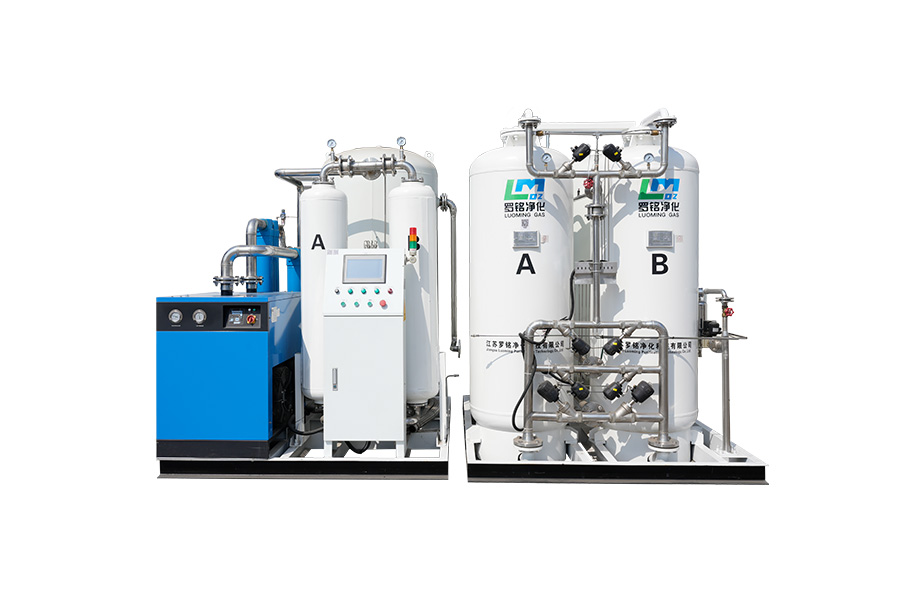
The dominant technology in certified medical oxygen generators today is Pressure Swing Adsorption (PSA). The process draws ambient air through a compressor, passes it through zeolite molecular sieve beds that selectively adsorb nitrogen, and outputs concentrated oxygen at the required purity. The two adsorption towers alternate in a continuous cycle, ensuring an uninterrupted supply.
Compared to traditional cylinder or liquid oxygen supply, on-site PSA generation offers several measurable advantages for healthcare facilities:
- Supply independence: No reliance on external gas suppliers or delivery schedules, eliminating shortages during emergencies or supply chain disruptions
- Long-term cost reduction: Operational costs per cubic meter of oxygen are consistently lower than cylinder or bulk liquid oxygen over a 5–10 year horizon
- Safety profile: PSA generators operate at low pressure and eliminate the hazards of high-pressure cylinder storage and liquid oxygen handling
- Scalability: Capacity can be matched to facility size, from small clinics to large hospital complexes
The WHO and numerous national health ministries have explicitly recommended PSA oxygen generation as the preferred solution for hospitals in regions with unreliable gas supply chains — a recommendation that gained significant momentum following supply disruptions observed globally in 2020 and 2021.
Our Medical Oxygen Generators: Certified and Ready for Clinical Deployment
At Jiangsu Luoming Purification Technology Co., Ltd., our medical oxygen generator product line is developed specifically to meet medical device standards across multiple regulatory systems. We hold the Class II Medical Device Production License, Medical Device Registration Certificate, CE certification, ISO 13485, and ISO 9001 — documentation we provide in full to all buyers during the procurement process.
Our systems are built on molecular sieve PSA technology with intelligent monitoring, multi-stage filtration, automated fault alarms, and remote monitoring capability — designed to meet the safety and reliability expectations of hospitals, nursing homes, health centers, and high-altitude medical facilities. We supply institutions across more than 30 countries and support each installation with pre-sales technical consultation, on-site commissioning, and long-term after-sales service.
If you are evaluating medical oxygen generation solutions for your facility and need documentation, technical specifications, or assistance with compliance requirements for your local market, we are available to provide direct support.





 English
 русский
 Français
 Español
 عربى
عربى