What Is an Oxygen Generation Plant?
An oxygen generation plant is an industrial facility or on-site system that produces high-purity oxygen gas from atmospheric air. Rather than relying on cylinder deliveries or liquid oxygen logistics, these plants generate oxygen continuously and on demand — making them a cost-efficient, reliable solution for operations with sustained oxygen requirements.
Atmospheric air contains approximately 21% oxygen, along with nitrogen (78%), argon, and trace gases. An oxygen generation plant separates and concentrates the oxygen from this mixture using one of several proven separation technologies, delivering gas at purities typically ranging from 90% to 99.5% depending on process requirements.
Core Technologies Used in Oxygen Generation
Two dominant technologies drive modern oxygen generation plants, each suited to different output scales and purity targets:
Pressure Swing Adsorption (PSA)
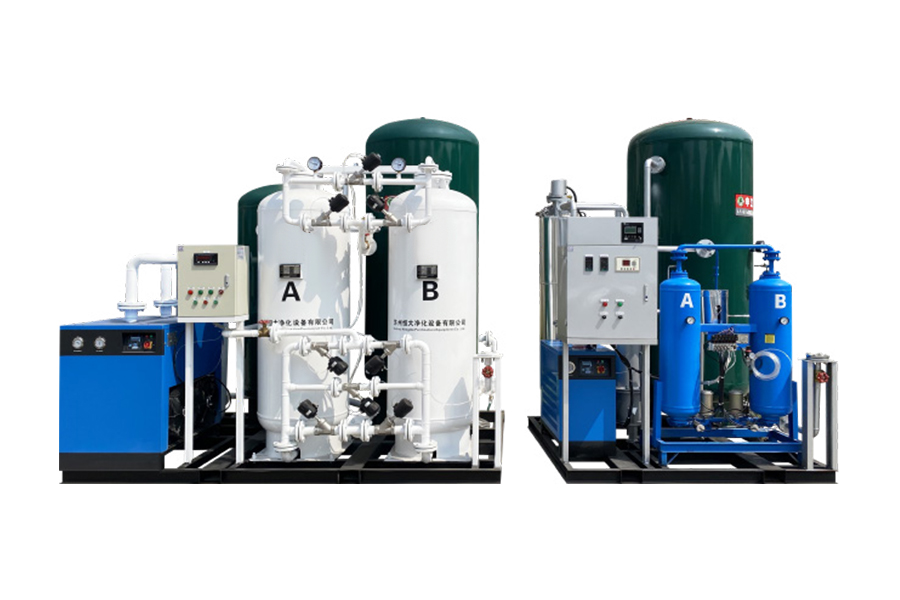
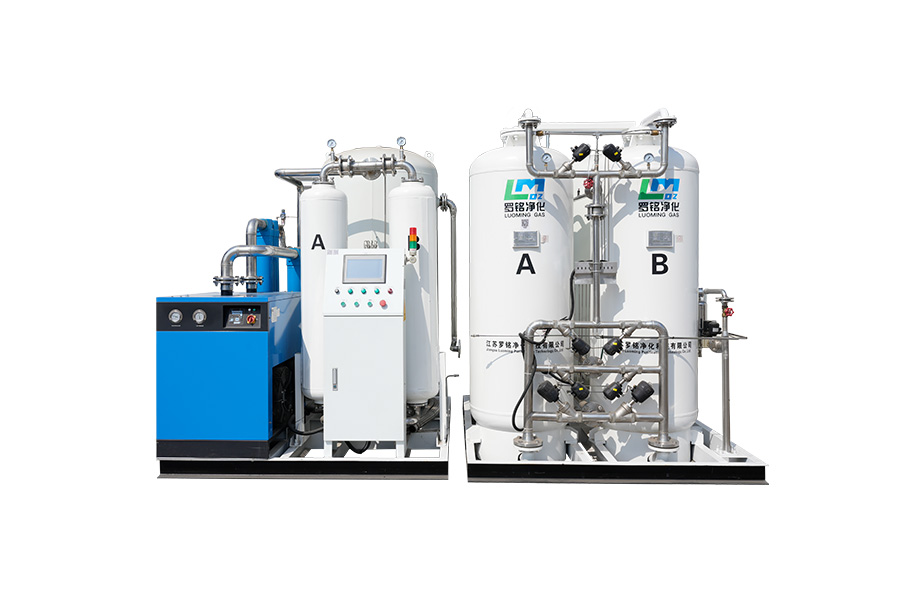
PSA systems pass compressed air through zeolite molecular sieve beds that selectively adsorb nitrogen, allowing oxygen to pass through. The process alternates between two vessels — one adsorbing nitrogen while the other regenerates — creating a continuous oxygen stream. PSA plants typically deliver oxygen at 90–95% purity and are well-suited for flow rates from a few liters per minute up to several thousand Nm³/h. They are valued for their low operating cost and minimal maintenance requirements.
Cryogenic Air Separation
Cryogenic plants cool air to extremely low temperatures (around −183°C), at which point oxygen liquefies and separates from nitrogen and argon through fractional distillation. This technology produces oxygen at purities of 99.5% and above and is the preferred choice for large-scale industrial applications requiring high-volume, high-purity supply. Capital investment is higher, but the unit cost per Nm³ drops significantly at scale.
Vacuum Pressure Swing Adsorption (VPSA)
VPSA operates on similar principles to PSA but uses vacuum during the desorption step rather than elevated pressure alone. This lowers energy consumption per unit of oxygen produced and is increasingly adopted in mid-range capacity plants, particularly in the steel and glass industries.
Key Industrial Applications
Oxygen generation plants serve a wide spectrum of industries where consistent, high-volume oxygen supply is critical to process efficiency and safety:
- Steel and metal production — Oxygen enrichment in blast furnaces and electric arc furnaces significantly increases throughput and reduces fuel consumption. A typical integrated steel plant may consume 200–300 Nm³ of oxygen per ton of steel produced.
- Wastewater treatment — Dissolved oxygen is essential for aerobic biological treatment. On-site oxygen plants replace air blowers with pure oxygen injection, improving BOD removal rates and reducing tank footprint.
- Pulp and paper — Oxygen delignification in the bleaching process reduces chlorine chemical usage by up to 40%, cutting effluent load and operational costs simultaneously.
- Glass manufacturing — Oxy-fuel combustion in glass furnaces replaces air with pure oxygen, improving flame temperature uniformity and reducing NOx emissions by more than 85%.
- Medical and healthcare facilities — Hospitals operating their own on-site oxygen plants eliminate dependence on third-party cylinder suppliers, ensuring uninterrupted supply for ICUs, operating theaters, and ventilator systems.
- Aquaculture — Oxygen injection maintains dissolved oxygen levels in high-density fish farming systems, directly improving survival rates and growth cycles.
Comparing Oxygen Supply Options: On-Site Generation vs. Bulk Delivery
For facilities evaluating whether to invest in an oxygen generation plant, the comparison against bulk liquid or cylinder supply is primarily a question of consumption volume, continuity of demand, and total cost of ownership.
| Factor |
On-Site Generation |
Bulk / Cylinder Supply |
| Upfront investment |
Higher |
Low |
| Operating cost per Nm³ |
Lower at volume |
Higher, variable |
| Supply continuity |
Continuous, independent |
Subject to logistics |
| Scalability |
Modular expansion possible |
Flexible, no fixed capacity |
| Best suited for |
High-volume, continuous users |
Low-volume or intermittent use |
Table 1. On-site oxygen generation vs. bulk supply — key decision factors
Industry benchmarks suggest that for facilities consuming more than 200 Nm³/day, on-site PSA systems typically reach payback within 18–36 months when displacing cylinder supply. At consumption levels above 1,000 Nm³/h, cryogenic plants become economically superior to all alternatives.
Critical Factors When Selecting an Oxygen Generation Plant
Choosing the right system requires careful evaluation across several technical and operational dimensions:
- Required purity level — Confirm the minimum oxygen purity your process can accept. Medical applications typically require ≥93% (per ISO 10083), while certain chemical processes demand 99%+.
- Flow rate and pressure — Size the plant to your peak demand with a margin of at least 15–20% to accommodate process variability and future capacity growth.
- Inlet air quality — Humidity, dust, and hydrocarbon contamination in the feed air directly impact sieve bed life in PSA systems. Pre-treatment filtration and drying is essential in humid or industrial environments.
- Energy consumption — Specific power consumption (kWh per Nm³ of O₂ produced) varies significantly between technologies and manufacturers. This figure is a key driver of long-term operating cost.
- Redundancy and reliability — For mission-critical applications, evaluate whether the plant design incorporates redundant compressors, automatic failover, or backup cylinder integration.
- Compliance and certification — Medical oxygen plants must comply with relevant pharmacopeial standards (e.g., USP, EP) and local regulatory requirements. Industrial plants should meet applicable pressure vessel and safety standards (ASME, PED, etc.).
Trends Shaping the Oxygen Generation Industry
The oxygen generation plant market is evolving rapidly, driven by both industrial demand and broader energy transition dynamics:
Hydrogen economy growth is a major demand driver. Electrolysis-based green hydrogen production requires large volumes of oxygen as a co-product, spurring investment in large-scale cryogenic and VPSA systems integrated with renewable energy sources.
Modular and containerized designs are gaining traction for remote or rapidly deployable applications — from mining sites to field hospitals — where traditional fixed-plant installation is impractical. Containerized PSA units can be operational within days of delivery.
IoT-enabled monitoring and remote diagnostics are now standard in leading systems, allowing real-time tracking of purity levels, pressure curves, and sieve bed performance. Predictive maintenance algorithms are reducing unplanned downtime by 30–50% in advanced installations.
The global oxygen generation equipment market was valued at approximately USD 3.8 billion in 2023 and is projected to grow at a CAGR of around 6.2% through 2030, with Asia-Pacific — led by China and India — accounting for the largest share of new capacity additions.





 English
 русский
 Français
 Español
 عربى
عربى