Procurement teams rarely compare an LMO oxygen generator with a liquid medical oxygen contract until a tender, an expansion, or a supply interruption forces the question. An onsite oxygen generator makes the same gas from ambient air inside the site fence, and a filling station can push it into cylinders. Both routes reach the same wall outlet, yet they differ sharply in lead time, running cost, footprint, and failure mode.
What an LMO Oxygen Generator Actually Means
An LMO oxygen generator is either a cryogenic air separation unit that liquefies oxygen for tank storage, or a pressure swing adsorption generator installed on site to displace liquid deliveries. The two machines share a name and almost nothing else.
The cryogenic route cools air until it liquefies, then separates oxygen from nitrogen by distillation at extremely low temperature. Oxygen leaves the column as liquid at 99.5 percent purity or above, and the site needs a storage tank, vaporisers, and a delivery chain. This is tonnage scale equipment, usually measured in hundreds of cubic metres per hour.
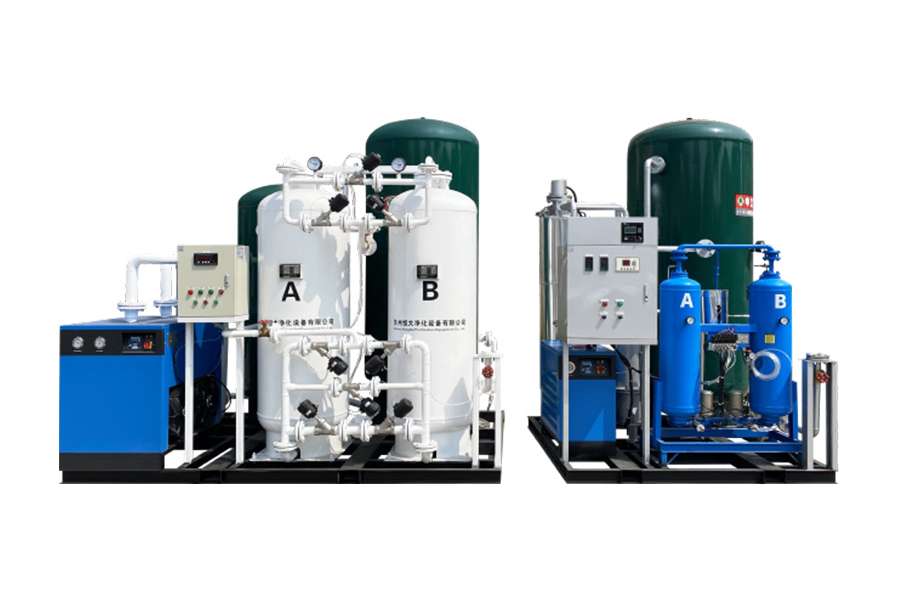
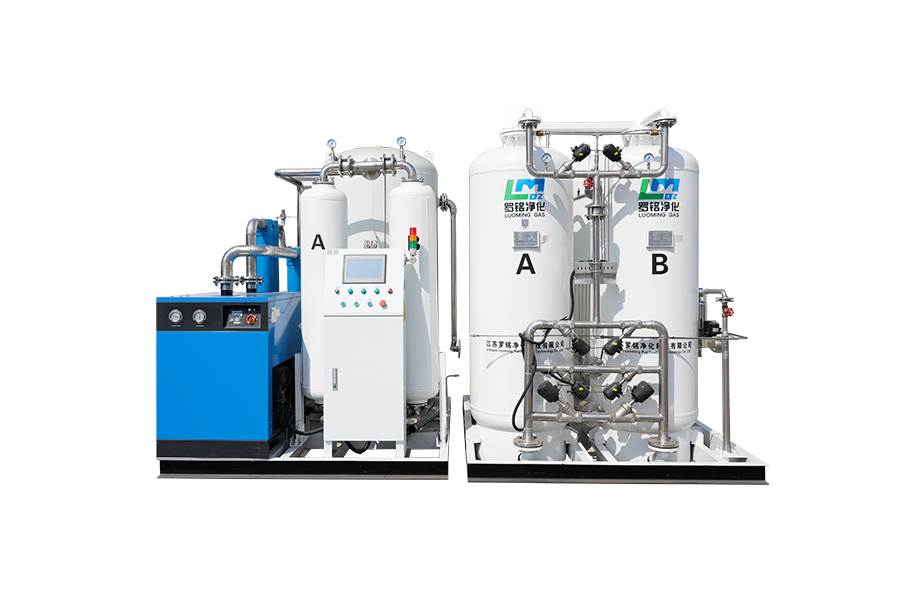
The PSA route stays at ambient temperature. Compressed air passes through a bed of zeolite molecular sieve, nitrogen is adsorbed on the surface, and oxygen-rich gas passes through. A standard medical unit delivers 93 plus or minus 3 percent oxygen; a downstream purification stage is what lifts the output to the 99.5 percent grade that many pharmacopoeias require for direct patient use.
Definition: Medical liquid oxygen is oxygen held as a cryogenic liquid at 99.5 percent purity or better, near minus 183 degrees Celsius in an insulated tank. One litre of liquid expands to roughly 861 litres of gas at room temperature, which is why a single tanker delivery can cover a large hospital for days.
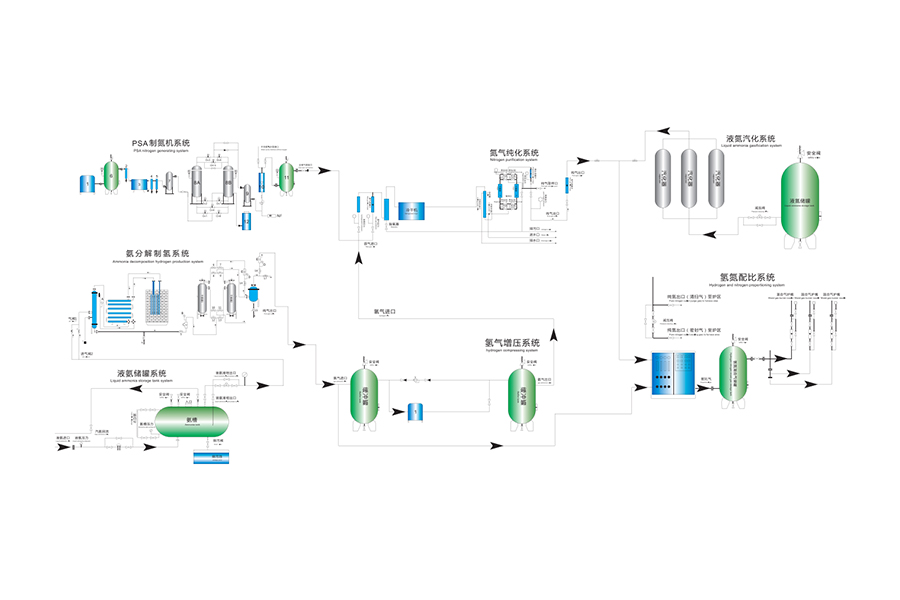 Air Separation On-Site Production SolutionsConfigurable on-site gas production solution with PSA nitrogen and hydrogen modules for hot-dip galvanizing, nickel plating, and powder metallurgical steel strip processing.View Product →
How the Gas Is Made: Cryogenic Separation Versus PSA
Cryogenic plants separate oxygen by distillation, while PSA generators separate it by selective adsorption, and the adsorption route is the one that normally replaces Medical liquid oxygen at a hospital, a fish farm, or a fabrication plant.
A PSA train follows five stages in every installation:
- Compression, where a screw compressor raises filtered ambient air to roughly 7 to 10 bar.
- Pre-treatment, where a refrigerated dryer, coalescing filters, and an activated carbon filter strip out water, oil aerosol, and dust before the air reaches the sieve.
- Adsorption, where air flows up through one zeolite bed, nitrogen is held, and oxygen-rich gas leaves the top of the vessel.
- Desorption, where that bed is depressurised and purged to release the nitrogen while the second bed takes the load, which is what keeps the outlet flow continuous.
- Storage and boosting, where oxygen enters a buffer tank and then passes a booster if cylinders are to be filled instead of a pipeline served.
A two-bed PSA train typically swings between adsorption and desorption every 30 to 60 seconds. Outlet purity stays stable only when buffer volume and the analyzer loop are sized around that cycle, not added afterwards.
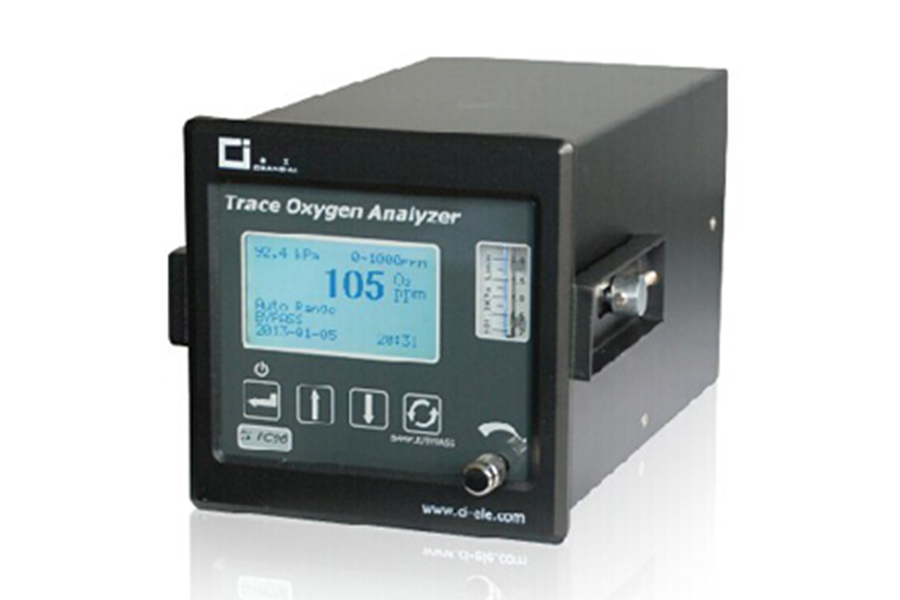 CI-PC96 Trace Oxygen Analyzer for Industrial Gas AnalysisFuel-cell analyzer for ppm-level oxygen monitoring in air separation and semiconductor gas detection, with auto-calibration and RS485/RS232 communication.View Product →
Medical liquid oxygen Tank Versus Onsite Generation: The Decision Table
Liquid supply usually wins on capital cost for very large single-site demand, while an onsite generator wins on running cost, supply security, and control wherever demand is steady and the site can host the equipment.
Comparison of liquid medical oxygen supply and onsite PSA generation for institutional buyers.
| Factor |
Medical liquid oxygen tank supply |
Onsite oxygen generator |
| Purity at source |
99.5 percent or above |
93 plus or minus 3 percent, or 99.5 percent with purification |
| Start-up |
Days to weeks, including tanker logistics |
Hours to a few days after installation |
| Recurring cost driver |
Gas price, road delivery, boil-off losses |
Compressor electricity, maintenance, sieve replacement |
| Storage on site |
Cryogenic tank, vaporisers, exclusion zone |
Buffer tank and cylinder bank, no cryogenic hazard |
| Supply risk |
Third-party delivery and road access |
Power stability and compressed air quality |
| Typical scale |
High volume, multi-ward or industrial |
3 to 200 cubic metres per hour |
Where liquid supply still fits
- Demand above a few hundred cubic metres per hour
- A cryogenic tank and vaporiser already in service
- Short campaigns where equipment cannot be amortised
- Sites with weak power but reliable road access
Where onsite generation wins
- Steady round-the-clock demand with a predictable load profile
- Cylinder refill spend that exceeds generator running cost
- Remote, plateau, or island sites with long delivery lead times
- Process oxygen for cutting, aeration, or combustion support
For that second group, a PSA oxygen generator is normally quoted together with a filling station rather than as a standalone machine.
Purity, Pressure, and Filling: Where Projects Fail
Generators usually pass the purity test at the outlet and then fail at the cylinder bank, because pressure, dew point, and oil carryover were never written into the same specification as purity.
93% Standard PSA purity, plus or minus 3 percent
99.5% Medical grade after a purification stage
150 bar Typical cylinder filling pressure from a booster
Four figures decide whether the installation survives daily operation:
- Pressure dew point at the sieve inlet, usually specified at minus 40 degrees Celsius or lower to protect both the sieve and the booster.
- Outlet pressure at the point of use, where a ward pipeline needs 4 to 5 bar but a cylinder bank needs 150 bar or more from a dedicated oxygen booster.
- Hydrocarbon carryover, which makes oxygen-clean components and oil-free compression downstream of the dryer non-negotiable for medical work.
- Analyzer placement, with at least one measurement at the generator outlet and one after the booster, calibrated against a traceable reference gas.
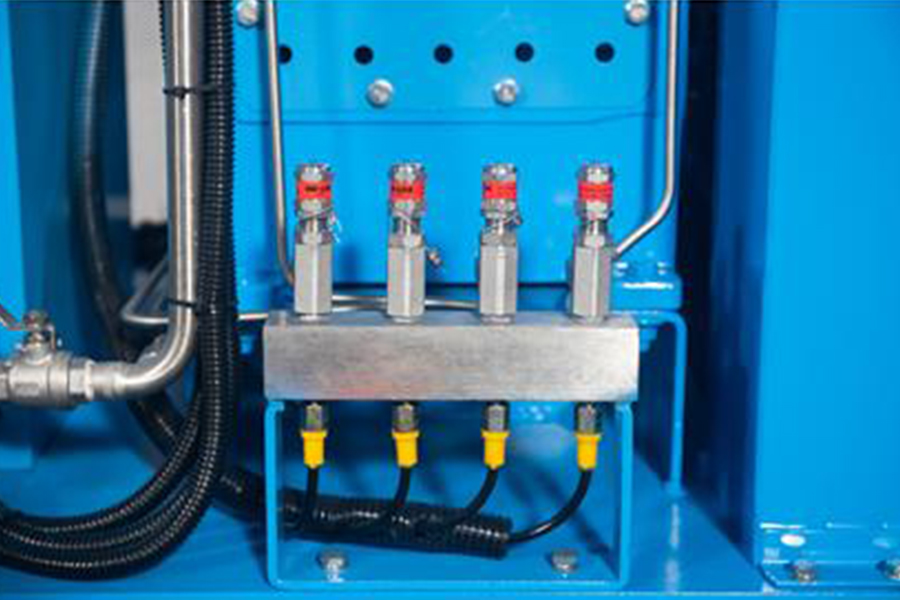 Oil-Free High Pressure Oxygen Booster CompressorOil-free booster for cylinder filling and oxygen charging stations, with 150–200 bar discharge pressure for high-pressure industrial oxygen supply.View Product →
Sizing an Onsite System Against Real Demand
Sizing starts from peak simultaneous flow rather than bed count, and the cylinder filling load is added on top of the pipeline load instead of being averaged into it.
A practical sequence: multiply the highest simultaneous oxygen flow, where a general ward bed under oxygen typically draws 2 to 8 litres per minute, by the number of users at peak, add filling demand, then apply a 20 to 25 percent margin for start-up, leakage, and future beds. Equipment ranges follow the same logic.
Portable concentrator, 1 to 5 cubic metres per hour
Medical PSA generator, 5 to 100 cubic metres per hour
Containerised or modular system, 50 to 200 cubic metres per hour
Cryogenic liquid plant, 200 cubic metres per hour and above
Altitude changes the calculation. Above 2,500 metres the effective oxygen partial pressure drops, so a site that would need one generator at sea level can need two, and plateau oxygen supply projects usually combine pipeline delivery with a filling point for portable units.
Beyond healthcare, the same equipment serves aquaculture aeration, wastewater treatment, metal cutting, and combustion support, where 90 to 93 percent oxygen is sufficient and the economics are decided almost entirely by delivered gas cost.
Frequently Asked Questions
Can an onsite oxygen generator fully replace an Medical liquid oxygen tank?
For steady demand, yes. A PSA generator covers pipeline supply continuously, and a high purity unit with a purification stage can meet a 99.5 percent medical specification. Most hospitals still keep a cylinder reserve or a small liquid backup for disaster planning, because a generator depends on power and compressed air quality.
What purity can an Medical liquid oxygen oxygen generator reach?
A standard PSA unit delivers 93 plus or minus 3 percent oxygen. Adding carbon or catalytic purification after the sieve brings the outlet to 99.5 percent or higher. Industrial users such as cutting, aeration, and combustion support normally run between 90 and 93 percent.
What drives the running cost of onsite generation?
Electricity for the air compressor dominates, followed by sieve replacement after roughly 8 to 10 years and routine filter and dryer maintenance. Operators compare that total against delivered liquid price, tanker logistics, and boil-off losses across the same period.
How long does installation and commissioning take?
Skid and containerised units arrive pre-piped, so mechanical installation on a prepared foundation usually takes a few days. Commissioning, purity validation, and operator training follow, with first gas at specification normally available within two weeks of site arrival.
Whatever the delivery route, three numbers should be fixed before quotations are compared: peak simultaneous flow, required purity at the point of use, and the pressure needed at the cylinder bank. A system specified around those three values will hold its performance for a decade, while one specified around unit price alone will not.





 English
 русский
 Français
 Español
 عربى