Why Hospitals Can No Longer Afford to Rely on Cylinder-Based Oxygen
For decades, hospitals managed their oxygen supply through one method: ordering pressurized cylinders, storing them in dedicated rooms, and hoping deliveries arrived before the reserve ran out. That model worked well enough when patient volumes were predictable and supply chains were stable. Neither condition reliably holds today.
A single medium-sized hospital may consume hundreds of cylinders each week. Each cylinder requires manual handling, inspection, and connection. Storage space comes at a premium. Transportation delays—caused by weather, logistics failures, or surges in regional demand—can create dangerous shortfalls within hours. During the COVID-19 pandemic, facilities across six continents experienced critical oxygen shortages not because oxygen ceased to exist, but because the distribution infrastructure could not keep pace with demand spikes.
The pivot toward on-site generation addresses exactly this structural vulnerability. By producing oxygen from ambient air directly at the point of use, healthcare facilities decouple their oxygen supply from external logistics entirely. The medical oxygen generator has evolved from a niche capital investment into a foundational piece of hospital infrastructure—one that directly determines a facility's resilience in emergencies.
How Oxygen Filling Stations Function Within a Hospital Gas System
An oxygen filling station is not a standalone device—it is the downstream terminus of a complete gas generation and distribution system. Understanding how these components interact clarifies why the filling station is often the most critical node in the entire chain.
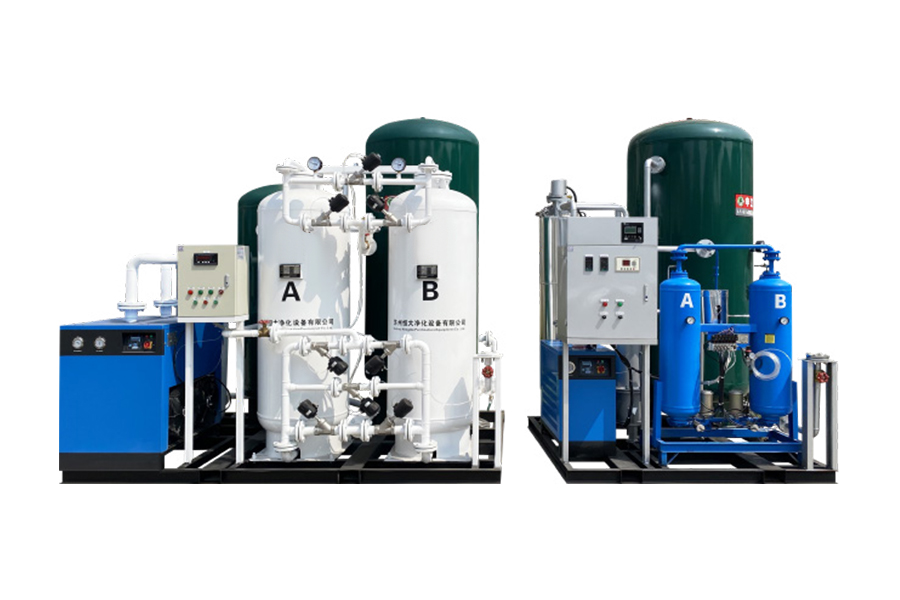
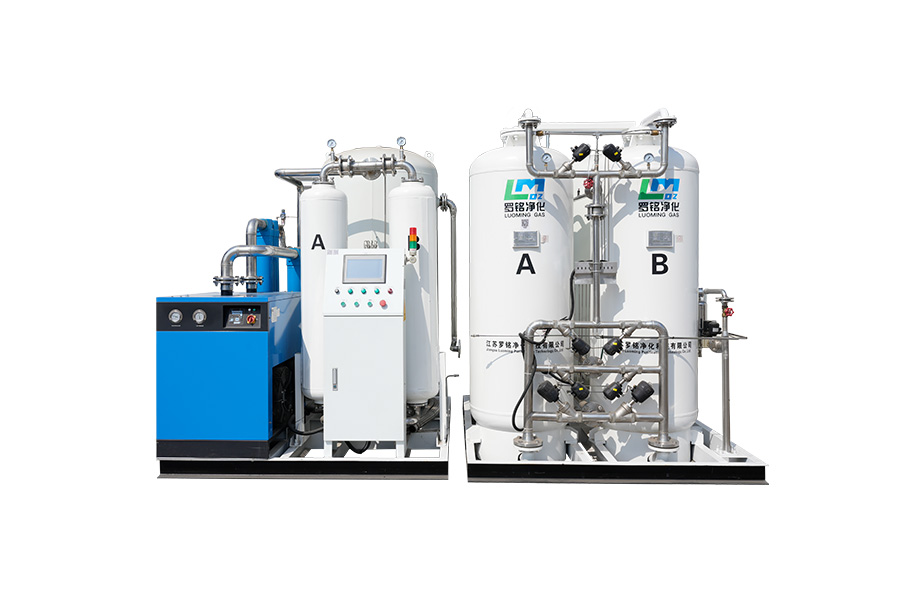
At the upstream end, a PSA (Pressure Swing Adsorption) generator extracts nitrogen from compressed air using molecular sieve beds, leaving behind a concentrated oxygen stream at 93%±2% purity. This meets the clinical threshold for most therapeutic applications, including respiratory support, anesthesia delivery, and ICU ventilator supply. The oxygen is then passed through multi-stage filtration—removing particulates, moisture, and microbial contaminants—before entering the distribution manifold.
The filling station sits between the generator output and the end-use point: whether that is a ward pipeline, a cylinder bank, or a direct bedside supply port. A medical onsite oxygen filling system allows facilities to simultaneously supply the pipeline network and refill portable cylinders for patient transport, surgical theatres, and emergency response vehicles—all from a single continuous production source.
This dual-function capability is what earns the "hidden lifeline" designation. The filling station makes oxygen portable and distributable without reintroducing dependency on external vendors.
Purity Standards: The Non-Negotiable Variable in Clinical Oxygen
Not all oxygen is interchangeable in clinical settings. Industrial-grade oxygen, while nominally similar in composition, is produced and handled under conditions that do not meet the contamination controls required for patient contact. Regulatory frameworks in the European Union, United States, and most national healthcare systems specify that oxygen administered therapeutically must meet minimum purity thresholds and must be produced, stored, and delivered under certified quality management conditions.
For filling station applications, this creates a specific engineering requirement: the production equipment upstream must consistently deliver output that satisfies certification requirements, and the filling hardware itself must not introduce downstream contamination. A high purity medical oxygen generator capable of reaching 99.5% purity addresses the most demanding clinical applications—including applications where standard 93% PSA output is insufficient, such as certain neonatal care protocols and high-altitude medical facilities where baseline atmospheric oxygen content is already reduced.
The relationship between purity level and clinical outcome is not theoretical. Studies on surgical patient recovery rates, ICU ventilator efficiency, and hyperbaric treatment outcomes consistently show that oxygen concentration and delivery reliability are directly correlated with patient prognosis metrics. For hospital procurement teams, the decision to invest in certified high-purity on-site generation is increasingly a patient safety decision as much as an operational one.
| Application |
Minimum Required Purity |
Recommended Generator Type |
| General ward pipeline supply |
≥93% |
Standard PSA medical oxygen generator |
| ICU / ventilator support |
≥93%–96% |
PSA with enhanced molecular sieve |
| Neonatal / high-altitude care |
≥99% |
High purity PSA (99.5%) generator |
| Cylinder filling for transport/emergency |
≥93% (pharmacopoeia-grade) |
On-site filling system with booster |
Clinical oxygen purity requirements by application type
The Role of Pressure Boosting in Cylinder Filling Operations
A detail that is frequently underestimated in filling station design is the pressure differential problem. PSA generators typically output oxygen at relatively low pressures—sufficient for pipeline distribution, but well below the 150–200 bar required to fill standard medical cylinders to usable capacity. Bridging this gap requires a compression stage between the generator output and the cylinder inlet.
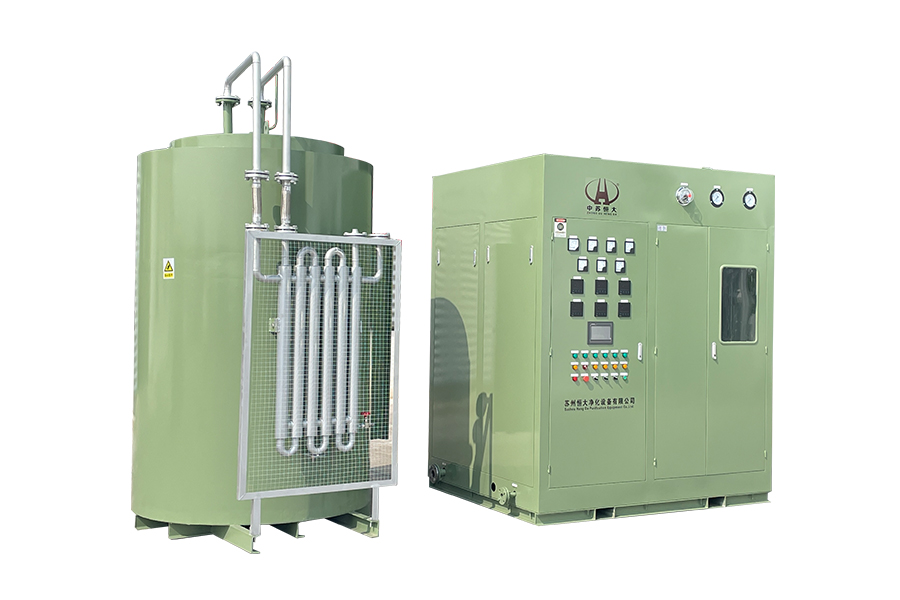
This is where an oxygen booster becomes a critical integration component. A purpose-built oxygen booster takes the low-pressure output from the PSA system and amplifies it to cylinder-filling pressures using oil-free compression technology—essential because any hydrocarbon contamination in high-pressure oxygen environments creates combustion risk. The booster's design must account for heat of compression, sealing integrity under repeated pressure cycling, and material compatibility with high-concentration oxygen streams.
Facilities that overlook this component often find their filling stations capable of supplying the pipeline but unable to refill portable cylinders efficiently, creating a hybrid dependency that negates much of the resilience benefit of on-site generation. A properly integrated filling system treats the generator, booster, and distribution manifold as a unified system—not as separately procured components.
Economic and Operational Case for On-Site Generation
The capital cost of an on-site oxygen generation and filling system is frequently the primary objection raised by hospital finance committees. The comparison, however, is often made incorrectly—initial capex against initial capex—rather than against the total cost of ownership across a 10–15 year operational period.
Consider a regional hospital consuming 200 cylinders per week. At a conservative estimate of $15–25 per cylinder including rental, delivery, and handling costs, the annualized spend ranges from $156,000 to $260,000—and that figure does not account for emergency surcharge pricing during shortage periods, which can multiply per-unit costs by three to five times. A properly sized on-site system amortizes its capital cost within three to five years under these conditions, with operating costs thereafter reduced to electricity, molecular sieve replacement (typically every 8–12 years), and routine maintenance.
Beyond the direct financial calculus, there are systemic efficiency gains: elimination of cylinder management labor, reduction in storage footprint, removal of cylinder-related injury risk, and—critically—predictable supply that enables more accurate clinical planning. Facilities in low- and middle-income countries, where cylinder supply chain unreliability is most acute, often see the fastest return on investment.
Selecting the Right Oxygen Filling Station for Your Facility
Procurement decisions for oxygen filling infrastructure should be guided by four primary variables: peak demand capacity, required output purity, available installation footprint, and certification requirements for the target regulatory environment.
Peak demand calculations should account for worst-case scenarios—mass casualty events, pandemic surges, or concurrent ICU and surgical theatre usage—not average daily consumption. Undersizing a system for cost reasons frequently results in the system being bypassed in favor of cylinders during high-demand periods, which defeats the purpose of the investment.
Certification requirements vary significantly by jurisdiction. Equipment deployed in healthcare environments in Europe must carry CE marking under the Medical Devices Regulation. Middle Eastern and African markets increasingly require ISO 13485 compliance from manufacturers. Verifying that equipment is certified for the target jurisdiction before procurement avoids costly retrofitting or regulatory rejection upon installation.
For facilities evaluating options, the complete product range within the medical oxygen generator category—from compact ward units to full hospital-scale central supply systems—provides a useful reference for matching system size to institutional demand profiles. Modular designs that allow capacity expansion without full system replacement offer particular long-term value for facilities in growth trajectories.





 English
 русский
 Français
 Español
 عربى
عربى