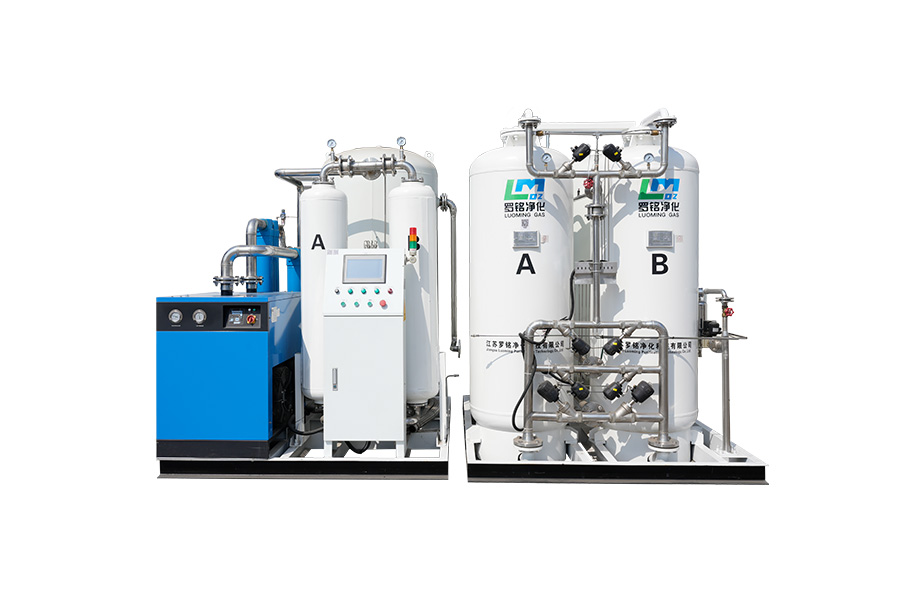
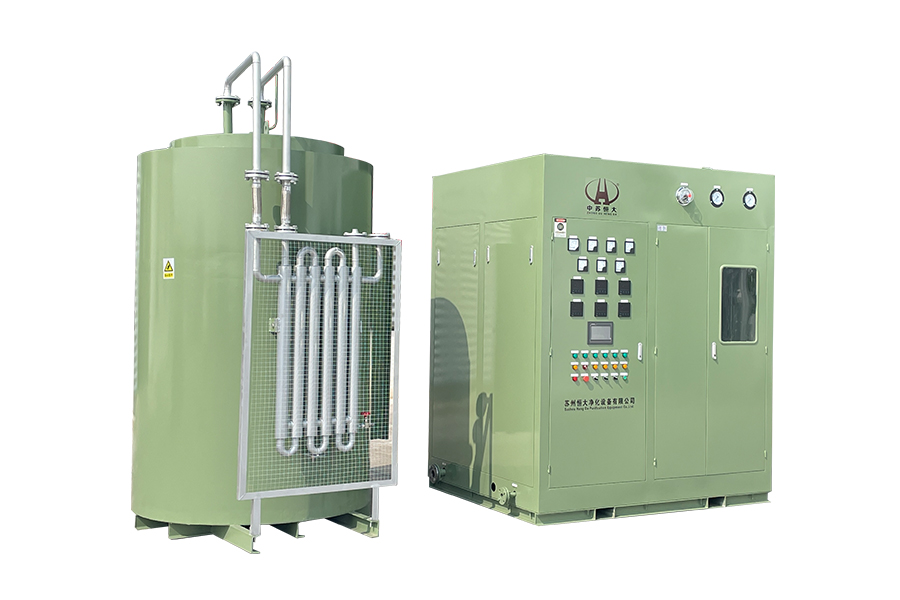
A single 47-litre medical oxygen cylinder holds roughly seven cubic metres of gas at 150 bar. A 300-bed hospital running a central oxygen pipeline can consume that in under an hour during a busy respiratory season, which is why mid-size facilities can empty dozens of cylinders per day. When a procurement team pays for the gas, then pays again for delivery fees, cylinder rental, return residuals and the labour of moving steel bottles through corridors, logistics becomes the most expensive part of medical oxygen. A medical onsite oxygen filling system attacks that cost at the source: it generates pharmacopoeia-grade oxygen from ambient air with PSA technology, boosts it to 150 bar and refills the hospital's own cylinder fleet on site. The same plant that feeds the pipeline also fills the cylinders supplying ambulances, satellite clinics and emergency reserves. Here is how these systems work, which specifications matter in a quote, and where the real costs and risks sit.
Why Cylinder Dependence Costs More Than the Gas Itself
Conclusion first: once a facility fills more than roughly fifteen to twenty cylinders a day — or spends a large share of its oxygen budget on delivery and rental rather than gas — producing and filling oxygen on site usually wins on total cost of ownership. The reason is structural. Cylinder pricing is dominated not by oxygen but by everything wrapped around it: trucking, handling, rental fleets and the residual pressure left in returned cylinders that has been paid for but cannot be used.
The three common supply models compare like this:
How the main medical oxygen supply models differ for a mid-size facility.
Supply model
Cost structure
Supply independence
Best fit
Delivered cylinders
Per-cubic-metre price plus delivery, rental and handling fees
None; fully exposed to supplier logistics
Low consumption, backup use
Liquid oxygen tank
Bulk contract with boil-off losses and minimum take
Low; tied to scheduled tanker deliveries
Large hospitals with steady, high demand
Onsite PSA plus filling
Capital cost plus electricity and scheduled maintenance
Liquid oxygen still suits very large consumers, but it keeps the hospital tied to a tanker schedule. A PSA-based filling plant turns oxygen into a utility under the facility's own control — and through the pandemic years, that control was the difference between full cylinder racks and empty ones.
How a Medical Onsite Oxygen Filling System Works
The system is a chain, and its weakest link defines the output quality. Ambient air is compressed, cleaned, separated, buffered, boosted and finally filled into cylinders:
From ambient air to a full cylinder
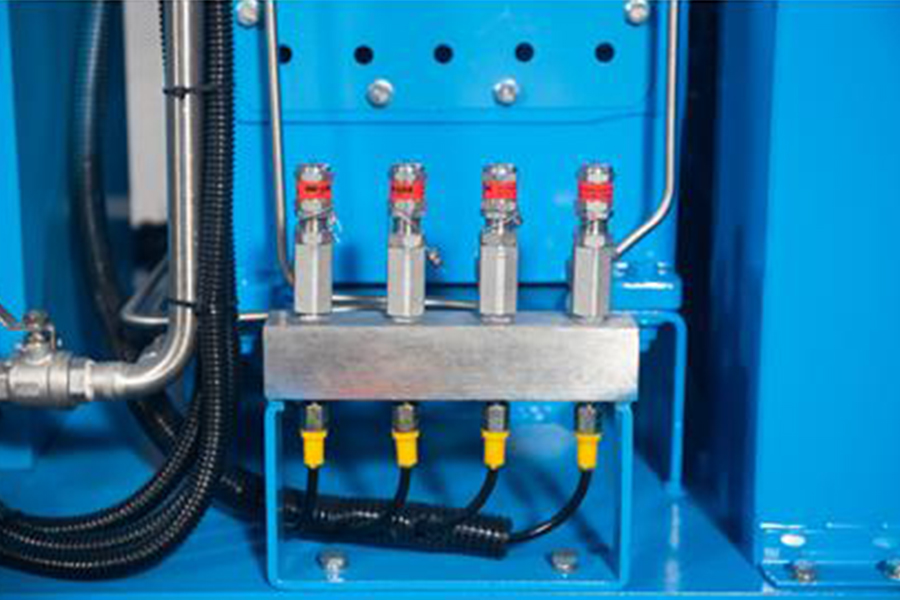
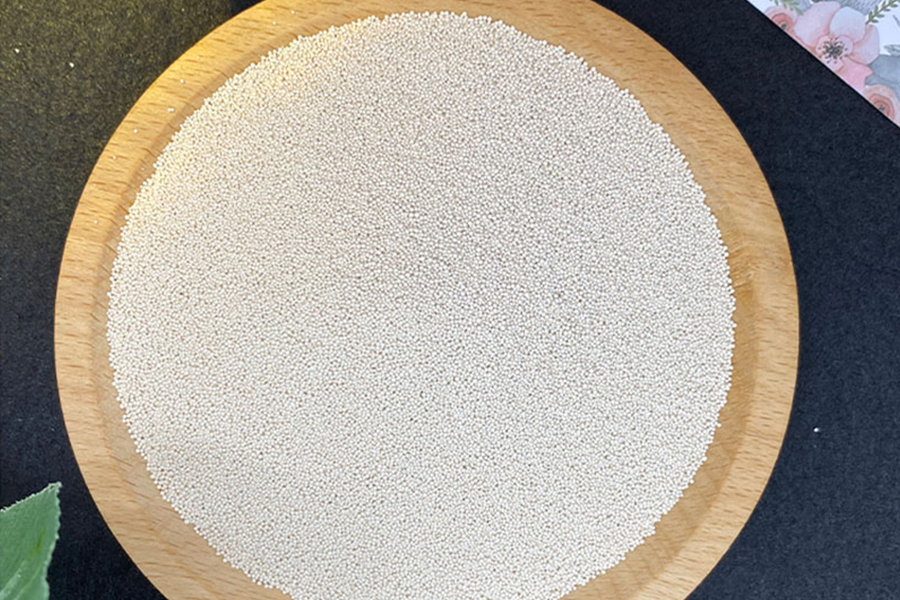
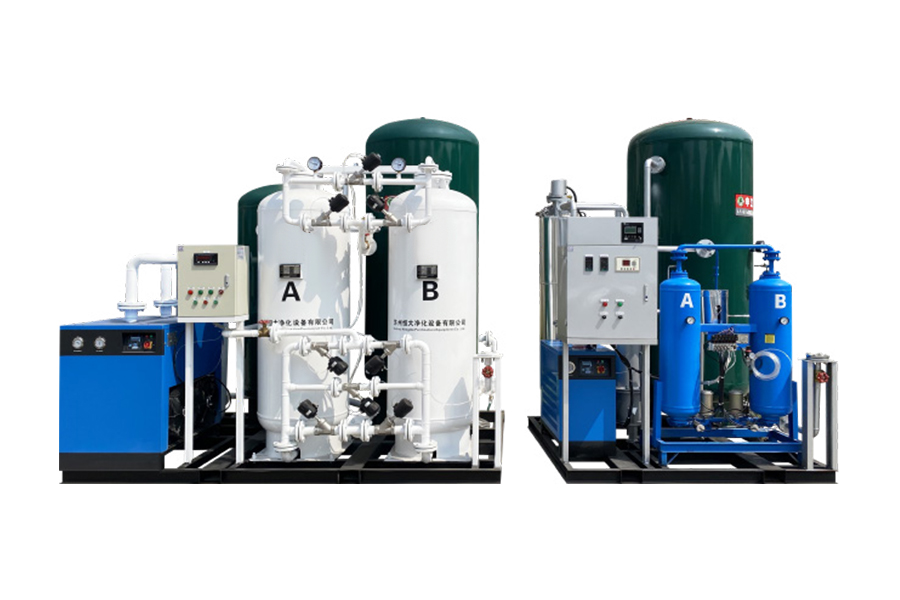
An air compressor feeds the plant, and a refrigerated dryer with staged filtration strips out moisture, oil aerosols and particles — clean inlet air is the single biggest determinant of molecular sieve life. The dry air then enters a PSA unit built around two towers packed with zeolite molecular sieve: under pressure the sieve adsorbs nitrogen while oxygen passes through at 93% ± 3%, the concentration range defined for medical use by the European and United States Pharmacopoeias. The towers alternate automatically, so one always produces while the other regenerates. Gas collects in a buffer tank that stabilizes pressure and purity before an oil-free oxygen booster raises it to 150 bar — or 200 bar where the cylinder fleet requires — for transfer through a filling manifold. A properly engineered manifold controls the fill rate so cylinders reach full pressure without excessive heating.
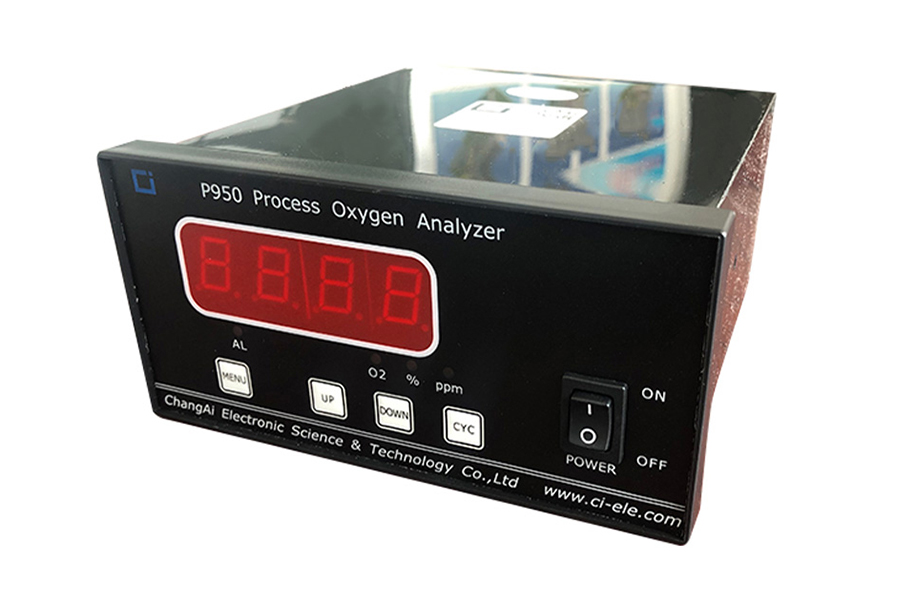
Quality monitoring is not optional in a medical context. An online oxygen analyzer verifies concentration continuously and should stop or divert the fill if purity drifts below setpoint, while the air treatment stage keeps moisture and contaminants within pharmacopoeia limits — one more reason not to economize on dryers and filters. Facilities needing more than the standard 93% stream for laboratory or specialty work can add purification stages that push output above 99.5%.
Specifications That Decide Whether a Quote Is Worth Comparing
Two buyers can request the same 20 Nm³/h plant and receive systems that differ enormously in engineering depth. These are the lines that separate a serious quotation from a generic one:
Key technical parameters to compare when evaluating medical onsite oxygen filling system offers.
Parameter
Typical specification
Why it matters
Output capacity
5–50 Nm³/h per unit, expandable in modules
Size to peak demand plus cylinder turnover, not average use
Purity
93% ± 3% per pharmacopoeia; above 99.5% with purification
Defines the compliance route and purification scope
Filling pressure
150 bar standard; 200 bar optional
Must match your existing cylinder fleet and valves
Gas dew point
-40 °C or drier at the filling point
Excess moisture risks cylinder corrosion and purity drift
Specific energy use
Roughly 0.7–1.2 kWh per Nm³ including air compression
The true driver of long-run cost per cubic metre
Sieve service life
8–10 years with clean inlet air
The main consumable; a warranty line to read carefully
Sizing is a measurement exercise, not a per-bed guess. For a 200-bed hospital, engineers should work from recorded cylinder consumption, ward-by-ward flow data and peak-season logs; such a facility often lands in the range of ten to twenty Nm³/h of continuous generation plus a filling schedule matched to cylinder turnover. Ask every bidder to quote specific energy consumption and to guarantee purity at the cylinder valve, not only at the generator outlet.
The economics are strongest where cylinder logistics are most fragile, and the pattern repeats across markets:
Hospitals with a central pipeline that still burn through cylinders for ambulances, transfers, remote wards and backup.
Regional health depots and government stockpile programmes that distribute filled cylinders to rural clinics.
Remote, island and high-altitude sites where one blocked road interrupts the entire oxygen supply.
Facilities building surge capacity ahead of respiratory season, when cylinder demand can double within weeks.
Deployment formats are flexible too. Where a facility cannot spare a technical room, containerized and mobile configurations deliver the complete plant — compression, purification, PSA, boosting and filling — inside one weatherproof enclosure, which is also the fastest route to commissioning in remote regions. For a deeper walkthrough of purchasing logic, this medical oxygen onsite filling system guide breaks the topic down step by step, while the medical onsite oxygen filling system solution page shows how the components come together in practice.
Running Costs and Maintenance to Budget From Day One
Electricity dominates the operating budget at roughly 0.7–1.2 kWh per cubic metre of product oxygen including air compression. Against delivered cylinder pricing, that usually means an onsite cubic metre costs a fraction of logistics-based supply — frequently one-third to one-tenth once every fee is counted, depending on local tariffs and cylinder prices. Maintenance, in turn, is predictable provided inlet air stays clean:
Weekly to monthly: check inlet filters and drains, and record analyzer readings and cylinder fill logs.
Quarterly to annually: compressor servicing and calibration of oxygen and dew-point analyzers.
Every 8–10 years: replacement of the zeolite molecular sieve, the core consumable inside the PSA towers.
Ongoing: cylinder hydrostatic testing and valve maintenance, normally handled by a certified local shop.
It holds up when the dryer and filter package performs and degrades quickly if oil or water reaches the towers, which is why sourcing sieve and spare parts from the plant manufacturer — rather than the open market — protects both purity and warranty coverage.
Medical oxygen equipment is regulated equipment, so credentials come first. A credible supplier holds a medical device manufacturing licence — Luoming operates under China's Class II medical device production licence — together with an ISO 13485 quality system and CE conformity for export markets. After the paperwork, judge suppliers on evidence: reference hospitals you can contact, running plants you can inspect on video, and warranties that name the sieve and booster explicitly. A complete quotation itemizes the compressor, dryers, PSA unit, buffer tank, booster, filling manifold and analyzers as one engineered package, with commissioning and operator training included. Any offer that quietly undersizes the air treatment stage or omits the online analyzer is a false economy; those components decide whether the plant still meets pharmacopoeia limits in year five.
Stated plainly: past a certain consumption threshold, oxygen should behave like electricity — produced on site, metered, and never hostage to a delivery schedule. A medical onsite oxygen filling system delivers exactly that by pairing PSA generation with high-pressure cylinder filling under continuous quality monitoring. Get three numbers right in procurement — true demand profile, specific energy consumption and the supplier's service footprint — and the plant repays its investment while removing the most fragile link in the clinical supply chain.





 English
 русский
 Français
 Español
 عربى
عربى