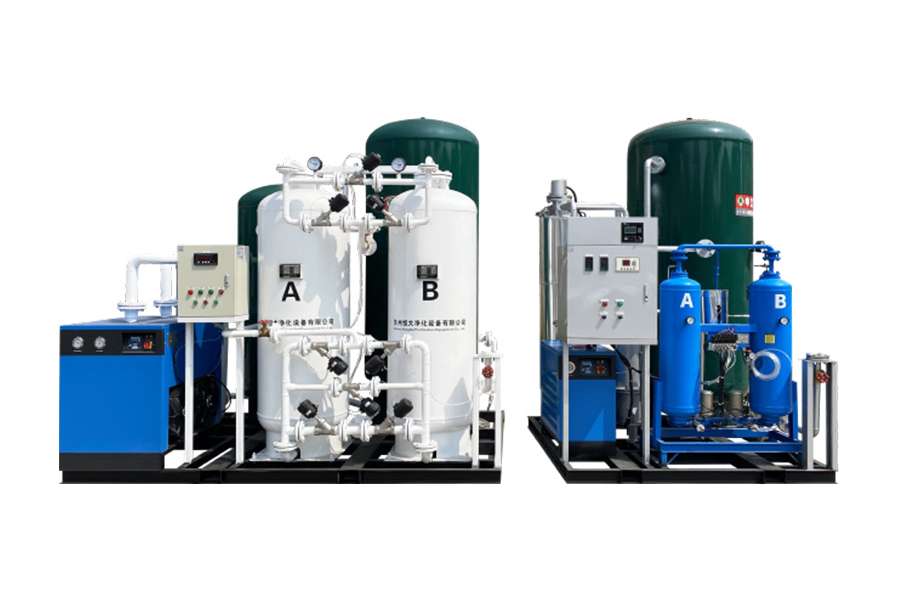
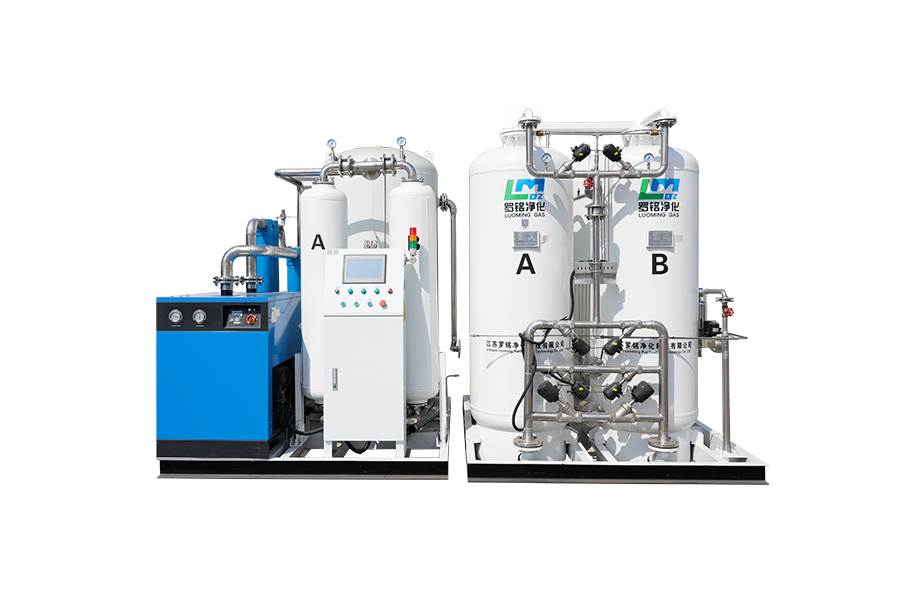
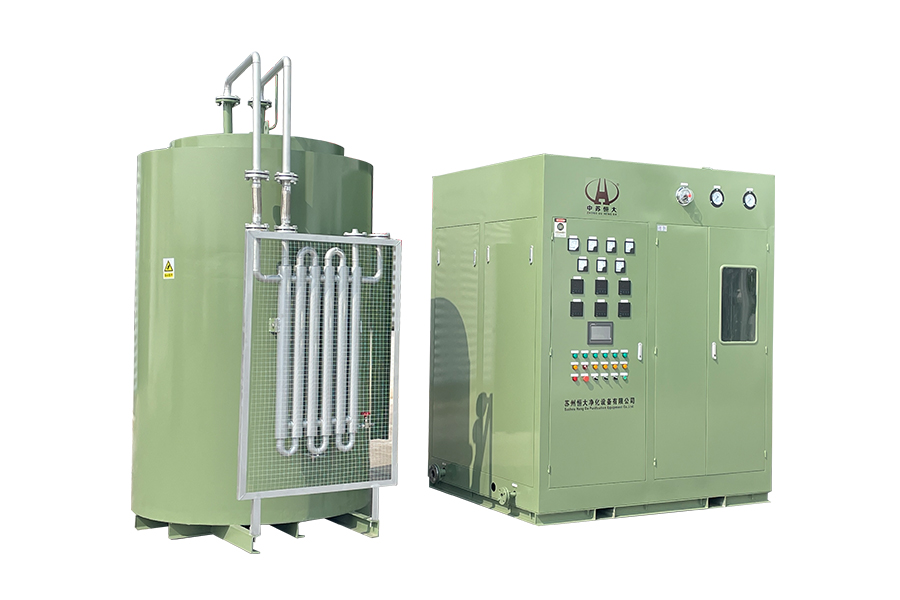
A 200 bar cylinder is not filled by a nitrogen generator. It is filled by a booster that lifts PSA nitrogen from roughly 0.6 to 0.8 MPa up to 15 or 20 MPa, and by a manifold that decides which cylinder receives gas first. Projects that run late are rarely short of purity. They are short of pressure headroom, buffer volume or a filling sequence that was never written down.
What Nitrogen Filling Equipment Actually Contains
Nitrogen filling equipment is the compression and transfer package that turns low-pressure nitrogen from a PSA generator into cylinders, bundles or cascades at 15 to 30 MPa. It is not the generator, and it is rarely a single skid. The filling side carries its own storage, its own pressure rating and its own control logic, and each part is sized separately.
A filling package is complete only when it can hold pressure, measure purity at the point of transfer, and isolate any single cylinder without taking the rest of the manifold offline.
- Buffer vessel between generator and booster, normally rated 0.8 to 1.0 MPa and sized for 30 to 60 seconds of booster suction.
- Oil-free high-pressure booster with intercooling, a condensate trap and a suction filter.
- High-pressure receiver plus cascade bank, rated above the final fill pressure rather than exactly at it.
- Filling manifold with one pigtail per position, a check valve per line and individual isolation so a leaking connection cannot drain the bank.
- Inline oxygen and dew point measurement, sampled downstream of the booster instead of at the generator outlet.
- Relief valves, burst discs and a trip that stops the booster on high temperature, low suction or analyzer alarm.
The upgrade request we see most often is swapping an oil-lubricated booster for an oil-free unit. Mineral oil carryover into a 200 bar cylinder is not a filtration problem; for food, electronics and medical users it is a total-loss problem, and it usually surfaces months after commissioning. Complete layouts for cylinder filling are described on the nitrogen filling equipment page.
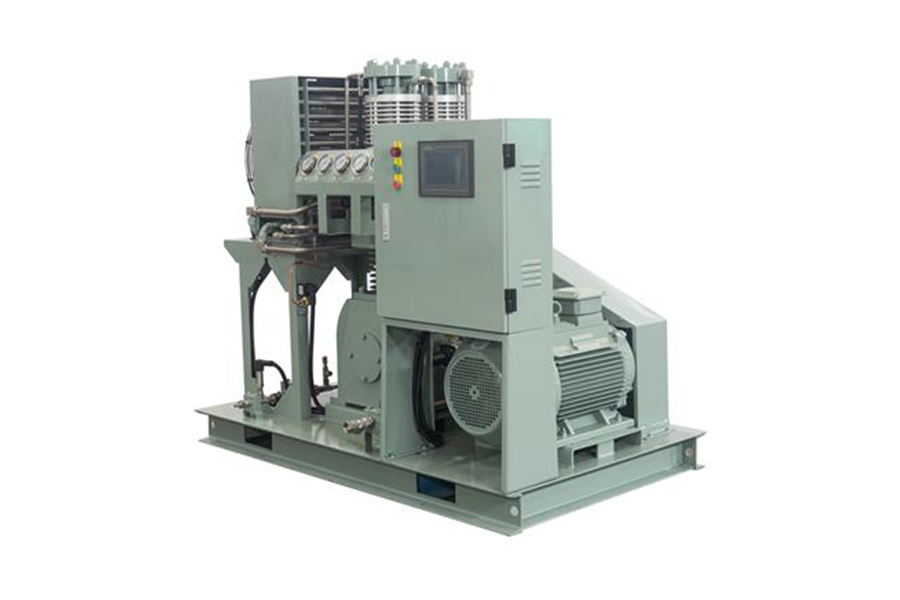 Oil-Free High Pressure Nitrogen CompressorA nitrogen booster option for layouts where oil carryover is unacceptable and final fill pressure, purity and flow matter.View Product →
Three Numbers That Fix the Whole Design
Final fill pressure, guaranteed purity and sustained flow decide most of the package. Every other specification, from receiver volume to pigtail rating, follows from those three.
15-30 MPa Manifold delivery pressure range for standard industrial cylinders
95-99.999% Nitrogen purity window available from PSA plus purification
2.5-4 : 1 Air to nitrogen consumption ratio at 99.9 percent purity
Pressure headroom is where projects slip. A booster rated at 30 MPa will reach a 200 bar cylinder, but the last 20 bar take almost as long as the first hundred, because the compressor is pushing against the cylinder's own pressure. Buyers who specify the booster exactly at the target pressure leave no margin for a hot afternoon, worn piston rings, or a cascade that needs to top one bank while another is being filled.
Rule of thumb: specify booster outlet at least 10 to 15 percent above the highest pressure you intend to sell to customers.
How the Package Is Built, Step by Step
A filling line is assembled in a fixed order, and skipping a step usually shows up as slow fills rather than as an obvious fault.
- Buffer after the generator. A receiver of 0.8 to 1.0 MPa absorbs the pressure swing that the PSA cycle puts on the booster suction, so the compressor is not chasing a moving inlet.
- Booster and cooling. Two or three compression stages with intercooling and a condensate trap keep discharge temperature inside the seals' working range and protect the downstream dryer.
- High-pressure receiver and cascade split. Storage at 20 to 30 MPa lets the booster run at steady load while the manifold draws from the bank instead of from the compressor directly.
- Manifold, pigtails and fill sequence. Fill the lowest-pressure cylinders first and use the bank for the final top-up; this single habit can cut fill time per cylinder noticeably.
- Analyzer, trip logic and records. Purity, dew point, fill pressure and operator identity should be logged per batch, not reconstructed later from memory.
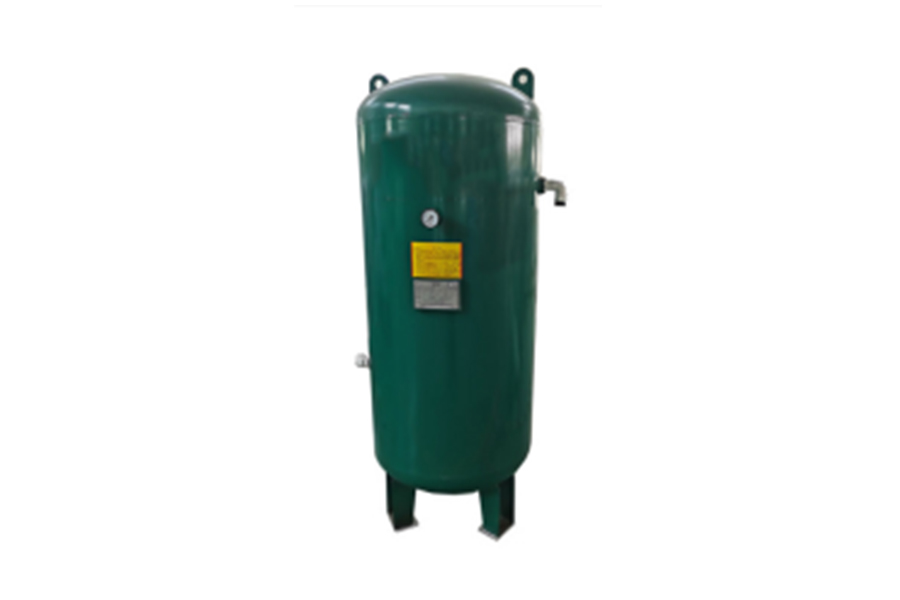 Industrial Air Storage Tanks and Gas ReceiversReceiver vessels for stabilizing compressed air output, regulating pressure and supporting moisture removal in oxygen and nitrogen generator systems.View Product →
Cylinder Filling, Cascade Bundles or Delivered Liquid
Filling on site wins when annual nitrogen demand is steady and cylinder handling already exists. Delivered gas wins when demand is spiky or when required purity sits at the very top of the range.
Fill on site
- Gas cost falls to compressor power and sieve replacement
- Cylinder turnaround stays inside your own yard
- Purity is verified every fill, not once per delivery
- Requires floor space, power and a trained operator
Buy delivered
- No capital outlay and no maintenance contract
- Fixed cost per cylinder, simple to budget
- Rental and demurrage charges accumulate quietly
- Delivery schedules constrain production peaks
A hybrid suits most plants better than either extreme: an on-site package sized for base load, with a small liquid or cylinder backup covering maintenance windows and demand spikes.
Purity by Application
Purity is set by the process, not by the catalog. Buying 99.999 percent for grain storage burns sieve life and compressor power for a result the grain will never notice. Where the process does need the top of the range, a high-purity PSA nitrogen generator with carbon or hydrogen purification is the usual route.
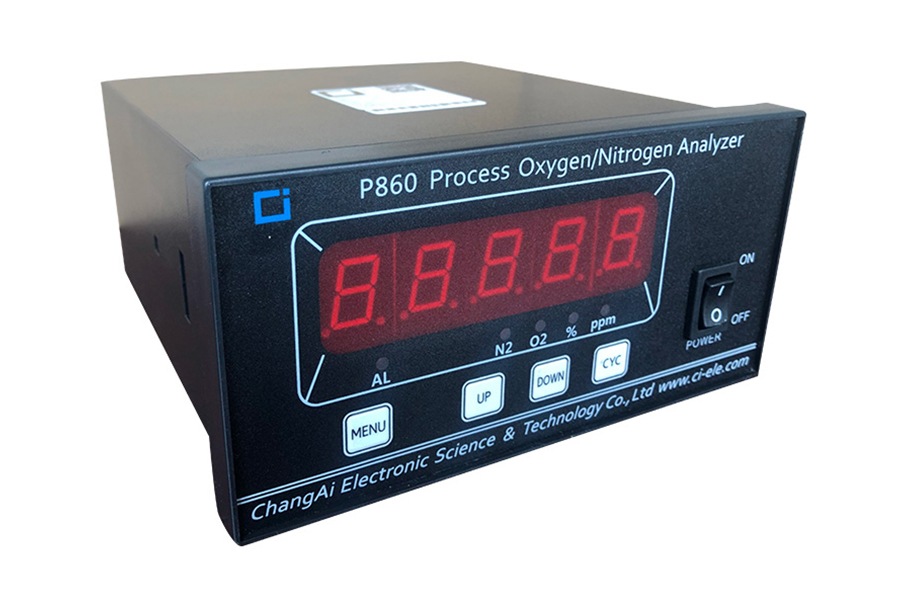 P860 Nitrogen Oxygen Analyzer for PSA GeneratorsIon-current analyzer for checking oxygen and nitrogen concentration in PSA generator systems, useful where process purity requirements guide equipment choice.View Product →
Measure at the fill point, not at the generator. The cylinder valve reading is the only number the customer will ever check, and it is the only number worth recording.
Cost, Energy and the Risks Buyers Underestimate
Operating cost is dominated by air compressor power and sieve replacement. Capital cost is dominated by the booster and the high-pressure storage. Neither is dominated by the manifold, which is why manifold shopping is a poor way to compare quotations.
A 40 litre cylinder filled to 200 bar holds roughly 8 cubic metres of nitrogen at standard conditions. At a 3:1 air ratio that is about 24 cubic metres of compressed air per cylinder, so the air compressor sets the electricity bill, not the filling skid.
- Fill rate quoted at free-air delivery instead of at cylinder pressure, which flatters the booster on paper.
- Residual pressure ignored; cylinders arriving at 20 bar fill in a fraction of the time of empty ones.
- Wet air upstream, which sends water into the carbon molecular sieve and shortens its working life.
- Undersized high-pressure storage, forcing the booster to cycle continuously instead of running at steady load.
- No spare pigtails, check valves or analyzer sensors on site, turning a one-hour repair into a two-week wait.
Commissioning Checks That Prevent Rework
Six checks catch almost every filling problem before the first customer cylinder leaves the yard.
- Pressure test every high-pressure line at 1.5 times working pressure and record the result.
- Verify the analyzer against a certified span gas rather than against the generator's own display.
- Run a full fill on an empty cylinder and time it, then compare with the quoted figure.
- Confirm the trip logic stops the booster on high discharge temperature and low suction pressure.
- Check pigtail flexibility and thread compatibility against the cylinders you actually own.
- Log dew point at the manifold across a full shift, including the hottest part of the day.
Frequently Asked Questions
Can a PSA generator fill cylinders directly?
No. Generator discharge sits at roughly 0.5 to 0.8 MPa while cylinders are filled at 150 bar and above. A booster and high-pressure storage are required between the generator and the manifold.
What pressure should the filling package be rated for?
Match the manifold to the highest cylinder pressure you will sell, then add 10 to 15 percent headroom at the booster outlet. A 200 bar working pressure with a booster rated to 250 bar is a common compromise.
How many cylinders can be filled per shift?
Booster flow decides this, not the number of manifold positions. A 20 Nm3/h booster fills about 2 to 3 forty-litre cylinders per hour to 200 bar, so a 60 cylinder shift needs a larger booster or a longer window.
Does purity drop during filling?
Purity is set upstream, but a contaminated pigtail or an empty cylinder full of air will pull the reading down. Purging each cylinder before the fill is the cheapest protection available.
Sizing a filling package comes down to three numbers and one habit: know the fill pressure, the purity and the sustained flow, then measure purity where the gas actually leaves the system. Everything else, from booster type to manifold layout, is a detail that follows.





 English
 русский
 Français
 Español
 عربى