A full oxygen cylinder holds gas at up to 15 MPa — roughly 150 times atmospheric pressure. Drop one, dent one, or leave one too close to a heat source, and you have a genuine hazard on your hands. A medical molecular sieve oxygen generator never comes close to that pressure. Its ceiling is 0.8 MPa, and the moment it shuts down, the internal pressure drops straight back to whatever the room is at. That single fact explains why so many hospitals, clinics, and nursing homes have quietly swapped cylinder rooms and liquid oxygen tanks for on-site PSA equipment over the last decade.
How PSA Oxygen Generation Works
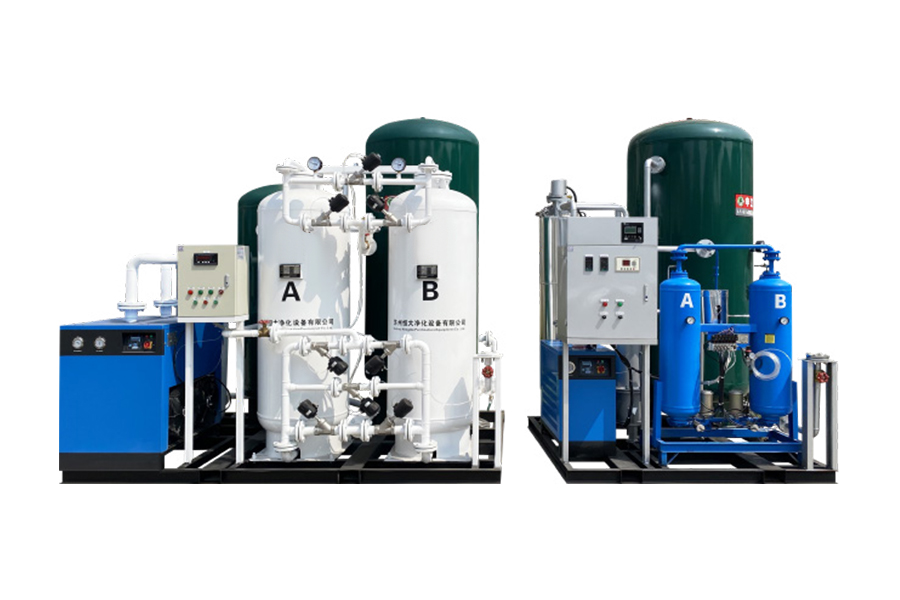
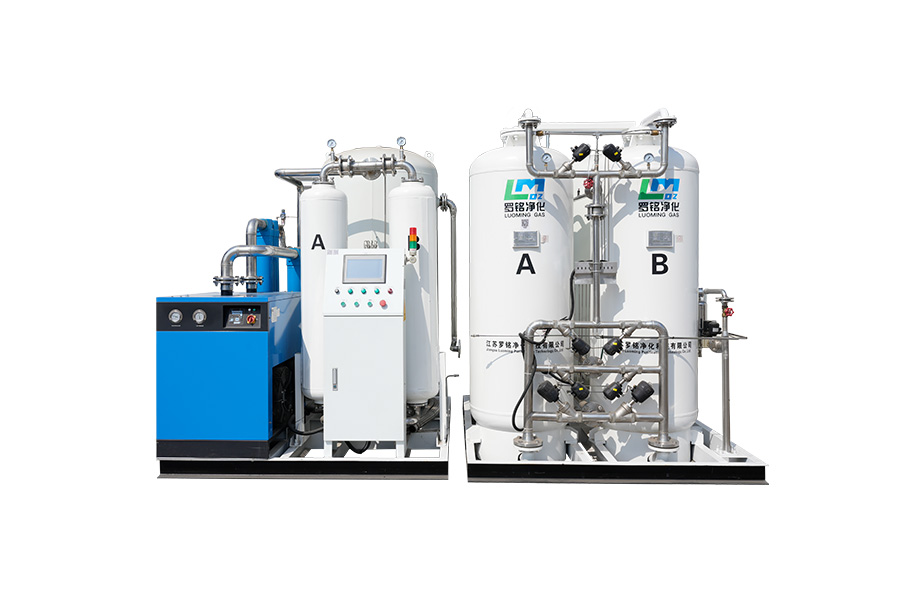
Pressure Swing Adsorption sounds technical, but the idea is simple. Compressed air is pushed through a tower packed with zeolite molecular sieve adsorbent. Nitrogen molecules cling to the sieve's surface under pressure; oxygen molecules pass straight through. Drop the pressure and the nitrogen releases back into the atmosphere, regenerating the sieve for another cycle. Two towers alternate between adsorption and regeneration, so the output never stops.
No combustion, no oxidation, no chemical synthesis happens anywhere in this process. Air goes in, oxygen and nitrogen come out separately, and nothing new — flammable, toxic, or otherwise — gets created along the way. That's a meaningful safety distinction from chemical or electrochemical oxygen generation methods, which do carry those risks.
Why 93% ± 3% Meets Medical Standards
A common question from facility managers: is 93% oxygen actually good enough for patients? The answer, backed by international regulators, is yes. The World Health Organization's International Pharmacopoeia recognizes Oxygen 93% (90–96% by volume) as clinically equivalent to 99.5% oxygen for respiratory care, including ICU and neonatal use. The remaining gas is mostly argon and nitrogen — both physiologically inert. For facilities that need higher concentrations for specific procedures, a 99.5% high-purity medical oxygen generator configuration is also available.
Safety: Cylinders vs On-Site Generation
Cylinder logistics carry risks that never show up on a spec sheet: transport vibration, storage in the wrong ambient temperature, valve damage, theft, or simply running out mid-procedure. Liquid oxygen tanks solve the supply problem but introduce cryogenic hazards and a much larger footprint. On-site generators sidestep both. There's no bottled inventory to manage, no delivery schedule to plan around, and no stored pressure once the unit is powered down. This is a big part of why hospitals are moving away from oxygen cylinders in favor of continuous, on-demand supply. It also simplifies hospital infection control requirements for medical oxygen, since there's no cylinder handling or valve contact to manage between uses.
Key Technical Specifications
Ratings below are based on 0.8 MPa feed air, 20°C ambient, 100 m altitude, and 80% relative humidity — standard reference conditions for this equipment.
Reference specifications for a medical molecular sieve oxygen generator
| Parameter |
Requirement |
| Power supply |
380V 3-phase / 220V 1-phase, 50Hz |
| Oxygen concentration |
93% ± 3% |
| Oxygen output pressure |
0.4–0.5 MPa (Can be customized according to requirements) |
| Maximum working pressure |
0.8 MPa |
| Installation site |
Indoor, non-explosion-proof, 3–45°C, well ventilated |
Because the site doesn't need explosion-proof construction — unlike a bulk liquid oxygen store — installation costs and space requirements are typically lower than a comparable liquid oxygen setup.
Jiangsu Luo Ming Purification Technology has been manufacturing gas separation equipment since 2020 as a subsidiary of Suzhou Hengda Purification Equipment, holding a Class II Medical Device Production License since late 2022. For facilities weighing cylinders, liquid oxygen, or on-site generation, the physics and the safety math both point the same direction: producing oxygen only when it's needed, at low pressure, is simply a more forgiving way to keep a hospital's oxygen supply running.





 English
 русский
 Français
 Español
 عربى
عربى